Year-end is when the old phone drawer gets cleared, the 12-year-old fridge finally gets replaced and the Black Friday laptop arrives. The question is what to do with the old one. In Malaysia, the answer is not the rubbish bin: electronic waste is classed as scheduled waste under code SW110 in the First Schedule of the Environmental Quality (Scheduled Wastes) Regulations 2005, made under the Environmental Quality Act 1974.
What counts as household e-waste
The Department of Environment's household e-waste portal names six "controlled items":
- Washing machines and dryers
- Televisions
- Computers and laptops
- Mobile phones
- Air-conditioners
- Refrigerators
The DOE says the list is not exhaustive and that smaller appliances such as hair dryers, microwaves and printers will be added later. In practice most collectors take them now, so ask.
Where to take it
1. MCMC's KITAR bins, for anything with a SIM or a screen you carry. KITAR, run by the Malaysian Communications and Multimedia Commission, accepts phones, tablets, laptops, power banks, chargers and accessories at no charge. Its locator showed 145 drop points on 22 November, 123 of them at NADI community centres, plus Courts in Setapak, Plentong, Miri and Karamunsing, Plaza Low Yat, Nojima at Lalaport and MCMC's own offices. Maxis closed its own e-waste campaign on 30 September 2025 and now points customers to KITAR. Once you drop a device in, you give up ownership of it.
2. The DOE collectors map, for appliances and pickup. The map lists DOE-registered collection centres, collection points and licensed recovery facilities in every state. When we read its data on 22 November it held 411 listings: 194 collection centres, 151 collection points and 66 recovery facilities, with 213 marked as offering pickup. Selangor had the most (137) and Labuan the fewest (1). Many are Senheng and senQ outlets, AEON stores, Tzu Chi recycling centres and Daikin or Acson service centres. Any payment or incentive is up to each collector, so call first, especially for a fridge or air-conditioner. The DOE also runs a MyEwaste app.
3. Retailer and brand take-back. - ALL IT Hypermarket: free drop-off of more than 25 types of item, including loose AA, AAA and coin batteries, at its 14 Klang Valley stores. Under its Tech The Emissions Down 2026 campaign, each drop earns one lucky-draw entry with no purchase needed until 31 December 2026. Prizes are three MacBook Neo 512GB units (one per two-month round) and two Blueshark Solo 1C electric bikes, with the bike winners announced on 8 January 2027. - Apple: Apple Trade In gives credit for eligible devices and recycles the rest for free. Swollen or damaged batteries and loose batteries are not accepted. - Senheng MyGreen Rewards: MyGreen Rewards is open to PlusOne members (free to join) and pays the trade-in value as S-Coin cashback with a 2x multiplier, spendable on Senheng and senQ products. Working, unlocked phones, tablets, MacBooks, smartwatches and AirPods qualify, and some home appliances too. Senheng checks that each device has been wiped; phone-locked devices or ones that do not power on are turned away. Accepted devices go to certified refurbish-or-recycle partners. - HP Planet Partners: free return of original HP ink and toner cartridges.
4. Penang. The state's Riiicycle Kitar Hub at Pacific Komtar, launched in May 2026, takes e-waste alongside plastics and metal and pays in Touch 'n Go credit or vouchers.
One pickup service that many older guides still recommend, ERTH, no longer has a working website, so do not rely on it.
Before you hand it over
KITAR publishes a five-step checklist for phones:
- Terminate the line.
- Move your photos and data off the phone, memory card and SIM.
- Delete everything or do a factory reset.
- Remove and destroy the SIM and memory card.
- Drop the device in the box.
KITAR says collected devices are fully dismantled. For a laptop, a full reset with the drive-cleaning option is the minimum.
Lithium batteries need care. In June 2026 the Fire and Rescue Department's director-general warned that damaged lithium batteries can catch fire, explode, give off toxic smoke and reignite after being put out. Tape the terminals of loose batteries and never put a swollen one in a general bin.
What the law does, and does not, say
The DOE tells households to use the formal channels above and says retailers must take back household e-waste on request. What does not yet exist is a dedicated household regulation with penalties. In an October 2025 written reply to Parliament, the natural resources ministry said regulations covering the same six items had been drafted, and that an extended producer responsibility (EPR) scheme was still being studied under the 13th Malaysia Plan. In March 2026 the ministry again spoke of "upcoming" EPR, with no date. As of 22 November 2026 nothing has been gazetted for households.
The rule that did change this year is at the border. An absolute ban on e-waste imports, P.U.(A) 151/2026, took effect on 1 April 2026.
Why it matters
The DOE's director-general said in November 2025 that the programme collected about 2,000 tonnes of household e-waste in 2025, with a target of 3,000 tonnes a year from 2026. The UN-backed Global E-waste Monitor 2024 puts Malaysia at 12.2 kg of e-waste per person a year, among the highest in ASEAN. Most of it still never reaches a registered collector.
*Sources: DOE household e-waste portal (collectors map, legislation and stakeholder pages, read 22 November 2026); MCMC KITAR locator and FAQ; Maxis e-waste page; ALL IT Hypermarket, Apple Malaysia, Senheng and HP Malaysia programme pages (ALL IT and Senheng re-checked 23 November 2026); Berita Harian (October 2025), The Star (26 March and 16 June 2026), Bernama (1 November 2025), Malay Mail (1 April 2026) and Buletin Mutiara (22 May 2026).*
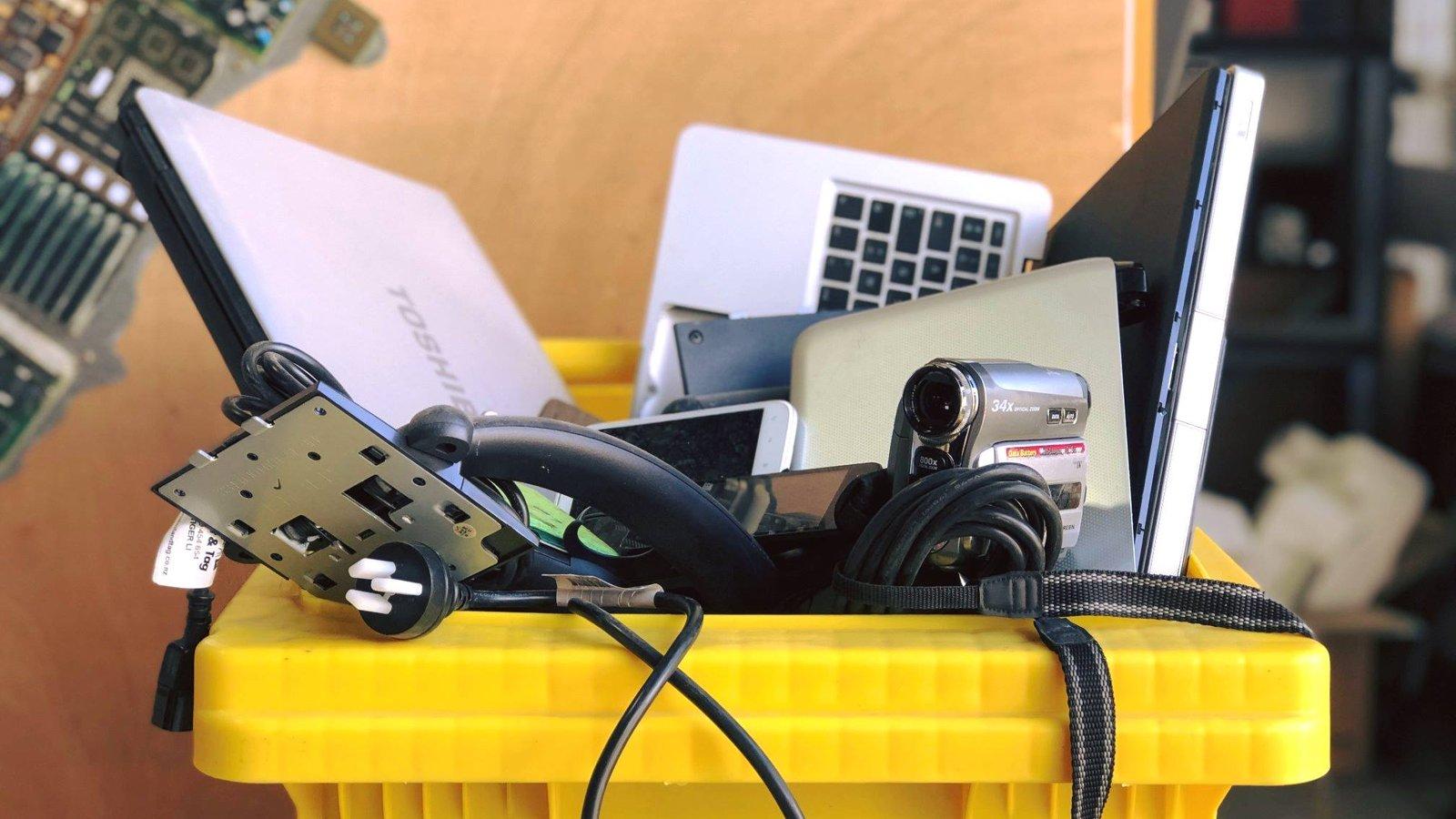
*Cover image: "E waste bin" by Patrickewastenz, Wikimedia Commons, CC BY-SA 4.0 (photographed in New Zealand).*