> Built from the Election Commission's announcements as reported by Malay Mail and The Star between 22 and 26 September 2026, the text of the Election Offences Act 1954, and the official 2021 results as published on electiondata.my. Checked on 30 September 2026. The Election Commission's own website did not load from our connection this week, so its notices are quoted through those reports.
Melaka is heading to its 16th state election, and a lot of people who will vote in it do not live there. Many Melaka voters work in the Klang Valley, Johor or Singapore, and their votes stay tied to the address on their MyKad. So the useful question right now is not who will win. It is whether you are registered where you think you are, whether you can vote without travelling, and whether you can get the day off.
What is already fixed
Chief Minister Datuk Seri Ab Rauf Yusoh announced on 22 September that the 28-seat State Legislative Assembly would be dissolved, with effect from 23 September 2026. Its term would otherwise have run to 27 December. He said the dissolution would not affect state government business.
Once an assembly is dissolved, the election has to be held within 60 days. That puts the last possible polling day at 22 November 2026.
Postal vote applications also opened on 23 September, the same day the assembly dissolved.
What the EC decides on 7 October
The Election Commission will hold a special meeting on 7 October, chaired by its chairman Datuk Seri Ramlan Harun, to fix the date of the writ, nomination day, polling day, the early voting date and which electoral roll will be used. The Commission said it would hold a press conference immediately after the meeting.
For a sense of rhythm, the last Melaka election ran like this: the EC announced its dates on 18 October 2021, nomination followed on 8 November, early voting on 16 November and polling on Saturday 20 November. That is our reference point only, not a forecast. Also note that Deepavali falls on Sunday 8 November 2026, with Monday 9 November as the replacement holiday, which matters if you plan to travel home to vote that month.
Step 1: check that you are on the roll, and where
Automatic voter registration and the voting age of 18 took effect on 15 December 2021, less than four weeks after Melaka last voted. That makes this the first Melaka state election under automatic registration. Every citizen aged 18 and above is now registered at the address on their MyKad, whether or not they ever filled in a form.
Two consequences follow:
- If your MyKad still shows a Melaka address, you vote in Melaka, even if you have worked in KL for ten years.
- If you updated your MyKad address, your constituency moved with it. The EC's August 2026 supplementary roll alone shows 34,411 voters nationwide whose constituency changed, alongside 43,309 new voters who turned 18 or became eligible in August.
To check, use the MySPR Semak app or mysprsemak.spr.gov.my, or call the voter check line on 03-8892 7218. The August supplementary roll is open for review until 24 October. If your name is missing, the EC's route is Form C, submitted through myspr.spr.gov.my or a state election office; objections to someone else's transfer use Form D and carry an objection fee. Which roll Melaka actually uses is one of the things decided on 7 October.
Step 2: see whether you can vote by post
Postal voting is not a general option for anyone who lives outside Melaka. The EC opened applications for three categories only:
- 1A: police, armed forces, election workers and officers, EC staff and media personnel on duty.
- 1B: Malaysian voters living overseas.
- 1C: agencies and organisations approved by the EC.
You need a MySPR account first, then apply at myspr.spr.gov.my. The closing date will be announced later. Queries go to 03-8892 7080 or upup@spr.gov.my.
The 1B category has a catch that hits Melaka voters hardest. Under the EC's overseas postal voting guidelines, Malaysians living in Singapore, Brunei, southern Thailand (Narathiwat, Pattani, Yala, Songkhla and Satun) and Kalimantan are not eligible; they are expected to come home to vote. You must also have been in Malaysia for at least 30 days in the five years before the assembly was dissolved. Voters living in KL, Penang or Johor have no postal option at all, so for them it is a trip home or no vote.
Step 3: know what your employer owes you
Section 25 of the Election Offences Act 1954 says every employer must, on polling day, allow every voter they employ a reasonable period for voting, and may not deduct pay or impose any penalty for that absence. An employer who refuses, or interferes through intimidation or undue influence, faces a fine of RM5,000 or one year in prison on summary conviction.
The Act does not define "reasonable". For someone working in KL whose polling station is in Jasin or Alor Gajah, that is a conversation to have with your manager as soon as the date is known, not the day before.
A holiday is a separate question. In 2021 the Melaka government declared polling day a special state public holiday under section 9(1) of the Holidays Act 1951, but it announced this only on 18 November, two days before the vote. A state declaration covers employers in Melaka only. Nothing has been declared for 2026 yet.
The 2021 baseline
In the 2021 election, 495,195 voters were registered and 326,068 voted, a turnout of 65.8%. Barisan Nasional won 21 seats, Pakatan Harapan 5 and Perikatan Nasional 2. This year's roll will be larger, because every Melaka adult registered automatically since December 2021 is now on it.
What to watch next
- The EC's press conference after its 7 October meeting, for nomination, early voting and polling dates.
- The closing date for postal vote applications.
- Whether the state declares polling day a public holiday, and how early.
- Candidate lists. Pakatan Harapan has said it will name candidates one to two weeks before nomination, and Barisan Nasional closer to nomination day.
We will update this guide when the dates are set.
Related reads
- Malaysia public holidays left in 2026
- Things to do in Melaka: heritage picks
- Budget 2027 on 9 October: what to know
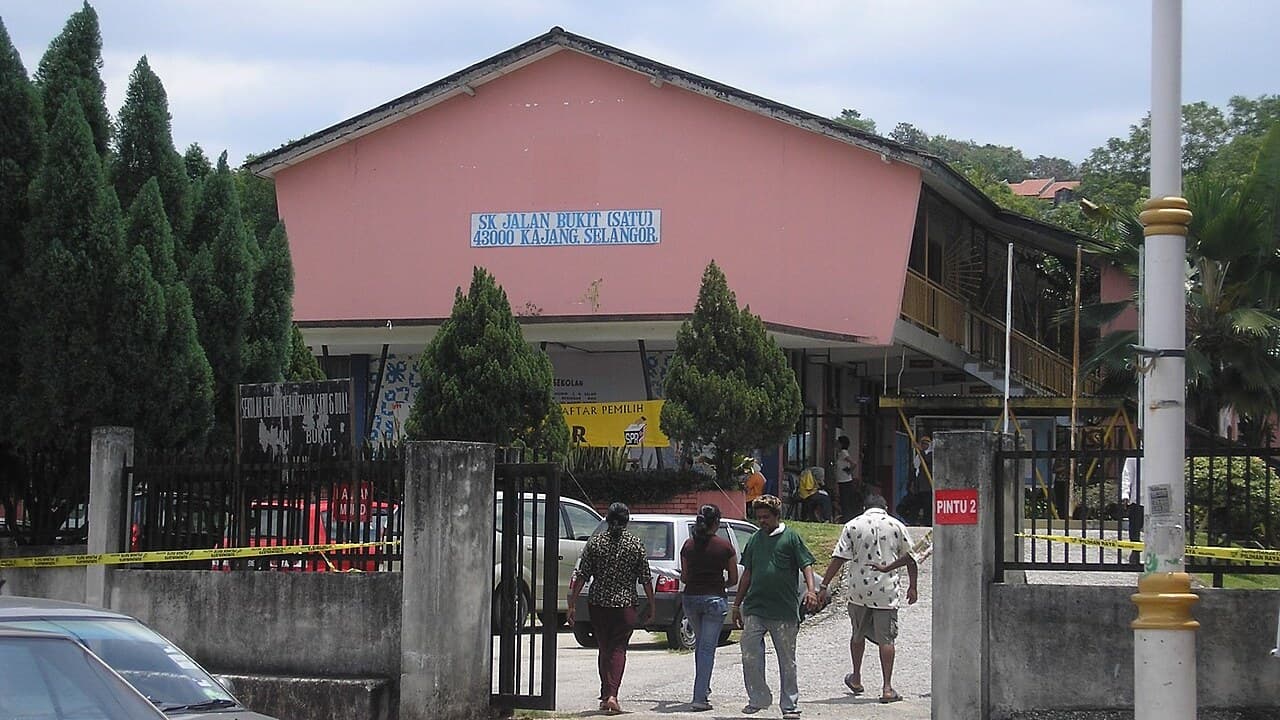
*Cover image: a school in Kajang in use as a polling station during a general election. Photo by Two hundred percent, CC BY-SA 3.0, via Wikimedia Commons.*