Every October the same thing happens: a week of forecasts, wish lists and leaked figures, then a Friday afternoon speech that decides what actually changes. This explainer sticks to what is on the official record as of 25 September 2026. It covers the date, the process, the Finance Ministry's own Pre-Budget Statement, the measures that are already settled, and the timing that decides when a budget line becomes money in your pocket. It does not predict what will be announced.
The date and how a budget becomes law
The Pre-Budget Statement, published by the Ministry of Finance on 18 August 2026, says the government will table Budget 2027 on 9 October 2026. Parliament's calendar puts that inside the Dewan Rakyat's Third Meeting, 5 October to 8 December 2026, 37 sitting days. For comparison, Budget 2026 was tabled on 10 October 2025 and, at RM470 billion, was described as the largest in the country's history.
The speech itself is not the law. Spending goes through the Supply Bill, which MPs debate first at policy stage and then ministry by ministry at committee stage before it is passed. Tax changes go through a separate Finance Bill. That second bill is the one that matters for your tax return, because a relief announced in October does not exist until it is enacted. Budget 2026's new reliefs, for example, were enacted by the Finance Act 2025 (Act 874), which received Royal Assent on 27 December 2025.
What the Pre-Budget Statement says
The statement frames Budget 2027 around three priorities: Raising the Ceiling for national growth, Raising the Floor for living standards, and Driving Reform in Governance. It also says 2026 was shaped by what it calls the energy crisis, with the conflict in West Asia pushing crude above US$100 a barrel.
It then names ten focus areas and asks the public specific questions under each:
- Social justice and development for all, with a focus on Sabah, Sarawak, rural and interior areas, housing affordability and public transport.
- Protecting people against cost-of-living pressures, through STR, SARA and BUDI MADANI, enforcement and Jualan Rahmah.
- Social protection for affected families, including gig and informal workers, retirement adequacy and the care economy, since Malaysia expects to become an aged society by 2030 with about 15% of the population aged 60 and above.
- Education, healthcare and essential services, including congestion at public hospitals and private healthcare costs.
- Spending that delivers the best value, including subsidy targeting and outcome-based monitoring.
- Governance and public service delivery, naming the Government-Owned Entities Bill, the Ombudsman Bill and the Freedom of Information Bill.
- Workers' welfare and decent wages, including TVET, reducing reliance on low-skilled foreign labour and a 60% target for female labour-force participation.
- Home-grown entrepreneurs and Made by Malaysia.
- Investment and high-value jobs, citing the RM10 billion BNM-CGC guarantee scheme and Visit Malaysia Year 2026.
- Energy, food, climate and cyber security, including tying data-centre incentives to energy and water efficiency.
The numbers the ministry chose to publish
A pre-budget statement is partly a scorecard, and the figures in this one are worth knowing because they frame what the government will say it can afford:
- Fiscal deficit: 6.4% of GDP in 2021, down to 3.7% in 2025. New borrowing fell from RM100 billion in 2021 to RM75.6 billion in 2025.
- Subsidy savings: floating chicken and egg prices and targeting electricity, diesel and RON95 subsidies save around RM15.5 billion a year. The statement says the fuel subsidy bill could reach RM40 billion this year.
- Cash aid: STR and SARA together total RM15 billion in 2026, up to RM4,600 per recipient, and SARA for All pays RM100 to 22 million people.
- Fuel: subsidised RON95 at RM1.99 and diesel at RM2.10 a litre, against a RON95 pump price of RM3.62 on 18 August 2026.
- Economy: GDP growth of 6.0% in the second quarter of 2026, inflation of 1.9% in June and unemployment of 2.9% in the first quarter.
What is already decided
Some things you will hear about on 9 October are not new, and knowing which saves confusion:
- The 30 August 2026 National Day measures, effective 1 September: BUDI95 back to 300 litres a month at RM1.99, BUDI Diesel up to 400 litres, the e-Invoice exemption threshold raised from RM1 million to RM3 million, and school maintenance funding up from RM1 billion to RM1.5 billion from January 2027.
- The Finance Act 2025 reliefs, which apply from the year of assessment 2026: childcare relief of RM3,000, learning-disability relief of RM10,000 and a one-year RM1,000 relief for tourist attraction entrance fees. They land on the return you file in 2027.
- The first-home stamp duty exemption for homes up to RM500,000, which covers sale and purchase agreements signed until 31 December 2027, and stamp duty self-assessment from 1 January 2027.
When any of it reaches you
Three different clocks apply. Cash aid starts when the relevant agency opens payment, which is usually announced with its own dates. Price and subsidy changes take effect on whatever date the government sets. Tax reliefs follow the Finance Act: Budget 2026 was tabled in October 2025 and its reliefs apply from the year of assessment 2026. If Budget 2027 follows the same pattern, any new personal relief would apply from the year of assessment 2027, meaning the return you file in 2028, not next year.
How to have your say
The Finance Ministry's Budget Portal at belanjawan.mof.gov.my opened for public proposals on 18 August 2026. When we checked on 25 September 2026 its front page still carried a Submit Your Proposal button and did not print a closing date.
Related reads
- Six cost-of-living measures from 1 September 2026: what changed before the budget.
- New personal tax reliefs for 2026: the Finance Act 2025 changes and when you can claim them.
- BUDI95 fuel quota explained: how the RON95 subsidy works at the pump.
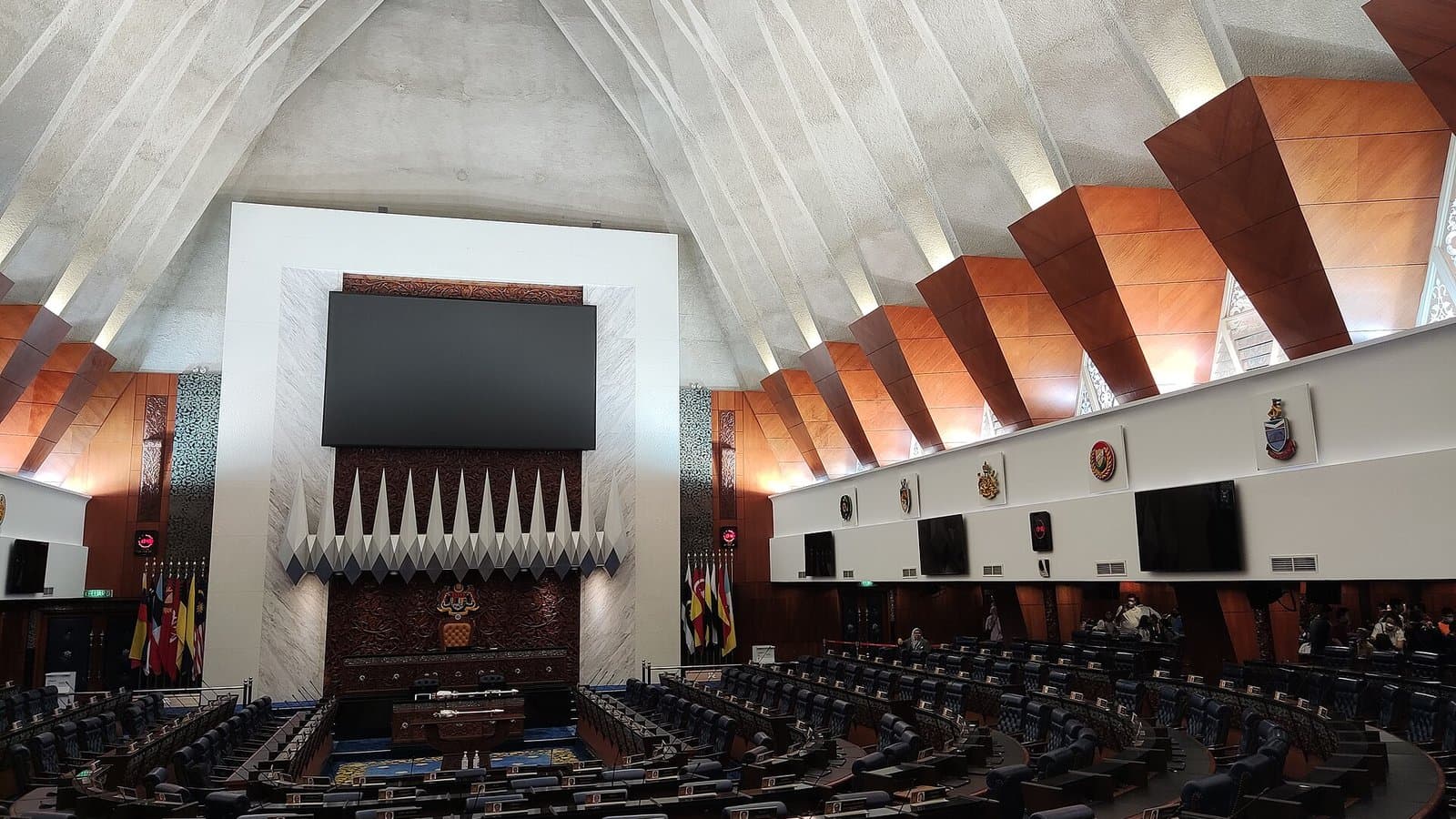
*Cover image: the Dewan Rakyat chamber, Parliament of Malaysia. Photo by Wee Hong, CC BY-SA 4.0, via Wikimedia Commons.*
*Sources, read 25 September 2026: Ministry of Finance, Pre-Budget Statement 2027 (press release, 18 August 2026); Parliament of Malaysia, Dewan Rakyat calendar 2026; Budget Portal, belanjawan.mof.gov.my; Finance Act 2025 (Act 874). Measures announced on 30 August 2026 are as reported in our earlier explainer.*