An OKU card is one of the most useful documents a Malaysian family can hold and one of the least understood. People assume it is automatic after a diagnosis, or that any doctor can sign the form, or that it costs money. None of that is true. This guide is built from JKM's own Garis Panduan Pendaftaran OKU (Pindaan 2019), the amending circular that took effect on 14 August 2020, the current BPPOKU application form, and the MyDaftarOKU page on oku.jkm.gov.my, all read on 25 September 2026.
What registration is, and what it is not
The guideline is plain about three things. Registration is voluntary. It is only for Malaysian citizens. And it is run by JKM together with the Ministry of Health, under the Persons with Disabilities Act 2008 (Act 685) and the 2010 regulations on registration and issuing the OKU card. The Act defines persons with disabilities as those with long-term physical, mental, intellectual or sensory impairments which, in interaction with various barriers, may hinder their full and effective participation in society. The government's MyGov portal lists the service as free, with processing of 5 to 14 working days once documents are complete.
The seven categories, and who has to sign
JKM registers seven categories, each with a code that is printed on the card. This is where most applications go wrong, because the guideline's certification table (Jadual 2 in the form) names a different signatory for each:
- Hearing (DE): an ENT (otorhinolaryngology) specialist, plus confirmation from a medical rehabilitation officer for hearing. For adults the benchmark is a hearing level of 40 dBHL or worse in the better ear, averaged over four frequencies; for children it is 30 dBHL.
- Vision (BL): a medical officer or medical practitioner registered with the Malaysian Medical Council. Low vision means worse than 6/18 but at least 3/60, or a visual field under 20 degrees; blindness is worse than 3/60 or under 10 degrees. Other permanent conditions need an ophthalmologist.
- Speech (SD): an ENT consultant specialist, plus a speech rehabilitation officer. For children the assessment is normally at age five or above.
- Physical (PH): an MMC-registered medical officer or practitioner. The exception is an obvious disability, meaning loss of a hand, foot, thumb or big toe, which JKM's own Assistant Registrar can confirm without a doctor. Short stature counts at under 142cm for men and under 138cm for women.
- Learning (LD): covers global developmental delay (under age five), Down syndrome, ADHD, autism, intellectual disability (age five and above) and specific learning disabilities such as dyslexia. The 2020 circular allows a medical officer or medical practitioner to certify children under 18, replacing the guideline's earlier wording that required a specialist.
- Mental (ME): only a psychiatrist on the National Specialist Register, and the applicant must have been in psychiatric treatment for at least two years. Covered conditions include serious organic disorders such as dementia, schizophrenia and related disorders, mood disorders and severe anxiety disorders.
- Multiple (MD): more than one type, each certified under its own category.
For adults, the form also scores daily functioning across seven domains such as self-care, mobility and cognition. A person qualifies if they have difficulty in at least three domains at level one, or at least one domain at level two. That scale does not apply to the vision, hearing, speech or learning categories, or to children.
How to apply
- Get the form. Download BPPOKU (Pindaan 2/2019) from oku.jkm.gov.my or collect it at a district welfare office.
- Get it certified. Take it to a government or private clinic or hospital, where the right doctor completes the diagnosis sections and signs and stamps it.
- Submit. Hand it in at any Pejabat Kebajikan Masyarakat Daerah with a copy of your MyKad, MyKid or birth certificate, plus one passport photo if you hold a MyKid or birth certificate. Or start on MyDaftarOKU: for an obvious disability you upload a photo showing it or go to the district office, and for anything else you print the form, get it certified and then submit it at the office.
- Keep the slip. The acknowledgement slip says that if you hear nothing within 30 days of a complete application, you should contact the office.
- Collect the card. Once the Registrar approves, the card is printed at the state JKM office and sent to your district office for collection. If you need proof sooner, ask for the temporary OKU identity document, valid for 30 days.
Replacing a lost or damaged card, or updating your address, needs no doctor and no Registrar approval, but you must change the address on your MyKad first. Changing category needs a newly certified form. If an application is rejected, you can appeal by letter to the Chief Registrar with a social report, and the Minister decides. Registration ends on death or recovery, and the card must be returned to a district office.
What the card leads to
Income tax. LHDN's relief table for the year of assessment 2025 lists RM7,000 for a disabled individual (RM6,000 for 2024), RM6,000 for a disabled spouse (RM5,000 for 2024) and RM8,000 per disabled child (RM6,000 for 2024), with a further RM8,000 for an unmarried disabled child aged 18 and above studying at diploma level or higher. Basic supporting equipment for a disabled self, spouse, child or parent is up to RM6,000. The table does not spell out the proof LHDN accepts, so keep your JKM registration record with your tax papers.
Public transport. Prasarana's Rapid Mesra Pass, formerly OKU Smile, gives registered OKU cardholders free rides on all Prasarana trains and buses. Its FAQ dated 20 June 2026 says the OKU concession card costs RM10 at Rapid KL, issued the same day at the Pasar Seni Bus Hub or Conlay MRT counters (Monday to Friday, 9am to 4pm), or within three working days online, and RM5 at Rapid Penang. You must apply in person with your original MyKad and JKM card, and keep at least RM5 on the card. Companions pay the normal fare.
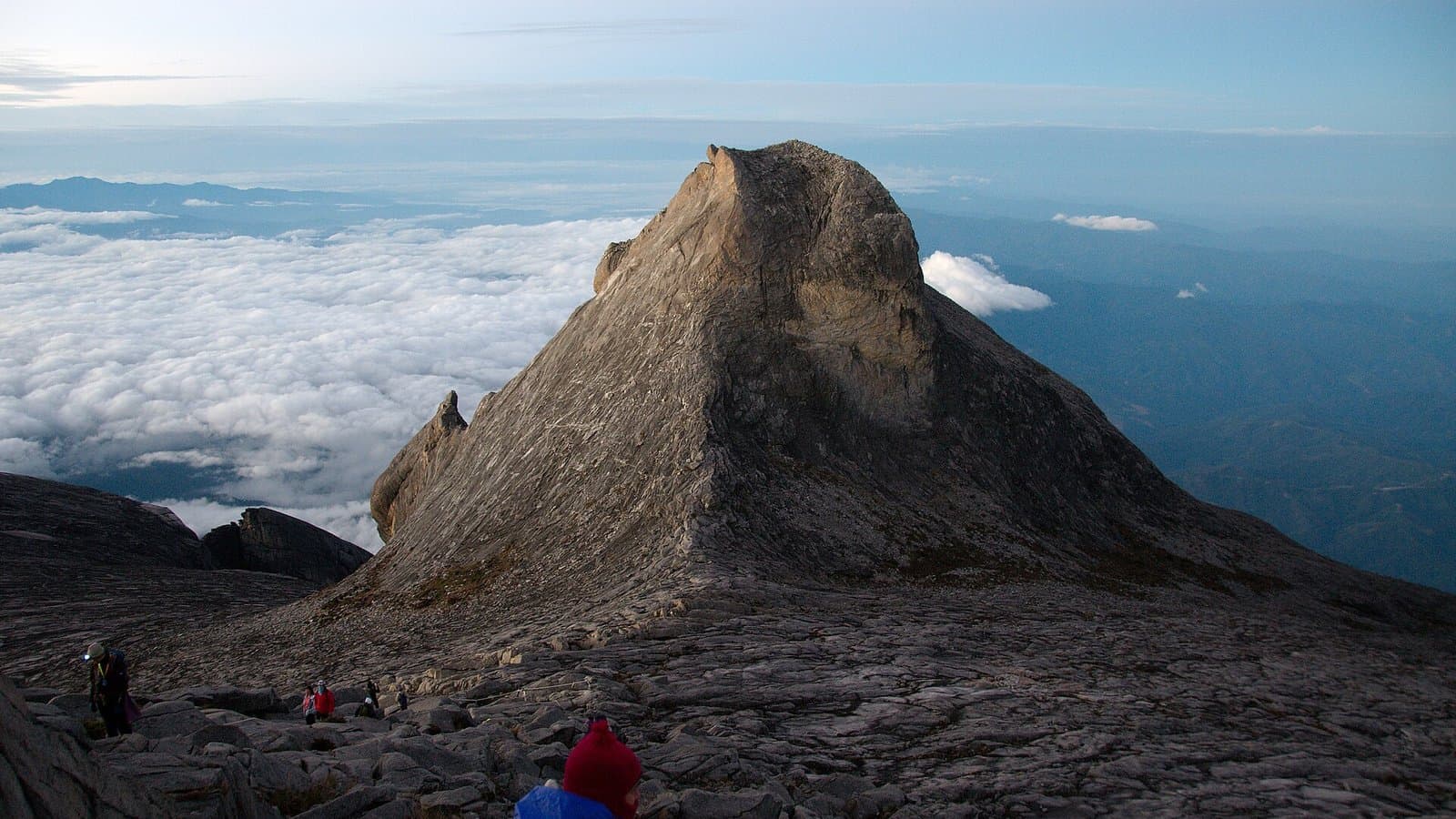
Parks. Sabah Parks, for example, waives the Kinabalu Park conservation fee for Malaysians with disabilities.
Related reads
- Rapid KL travel passes 2026: the other concession and monthly passes on Prasarana's network.
- New personal tax reliefs for 2026: including the learning-disability relief rising to RM10,000.
- Replacing a MyKad in 2026: do this first if your address has changed.
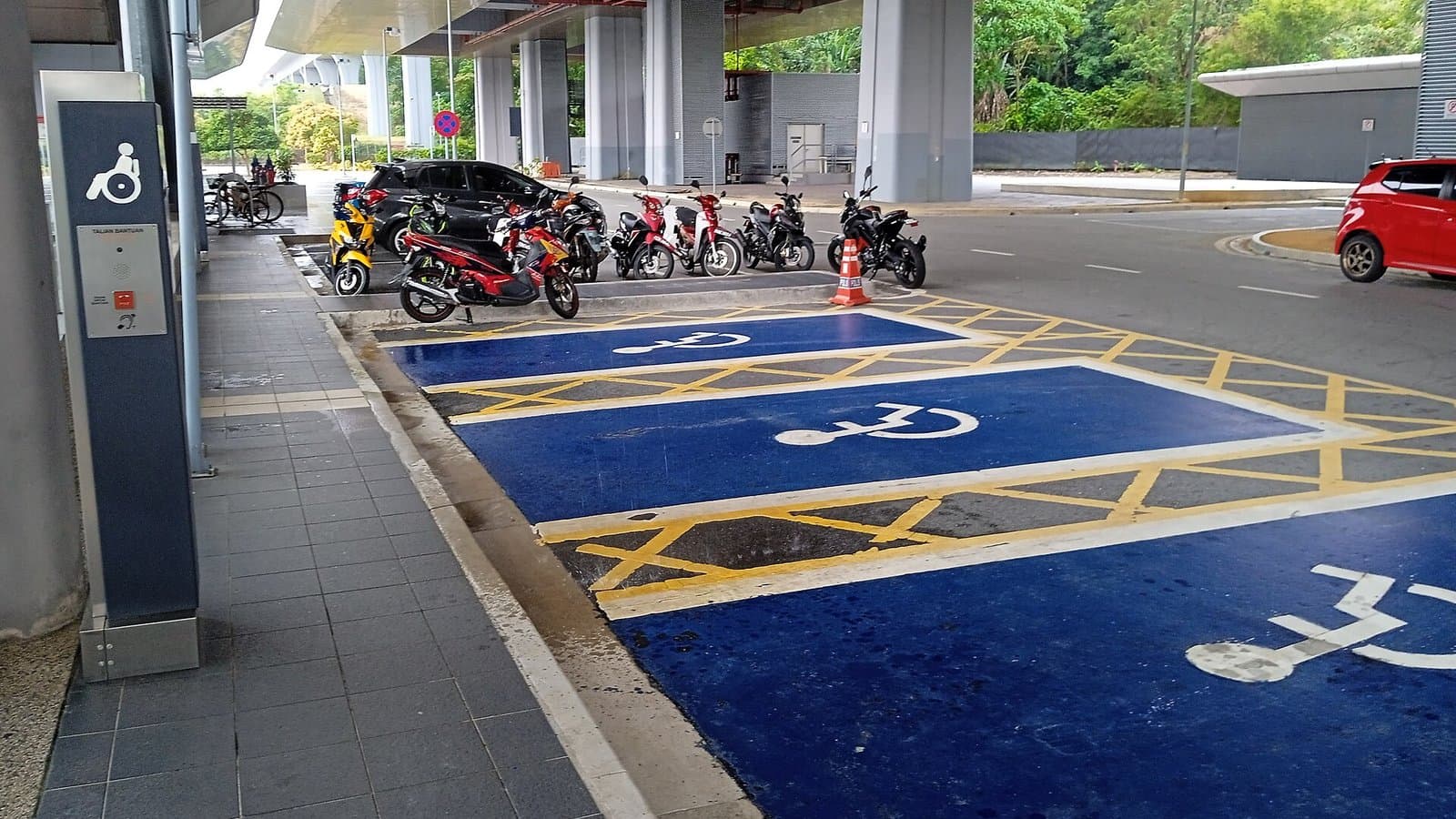
*Cover image: accessible parking bays and a help point at Kwasa Sentral MRT station. Photo by Wiki Farazi, CC0, via Wikimedia Commons.*
*Sources, read 25 September 2026: JKM, Garis Panduan Pendaftaran OKU (Pindaan 2019) and Surat Pekeliling Ketua Pengarah Kebajikan Masyarakat Bil 8 Tahun 2020; BPPOKU (Pindaan 2/2019) form and MyDaftarOKU page, oku.jkm.gov.my; MyGov portal, Pendaftaran OKU; LHDN tax relief table, hasil.gov.my; Prasarana, Rapid Mesra Pass FAQ updated 20 June 2026; Sabah Parks, Mount Kinabalu climbing guide.*