> Quick view (updated 1 October 2026): the new-generation MyKad has been issued since 17 September 2026. You can get it on the same day at 40 JPN and UTC offices with their own printing centres, or in about five working days at any other branch. It costs RM10 to switch, and nobody is required to: JPN's FAQ says existing holders need not change unless the card is damaged, and it advises a change only for KPP, KPT and MyKad without a ghost image. The card carries 53 security features (up from 23) and will not work as a Touch 'n Go card. Existing cards stay valid, including for subsidies. Losing your IC still costs RM110, then RM310, then RM1,010. Before September, nobody had the new card: the 1 June start was a supply contract, and JPN printed from old stock until a 26–31 August changeover.
Where things stand on 1 October: the card is out
*This article was first written on 26 August 2026, when nobody had the new card. That has changed, and this section is the update.*
JPN unveiled the MyKad Generasi Baharu on 16 September 2026. It calls it the seventh-generation Malaysian identity card, and it has issued the card in stages since 17 September across Peninsular Malaysia, Sabah, Sarawak and Labuan. The points that matter:
- Same day at 40 offices. JPN branches and Urban Transformation Centres (UTC) with their own printing centre produce the card on the spot. Everywhere else it takes about five working days.
- RM10 for a standard change to the new card, the same processing fee as before.
- 53 security features, up from 23. The front has a dynamic security hologram and a transparent window. The back has an enforcement QR code and a dual-interface chip that reads by contact or contactlessly (NFC). The 12-digit IC number format does not change.
- No Touch 'n Go. JPN's FAQ says the facility is not provided, and it points users to the TNG eWallet or a separate TNG card.
- Nobody has to rush. JPN's FAQ says existing holders do not need to change just because the new card has been introduced, as long as the card is not damaged.
On 15 September in Port Dickson, Home Minister Datuk Seri Saifuddin Nasution Ismail asked people not to crowd JPN offices. He noted that around 24 million MyKads are in circulation and that JPN issues 180,000 to 200,000 cards a month. He also said subsidy balances are unaffected, because the records are linked to the existing MyKad.
The 40 same-day offices
These are the offices listed in JPN's own map. Every other branch takes about five working days.
- Perlis: UTC Perlis
- Kedah: UTC Kedah, JPN Kedah, UTC Sungai Petani
- Penang: JPN Seberang Perai Utara, UTC Pulau Pinang, JPN Pulau Pinang, UTC Seberang Perai
- Perak: UTC Perak, JPN Perak
- Selangor: UTC Selangor, JPN Selangor, JPN Petaling Jaya
- Kuala Lumpur: UTC Keramat, UTC Kuala Lumpur, UTC Sentul, JPN Kuala Lumpur
- Putrajaya: JPN Putrajaya
- Negeri Sembilan: UTC Negeri Sembilan
- Melaka: JPN Melaka, UTC Melaka
- Johor: UTC Pasir Gudang, UTC Johor, JPN Johor
- Pahang: JPN Pahang, UTC Pahang
- Terengganu: UTC Terengganu, JPN Terengganu, JPN Dungun
- Kelantan: JPN Kelantan, UTC Kelantan
- Sarawak: UTC Sibu, UTC Miri, JPN Sarawak, UTC Sarawak
- Sabah: UTC Keningau, UTC Sabah, JPN Tawau, JPN Sandakan
- Labuan: JPN Labuan
Before the launch: the 26–31 August printing pause
In the last week of August, JPN published a notice, Pemakluman Peralihan MyKad Generasi Baharu. It said MyKad printing nationwide would face temporary disruption from 26 to 31 August 2026 while the department moved from the existing card structure to the new one. It asked anyone without an urgent need to postpone replacements. It also asked parents of 12-year-olds applying for a first MyKad to wait, so the child would receive the new card. That instruction showed that the new card was not yet being issued, which most of the June headlines had got wrong.
What actually launched on 1 June — and what did not
The headlines on 1 June 2026 said the new MyKad was rolling out. The card itself was not.
What began on that date was the supply contract. NexG Bhd holds a six-year contract worth RM732.72 million, running 1 June 2026 to 31 May 2032, on a pay-per-issue basis: the government pays RM40 for each card actually issued to an applicant, rather than for a print run. JPN also set out the shape of the roll-out — first at JPN headquarters in Putrajaya plus 18 selected offices, 19 locations in total, through the JPN appointment system, before expanding nationwide in stages.
But a plan is not a card. In a statement on 29 May 2026, JPN said the roll-out of the new-generation MyKad would only begin after its official launch by Prime Minister Datuk Seri Anwar Ibrahim, on a date yet to be announced. In the end, it took until mid-September for the card to reach the public.
And on 8 June 2026, in Putrajaya, Home Minister Datuk Seri Saifuddin Nasution Ismail put it beyond doubt:
> "We will continue issuing passports and identity cards using the existing stock until it is exhausted."
He added that the start of a new contract "does not mean we should destroy stock that is still available", and said the changeover would be managed practically to avoid wasting government resources. The existing stock, he said, was enough for another two to three months, against roughly 35,000 MyKad applications a month — most of them children turning 12.
Now do the arithmetic. Two to three months from 8 June lands in August or September 2026. That is exactly when JPN scheduled its nationwide printing changeover. The 26–31 August disruption was not a fault or an outage. It was the existing stock running out on the schedule the minister described in June, and the new card followed on 17 September.
What this means for you in one line: if you applied for, replaced or renewed a MyKad between 1 June and 16 September 2026, the card you were handed is the existing-structure card. That is not an error and it is completely valid — including, as JPN has repeatedly stressed, for subsidies and government aid.
The feature the new card quietly drops: Touch 'n Go
This is the change with the most day-to-day consequence, and it has been badly under-reported next to the security-feature count.
The new MyKad will not function as a Touch 'n Go card. JPN director-general Datuk Badrul Hisham Alias confirmed this in May 2026 in remarks carried by Bernama. No reason was given at the time. JPN's explanation since is that the built-in TnG function is no longer widely used and has become less relevant now that dedicated payment cards, e-wallets and mobile payment platforms are commonplace.
For anyone who has spent twenty years tapping their IC at a toll plaza, a parking gate or a train barrier, two practical points follow:
- Your current card is unaffected. The TnG function on the MyKad in your wallet keeps working, and nothing in law requires you to give that card up. For most people, that means no change for years.
- When you do change over, budget for a separate card. Once you hold the new-generation MyKad, tolls, parking and transit need a standalone Touch 'n Go card or another payment method.
The part that got lost in the noise
Within days, three claims were circulating widely: that everybody must replace their card, that the new card costs more, and that JPN was about to start fining people over their addresses. Taken against the official record, none of them holds.
Existing cards remain valid. The government has said it does not intend a full or rushed replacement of cards already in circulation. Cards currently in use stay valid for all official transactions including subsidy redemption and government assistance — which is the line that matters most, because that is where people were worried about being cut off.
But three groups do have to change. Holders of the old plastic identity card (KPP), holders of the high-quality identity card (KPT) and holders of Version 1 MyKad are required to replace their cards with the New Structure MyKad in stages within three years. These are the oldest documents still in circulation. JPN's September FAQ lists the same three groups as the ones advised to change, and it describes Version 1 as MyKad *tanpa ghost image*, the card without the faint second portrait. If you are carrying one, this is your notice. If you are not, nothing is being asked of you.
Anyone else can switch if they want to, for RM10. There is no deadline, and JPN would rather you went when your card is damaged, lost or due for an update anyway.
Your aid is not at risk. This was the fear that drove most of the panic, and JPN addressed it directly in a statement in May 2026: the list of aid recipients in the system remains intact, and the migration of information happens automatically within the department's central database, so assistance continues to reach eligible recipients. JPN named the programmes people were worried about — SARA and BUDI95 — and asked the public not to be misled by claims that aid stops if a card is not replaced immediately. If you are on the RON95 subsidy quota, your MyKad is the credential the whole thing runs on, and nothing about this changeover interrupts it. JPN's September FAQ says it again: SARA balances and eligibility are recorded in the SARA system and are not stored on the card, and the new card can be used for aid verification and subsidy redemption.
How long the whole thing takes. The Home Minister has described the change-over as running in four phases, with all citizens required to switch only after the last of them. The first phase covers production and supply; the second covers issuing the new card for applications and replacements. JPN has not published dated milestones for the later phases, so treat any specific end-date you see quoted online as unsourced.
What it costs, in both directions
The fee to you has not moved. In a written parliamentary reply on 23 June 2026, the Home Minister stated that the fee charged to applicants remains at RM10 for processing, with no increase arising from the new card.
The cost to the government has. The payment rate is fixed at RM40 per card, and on an estimated issuance of three million cards a year, the implementation cost is put at roughly RM120 million a year. The structure matters: this is a pay-per-issue arrangement under the NexG Bhd contract, so the government pays for cards successfully issued to applicants, not for cards printed and stockpiled — which is also why using up the old stock first was the cheap option rather than an embarrassment.
Set those two numbers side by side and the "revenue exercise" theory does not survive: the public pays RM10 for something the state pays RM40 to produce.
The fees that actually catch people
The RM10 is the least interesting number in this article. JPN's published schedules for replacement are where the real money sits, and they escalate sharply.
Lost identity card, citizens:
- First loss — RM10 application fee plus RM100 processing = RM110
- Second loss — RM10 plus RM300 = RM310
- Third or subsequent loss — RM10 plus RM1,000 = RM1,010
Lost identity card, non-citizens (MyPR and MyKAS): the same processing ladder of RM100, RM300 and RM1,000, on a RM40 application fee — so RM140, RM340 and RM1,040.
These are JPN's Payment Schedule 4A (citizens, MyKad and MyTentera) and Payment Schedule 4B (non-citizens, MyPR and MyKAS). Both were re-read from jpn.gov.my on 1 October 2026 and are unchanged — the new card has not moved any of them.
A police report is required for a lost card, and JPN specifies that it must clearly state the details of the incident and of the card that was lost.
Damaged identity card: RM10 for citizens and RM40 for non-citizens — and a card damaged within 12 months of the date of issue is replaced without charge.
Change of address: RM10 for citizens, RM40 for non-citizens, because a new card has to be issued.
One rule applies across all of these: refunds are not considered once an application has been processed, including when the lost card is later recovered.
Regulation 15, and the RM20,000 that was never a campaign
The address rule is old and it is real. Regulation 15 of the National Registration Regulations 1990 provides that a holder of an identity card who changes their current place of residence to another place of residence for a period of 90 days or more shall change the address on the identity card. JPN also specifies what will not be accepted: the address must be a permanent residential address in Malaysia, and a workplace, office, organisation address or PO box is not allowed.
What went viral in mid-2026 was something else — a claim that the government had launched an enforcement drive against people who had not updated their addresses, with penalties of up to RM20,000, three years' imprisonment, or both.
On 23 July 2026 JPN put out a statement saying plainly that no special campaign is being conducted to force citizens to update their MyKad addresses, that no special operation is under way to take action against those who have not, and that the government is not profiting through the enforcement of Regulation 15, a rule that has been in force for a long time. The department's position is that citizens are encouraged to keep the address current, not that a dragnet is coming. It also confirmed the RM10 replacement fee in the same breath.
How to actually do it
First, decide whether you need to go at all.
- Card intact, and not a KPP, KPT or MyKad without a ghost image: you have nothing to do. Your card stays valid, Touch 'n Go included.
- Holding a KPP, KPT or MyKad without a ghost image: plan a visit, because JPN advises you to change.
- Lost, damaged or address changed: go as normal. Replacements are now issued on the new card.
- A child turning 12: apply as usual. The first MyKad is now the new-generation card.
- Want the new card anyway: it costs RM10, but there is no deadline. Skip the first-weeks rush and use one of the 40 same-day offices.
For a lost or damaged card, you can attend any JPN counter, or use the online Sistem Gantian MyKad at gantianmykad.jpn.gov.my if you are a Malaysian citizen and need no change to your photograph or particulars. The portal now requires a MyDigital ID login, and online applications accept credit card payment only. JPN also lists a phone service on 03-8880 8066 for the same limited category. A police report is required for a lost card, stating the incident and the details of the card.
For an address change, JPN's own guidance is a counter visit with the original identity card and proof of address — an electricity, water, sewerage or other utility bill, a property tax assessment, an income tax form, a sale or tenancy agreement, or an official letter from a local authority or employer, in original or certified copy.
For the new-generation card specifically, go to a JPN or UTC counter, or book through the JPN appointment system at www.jpn.gov.my. Choose one of the 40 printing offices above if you want the card the same day.
How to think about the whole thing
Strip out the noise and the position is simple. You are not being asked to replace anything unless you hold a KPP, a KPT or a Version 1 MyKad without a ghost image. If you do, JPN advises the change and it costs RM10. Your card still works for everything, subsidies included. The new card is available now, on the same day at 40 offices, but there is no deadline for anyone else, so there is no reason to queue in the first weeks. And the one real trade-off is that the new card is not a Touch 'n Go card. That is worth a moment's planning, and nothing more.
Where the information came from
The 16–17 September launch, the 40 same-day printing offices, the five-working-day turnaround, the 53 security features and JPN's answers on Touch 'n Go, SARA, subsidies and who needs to change were read from JPN's MyKad Generasi Baharu page and its FAQ infographics at jpn.gov.my on 1 October 2026. They were also reported by Lowyat.NET, SoyaCincau, The Sun and Malay Mail on 16–17 September. The Home Minister's 15 September remarks in Port Dickson (24 million cards in circulation, 180,000 to 200,000 issued a month) were reported by Bernama and Malay Mail. The RM10 fee for a switch comes from JPN's FAQ as reported on 18 September, and matches the 23 June parliamentary reply. The MyDigital ID login on the online replacement portal was checked at gantianmykad.jpn.gov.my on 1 October 2026. The 26–31 August 2026 printing disruption, the advice to postpone non-urgent replacements and the guidance to parents of 12-year-olds were read from JPN's own notice, Pemakluman Peralihan MyKad Generasi Baharu, published at jpn.gov.my and dated 26 August 2026, and were also reported by The Star, Free Malaysia Today and Kosmo on 25 August 2026. Fee schedules for lost, damaged and address-change applications — Payment Schedules 4A and 4B — the required documents and the online and phone channels were re-read from JPN's service pages at jpn.gov.my on 26 August and again on 1 October 2026. JPN's 29 May 2026 statement that the roll-out begins only after the Prime Minister's official launch was reported by Lowyat.NET. The Home Minister's 8 June 2026 remarks in Putrajaya on using up existing stock, the two-to-three-month estimate and the 35,000 monthly applications were reported by The Star and Malay Mail. The NexG Bhd contract terms — RM732.72 million, 1 June 2026 to 31 May 2032, RM40 per card on a pay-per-issue basis — and the RM10 fee and RM120 million annual figure come from the Home Minister's written parliamentary reply of 23 June 2026, reported by The Edge Malaysia and Free Malaysia Today. The removal of Touch 'n Go functionality was confirmed by JPN director-general Datuk Badrul Hisham Alias in May 2026 via Bernama, reported by paultan.org; JPN's reason was reported by Lowyat.NET. The 1 June 2026 launch details, the 53-versus-23 security element count, the three-year requirement and the 19 launch locations were reported by The Star and Malay Mail on 1 June 2026. JPN's rebuttal of the address-enforcement claim was carried by Bernama on 23 July 2026. Fees and procedures are set by JPN and can change; confirm at a counter or on jpn.gov.my before you act on anything here.
Related reads
- BUDI95 and the 300-Litre Quota — the subsidy your MyKad unlocks, and why JPN had to promise the recipient list migrates automatically.
- Renewing Your Malaysian Passport in 2026 — the same supply contract and the same "use up existing stock" instruction cover the passport book.
- Renewing Road Tax and Your Driving Licence Online — the other document renewal most people put off until it is urgent.
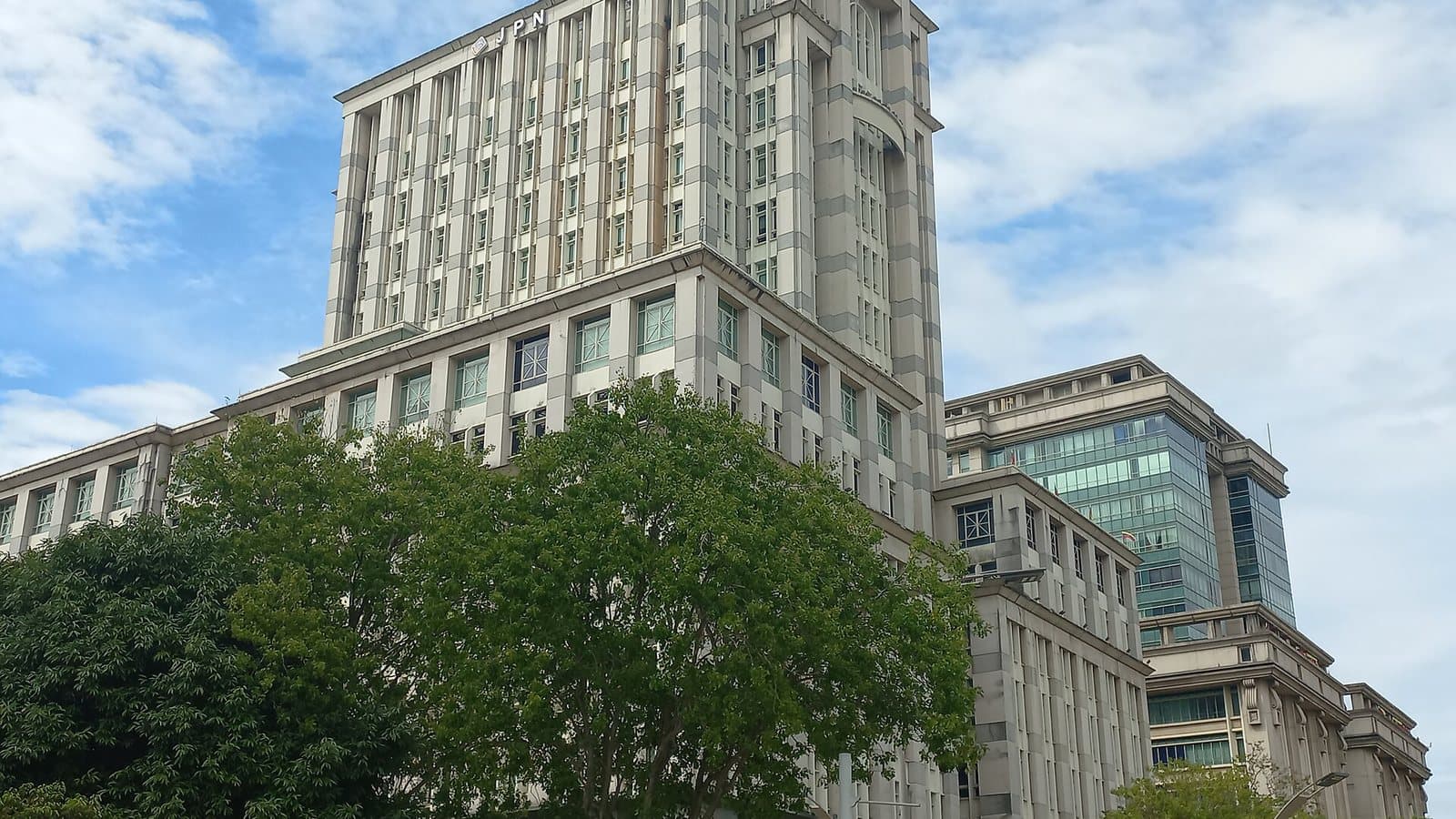
*Cover image: Farishhamka, CC BY 4.0, via Wikimedia Commons — the JPN headquarters in Putrajaya*