What is yong tau foo, and why KL and PJ do it differently
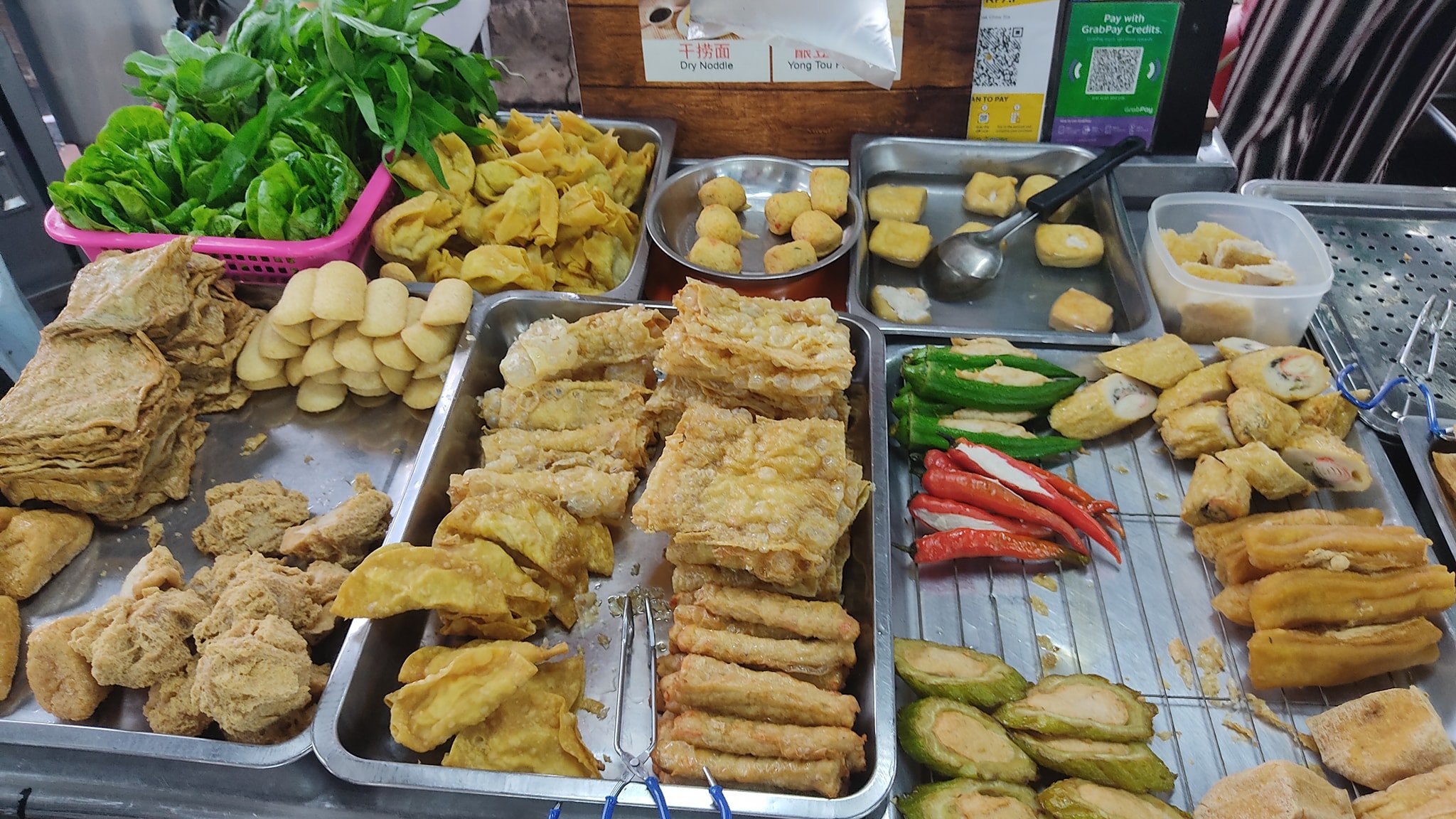
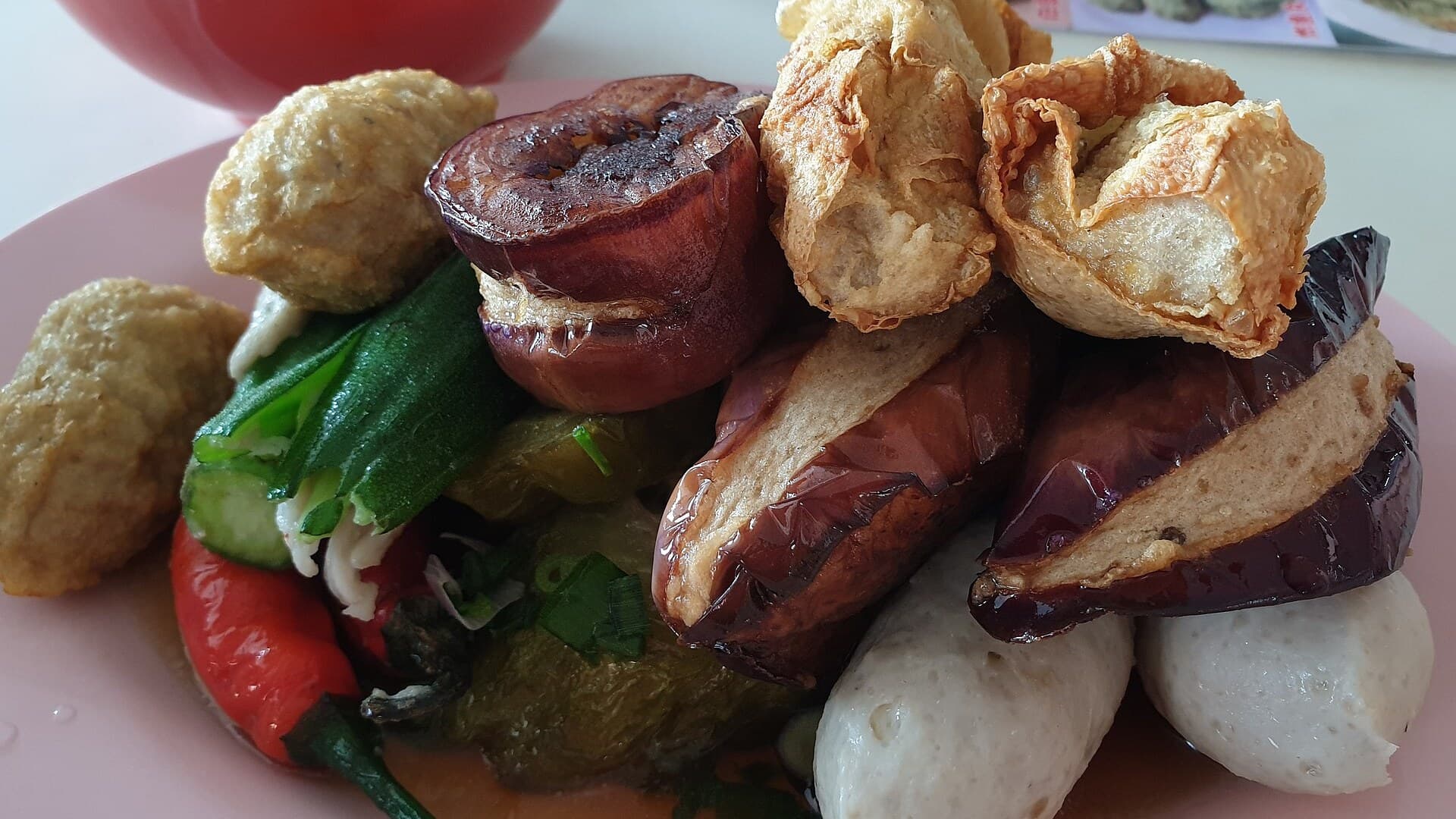
Yong tau foo (酿豆腐) began as a Hakka dish — vegetables and tofu stuffed with a paste of minced fish or fish-and-pork, poached or fried, then served either dry with a sweet-and-spicy sauce or ladled into a light broth. In the Klang Valley it has splintered into distinct camps: old-school Hakka stalls that still stuff their own tofu by hand behind the counter, self-service pick-and-pay setups where you fill a tray and pay by the piece, and the Ampang variant, known for its distinctive wok-searing technique. None of it is quite the same as Singapore-style yong tau foo noodle-soup bowls — expect much more emphasis on the stuffing itself, less on a fixed noodle format.
Dry versus soup: two ways to eat it
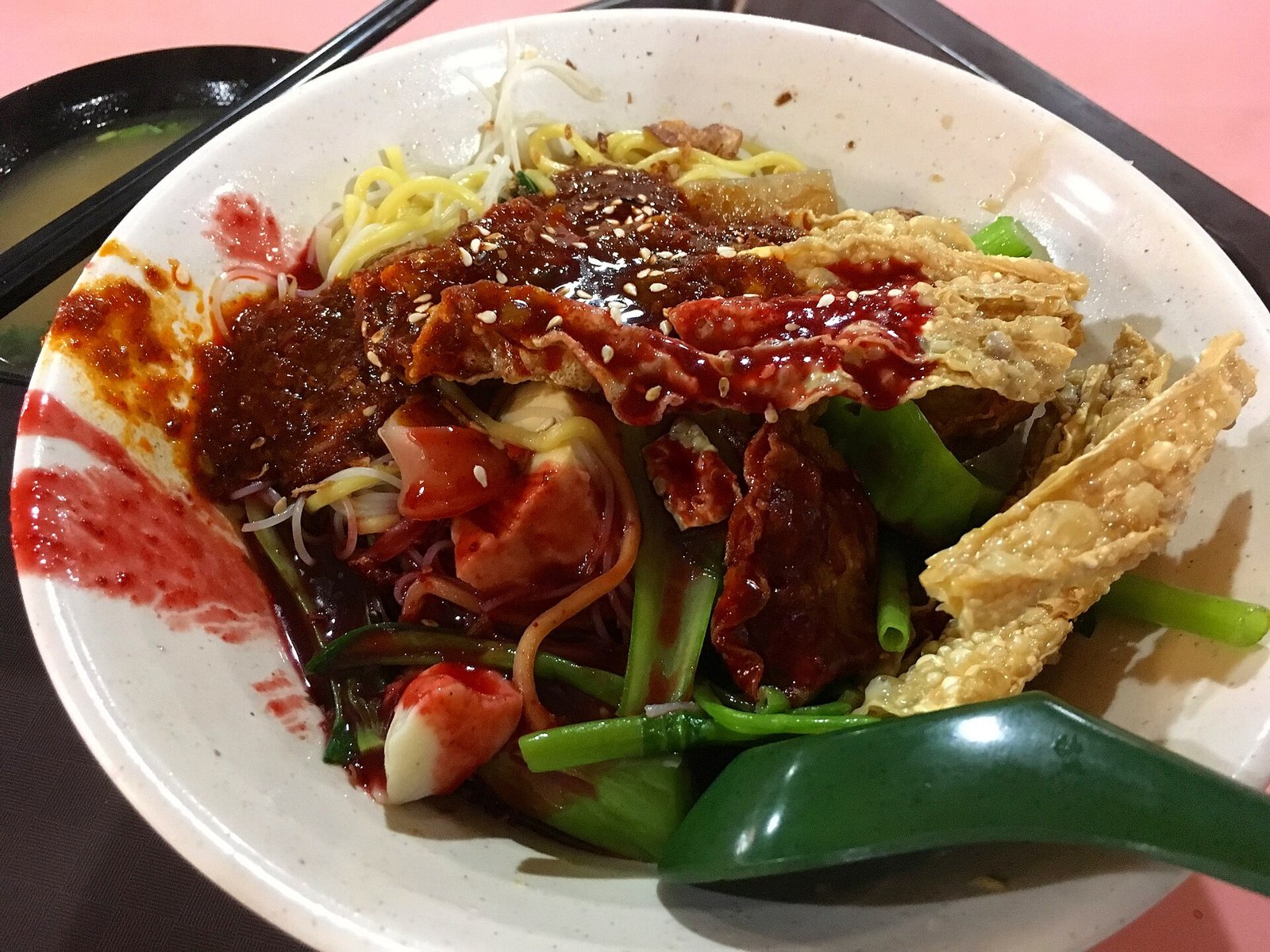
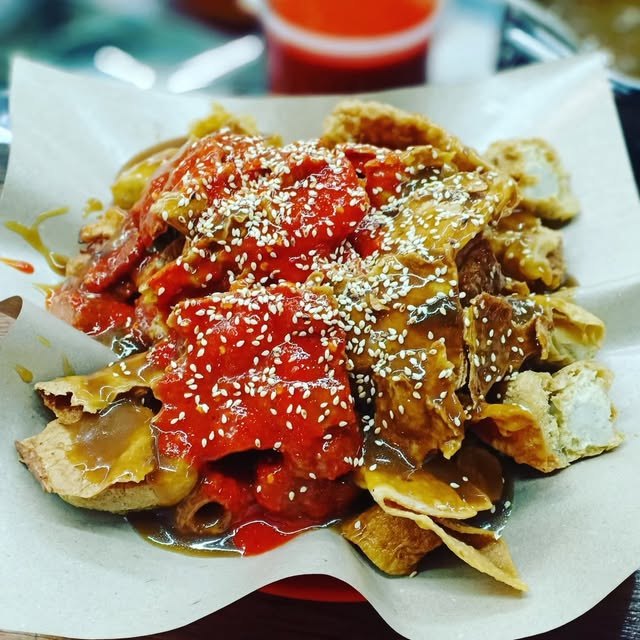
Most stalls on this list let you choose. Dry-style comes with a sweet bean-based sauce (sometimes cut with chilli), tossed at the table — this is how Petaling Street's Madras Lane serves it, and it's the format most associated with Cantonese and Hakka hawker stalls in the older parts of KL. Soup-style ladles the same pieces into a clear pork or ikan bilis broth, closer to what you'll get at Hup Soon in SS3 or Ah Keong in Damansara Uptown. A few, like Fatty Mok and 126 Hakka, will do either depending on what you order.
Ampang-style: the wok-seared original
Ampang's version of yong tau foo diverges from everything else on this list. At Foong Foong Restoran, running on Jalan Merdeka since 1974, pieces are seared in a screaming-hot wok, rocked over open flame, then splashed with stock and simmered briefly before serving — a technique locals say hasn't been replicated the same way anywhere else in the Klang Valley. It's also closely associated with sui kow (dumplings) served fried or in soup, and remains a family-run operation that fills up well before noon. It trades 9am to 4pm and closes every Tuesday, and at RM2.20 a piece plus 6% service tax it is the priciest per piece on this list — the wok work is what you are paying for.
KL cluster: Petaling Street to Kepong and Salak South
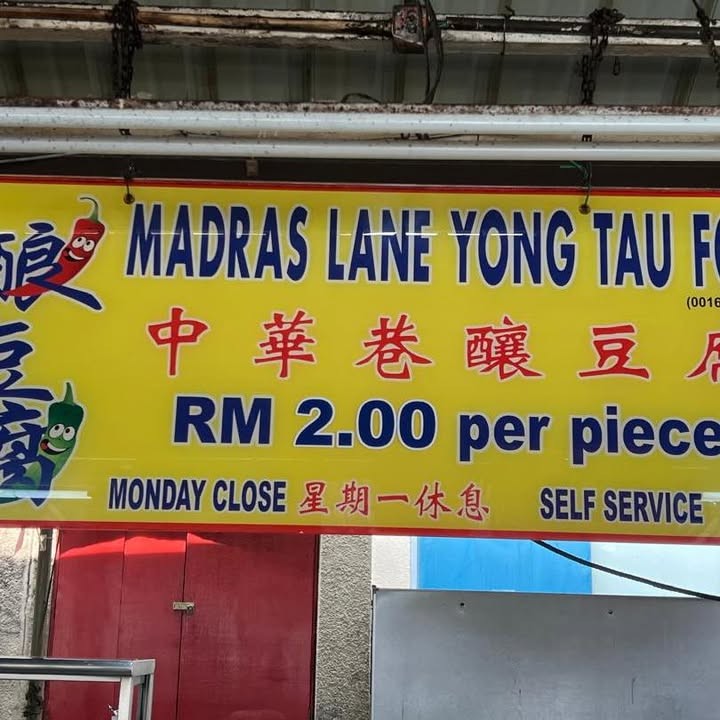
Inside KL proper, the spread runs from Chinatown to the northern and southern edges of the city. Madras Lane Yong Tau Foo has operated out of the Petaling Street wet market for over 50 years, cooking each piece fresh in front of customers rather than pre-frying and reheating. Up north in Kepong's Taman Intan Baiduri, 126 Hakka Yong Tau Foo — relocated from its original Paramount Garden, PJ address — still offers the increasingly rare choice of a pork-and-salted-fish filling alongside the standard fish paste. South in Salak South Garden, Fatty Mok Hakka Yong Tau Foo has grown from a roadside stall into a two-shoplot restaurant over more than three decades, running roughly 20 varieties of stuffed items self-service style, alongside its equally well-regarded curry mee — though it is the one entry here you cannot visit today, having closed for renovation on 3 August 2026 with a reopening its own notice puts at mid-September. And inside The Gardens Mall, Pulau Ketam Yong Tau Foo gives shoppers a mall-format, air-conditioned version of the same self-service model — pick from a tray, pay at the till.
PJ cluster: SS3, Damansara Uptown and Taman Paramount
Petaling Jaya's picks lean toward kopitiam-attached stalls rather than standalone shops. At Restoran Hup Soon in SS3, Kelana Jaya, the yong tau foo counter is one of several hawker stalls sharing the coffeeshop and is popular enough to sell out most mornings — but the whole shop shuts on Tuesdays, which is the easiest way to waste a drive out here. In the Damansara Uptown hawker centre, Ah Keong Yong Tau Foo has been run by the same family for several decades and sticks to fish-only stuffing with no meat, making it a practical stop for diners avoiding pork even without formal halal certification; it closes on Sundays and breaks for two hours between 3pm and 5pm. And in Taman Paramount, Yong Tau Foo Khong Kee pairs its yong tau foo with a well-liked century-egg-and-dried-oyster porridge — go to 57, Jalan 20/7 rather than the 22, Jalan 20/16A address its own Facebook page has been carrying since it stopped posting in February 2021.
Rest days and hours: the part that actually ruins trips
Yong tau foo is a morning-and-lunch trade, and the stalls that have been going longest keep the shortest hours. Four of the eight here take a weekly day off, and no two take the same one. Madras Lane closes Mondays, and even on the days it opens the window is only 10.30am to 2pm (10am to 2pm at weekends) — the tightest on this list. Foong Foong closes Tuesdays and runs 9am to 4pm. Restoran Hup Soon also closes Tuesdays, so a Tuesday in the Klang Valley knocks out both the Ampang benchmark and the SS3 kopitiam at once. Ah Keong closes Sundays and splits its day into 12pm–3pm and 5pm–11pm, meaning a 4pm arrival finds a shuttered stall even mid-week.
The three that never close are 126 Hakka (11am–9pm, now listed on all seven days rather than the Friday-to-Wednesday pattern older round-ups give), Khong Kee (9am–9pm) and Pulau Ketam at The Gardens Mall (10am–10pm, on mall hours). Those three, plus Ah Keong outside its afternoon break, are also the only realistic dinner options — everything else on this list is finished by late afternoon.
On top of the weekly pattern, Fatty Mok is closed altogether: its own Facebook notice, posted 4 August 2026, says closed for renovation from 3 August with a reopening expected mid-September 2026. Its Instagram bio was still advertising 8am–10pm daily when we checked on 4 September, which is a good reminder that a stall's social bio is not a schedule.
Self-service vs hawker-style: how ordering works
Two formats dominate. At classic hawker stalls (Madras Lane, Hup Soon, Foong Foong, Ah Keong, Khong Kee), you typically tell the stall what you want or fill in a paper order slip, and it's cooked or assembled to order. At self-service counters (Pulau Ketam, and to an extent Fatty Mok and 126 Hakka), you pick items straight off a tray or display counter yourself, and staff count pieces at the till. Neither is inherently cheaper — pricing runs per piece either way — but self-service tends to be faster for solo diners and less predictable for portion control if you're not used to eyeballing quantities.
What We Left Out
126 Hakka Yong Tau Foo's original Paramount Garden, PJ storefront came up repeatedly in older coverage, but reporting from late 2025 confirms that location has closed and the stall now operates solely from Kepong — so we've listed only the current address. A stall referred to online simply as "Yong Tau Foo Hawker" on Jalan Perak, KL kept surfacing in older round-ups, but the most recent review we could find dated to 2016, with no fresher confirmation it's still trading, so we left it off rather than risk sending readers to a shuttered stall. 3A Yong Tau Foo & Cheong Fun is the halal-friendly, air-conditioned name almost every KL round-up reaches for, and this article did too — but its Petaling Jaya premises at 31, Jalan SS 21/56b, Damansara Utama are now marked permanently closed, so any list still calling 3A a PJ option is sending readers to a dead address. The business does survive: a 3A Yong Tau Foo & Cheong Fun trades at 75F, Jalan Foss, off Jalan Sungai Besi, 55200 Kuala Lumpur, rated 3.9 from 441 reviews, in a higher RM20–RM40 per-person bracket than the hawker stalls above. Halal certification in Malaysia attaches to a specific premises rather than to a brand, so if this matters to you, check the certificate displayed at that outlet rather than relying on the reputation of the closed one. We also came across a newer-generation stall, Restoran Sungai Way Hakka Yong Tau Foo in PJ, flagged in a Malay Mail piece from mid-2025 — promising, but without the multi-decade track record of the eight spots above, so it's one to watch rather than include outright. Franchise-style "pick your own" yong tau foo chains exist across the Klang Valley, but we couldn't verify a specific, currently-trading KL/PJ branch that met this list's bar for direct confirmation, so none made the cut.
A Note on Prices
Yong tau foo in KL and PJ is priced per piece rather than per bowl, plus the cost of noodles or rice if you add them. None of these operators publish an official rate card, so the only honest way to price the dish is to read what people actually paid — and on that evidence the familiar RM0.80–RM2 band, which this article carried until today, is out of date at the well-known stalls.
The two firm figures we could verify are the two most famous names. Madras Lane is RM2.00 a piece, confirmed in customer reports from January 2025 through to a review posted three months before this update; its own price history is a neat index of Klang Valley food inflation, running RM1.00 in 2013, RM1.20 in 2015, RM1.40 in 2018 and RM2.00 by 2025. Foong Foong is RM2.20 a piece with a 6% service tax on top, about RM2.33 all-in, which makes the Ampang original the dearest per piece here and roughly 66% above its 2015-to-2020 level of RM1.10 to RM1.60.
So treat RM2 as the floor at the landmark stalls rather than the ceiling, and reserve the sub-RM2 end for plain tofu and vegetables at neighbourhood stalls. Eight to ten pieces is a normal solo order, which puts a real one-person meal at those two stalls at roughly RM16–RM23 before noodles or a drink — above the RM8–RM15 figure round-ups still quote. Google's own crowd-reported spend band puts every stall on this list at RM1–RM20 per person, which is consistent but too wide to plan with. Prices at the other six were not published anywhere we could verify this run, so confirm at the counter.
Related reads
If yong tau foo has you in a hawker mood, our curry mee list covers eight more currently-trading KL and PJ noodle stalls, several in the same neighbourhoods as picks above. For dim sum and porridge pairings similar to what you'll find at Khong Kee, see our dim sum guide. And if you like decades-old KL institutions in the same vein as Madras Lane and Foong Foong, our old-school food institutions piece is worth a read. For another Klang Valley dish where the rest days and the queue matter as much as the recipe, see our Klang bak kut teh guide.
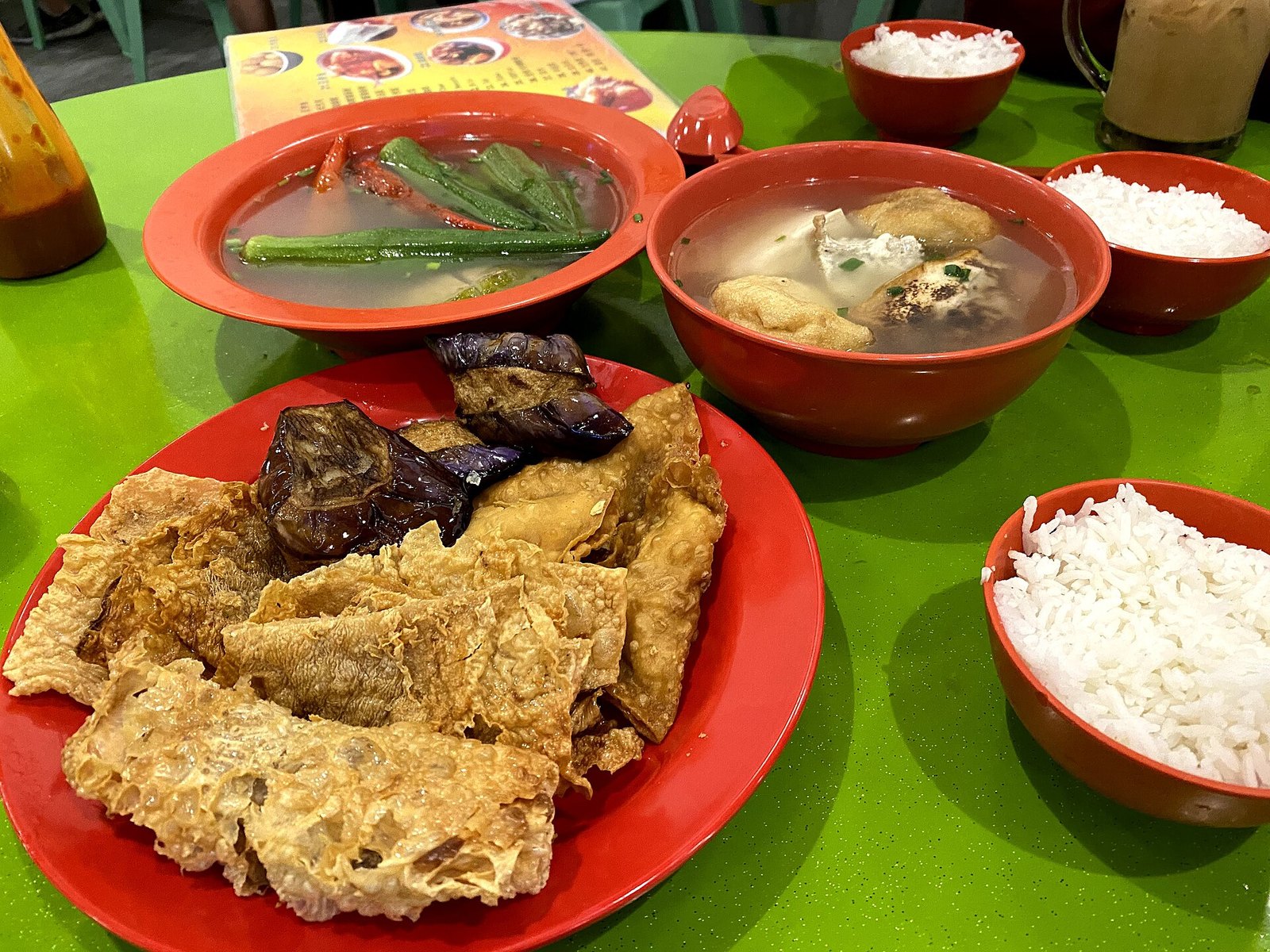
*Image: A plate of Malaysian yong tau foo — stuffed tofu, brinjal, lady's finger, chilli and fish balls. Photo by Foodi-elaine, via Wikimedia Commons (CC BY-SA 4.0).*