> Quick take: Malaysia now has final rules for "open finance", the system that will let you tell your bank to send your account history to another bank or e-wallet, for example to apply for a loan without uploading PDF statements. The rules were issued on 17 November 2026, but nothing changes for customers until 1 January 2028 at the earliest.
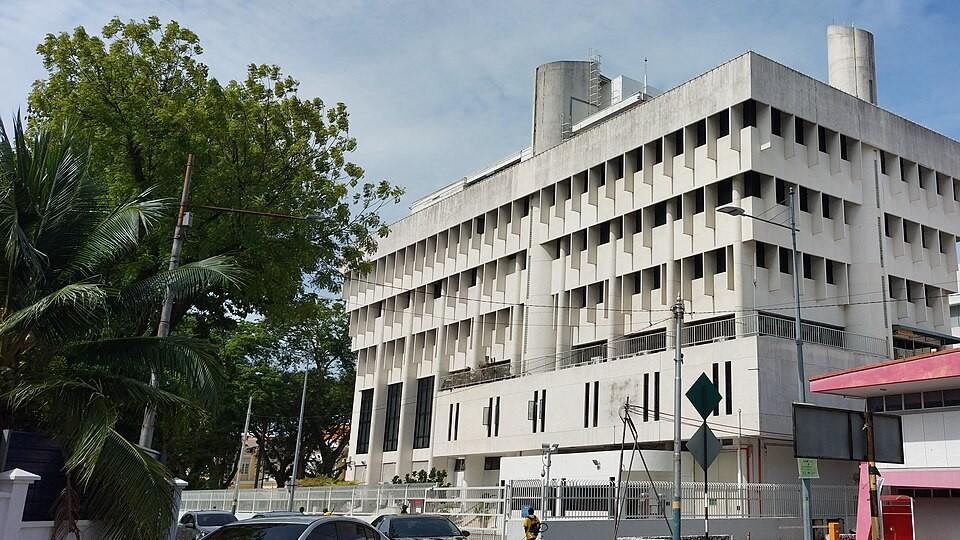
*Cover image: Bank Negara Malaysia Penang branch, by C.W. Tan (PenangLion), CC BY-SA 2.0, via Wikimedia Commons.*
What BNM issued
On 17 November 2026 Bank Negara Malaysia published the Policy Document on Open Finance (reference BNM/RH/PD 028-145) together with an FAQ for the industry. It took effect on the day it was issued and replaces an industry letter on participation timelines from 1 September 2026.
It follows an exposure draft from 18 November 2025, which was open for feedback until 1 March 2026. Reports at the time, including The Edge, said sharing could begin from January 2027. The final version pushes the first mandatory date to January 2028, which The Edge described on 17 November as a year later than first proposed.
The idea is simple. Today, if a lender wants to see your finances, you usually download statements and upload them, or hand over your online banking login to a third-party tool. Open finance replaces that with a direct, consent-based connection between licensed institutions, run through a shared platform called Open Finance Malaysia operated by PayNet. BNM's own illustrations of what it enables are a single view of all your accounts in one app, faster credit decisions using real transaction data, and fully digital document submission.
Who has to join, and when
Participation is compulsory only for large players. The deadlines to start sending individual customers' data are:
- By 1 January 2028: licensed banks and Islamic banks with more than 1 million active individual and SME customers (counted at group level).
- By 1 January 2029: banks and Islamic banks with more than 250,000 active customers, plus e-money issuers running a network-based e-wallet with more than 5 million active users.
- By 1 January 2030: development financial institutions with more than 250,000 active customers.
The mandated banks and e-wallets must also be able to receive data (so you can pull your other accounts into their app) by 1 January 2029, and development financial institutions by 2030. SME customer data becomes mandatory from 1 January 2030, and only at institutions with more than 30,000 active SME customers.
Investment banks, insurers and takaful operators are covered by the rules but are not forced to join. Smaller banks may join voluntarily.
What data is covered
The mandatory set is the last 12 months of transactions (date, time, amount, currency, description and whether it was a debit or credit) plus the current outstanding balance. It applies to deposit accounts (savings, current, fixed deposit and Islamic deposit products), e-money accounts, credit cards and charge cards.
It applies to individuals aged 18 and above with accounts in their own name. Joint accounts fall outside the mandatory scope.
How consent has to work
This is the part that matters most to customers. Under paragraph 11 of the document:
- Consent must be specific, voluntary and explicit. You must be told who gets the data, why and which data. Pre-ticked boxes and silence do not count, and a firm cannot make you agree to marketing use as a condition of the service; that needs a separate yes.
- Revoking must be as easy as agreeing.
- Both ends must give you a consent dashboard showing active and past consents with their scope, purpose and duration, updated in real time, with a revoke button. The receiving firm's dashboard must also let you renew and warn you before a consent expires.
- Ongoing access lasts at most six months before you must renew. A one-off consent expires as soon as the data is pulled.
- After you revoke, the receiver must stop accessing the data, dispose of it unless the law requires it to be kept, and send you an electronic confirmation.
- You can see access logs showing when and by whom your information was accessed, and firms must keep consent records for seven years.
- No passing it on. The receiving firm cannot share your data with another party for that party's own use without fresh consent.
Fees, security and complaints
BNM has not set a fee. Paragraph 12.21 says any fees must be fair and transparent, must not create unreasonable barriers, and must follow its existing fees guidelines. The bank releasing your data must authenticate you first, for example with multi-factor authentication. On liability, each institution must make sure customers "do not suffer loss or detriment" from its own weaknesses, failures or misconduct, though the document sets no compensation amounts. Complaints follow BNM's complaints-handling rules, and institutions are encouraged to offer a human contact for customers who are less comfortable online.
What is still undecided
Several practical details are not in the document: PayNet's technical specifications and user journeys, how SMEs with several signatories will give consent (BNM says it will work this out with a pilot group before 2030), any fee levels, and how joint accounts will be handled. The document also gives no route for non-licensed fintech apps to receive data, so only licensed banks, insurers, development financial institutions and eligible e-money issuers are in scope.
What to do now
Nothing, yet. No bank is required to offer this until 2028, and no legitimate open finance service will ask for your online banking password, because the whole point is that it doesn't need one. If anyone offers "open finance" access before your bank announces it, treat it as a scam until you have checked directly with the bank.
*Sources: BNM Policy Document on Open Finance and FAQ (both 17 November 2026), read in full; BNM Exposure Draft on Open Finance (18 November 2025); The Edge (17 November 2026); The Star via Bernama (17 November 2026). Read 27 November 2026.*