> Quick take: nothing about entering Japan has become harder for Malaysians in 2026, but two money rules have changed since most people's last trip. The departure tax is now 3,000 yen, and tax-free shopping has switched to a refund you claim at the airport. If you shop the old way and check in your bags first, you can lose the refund.
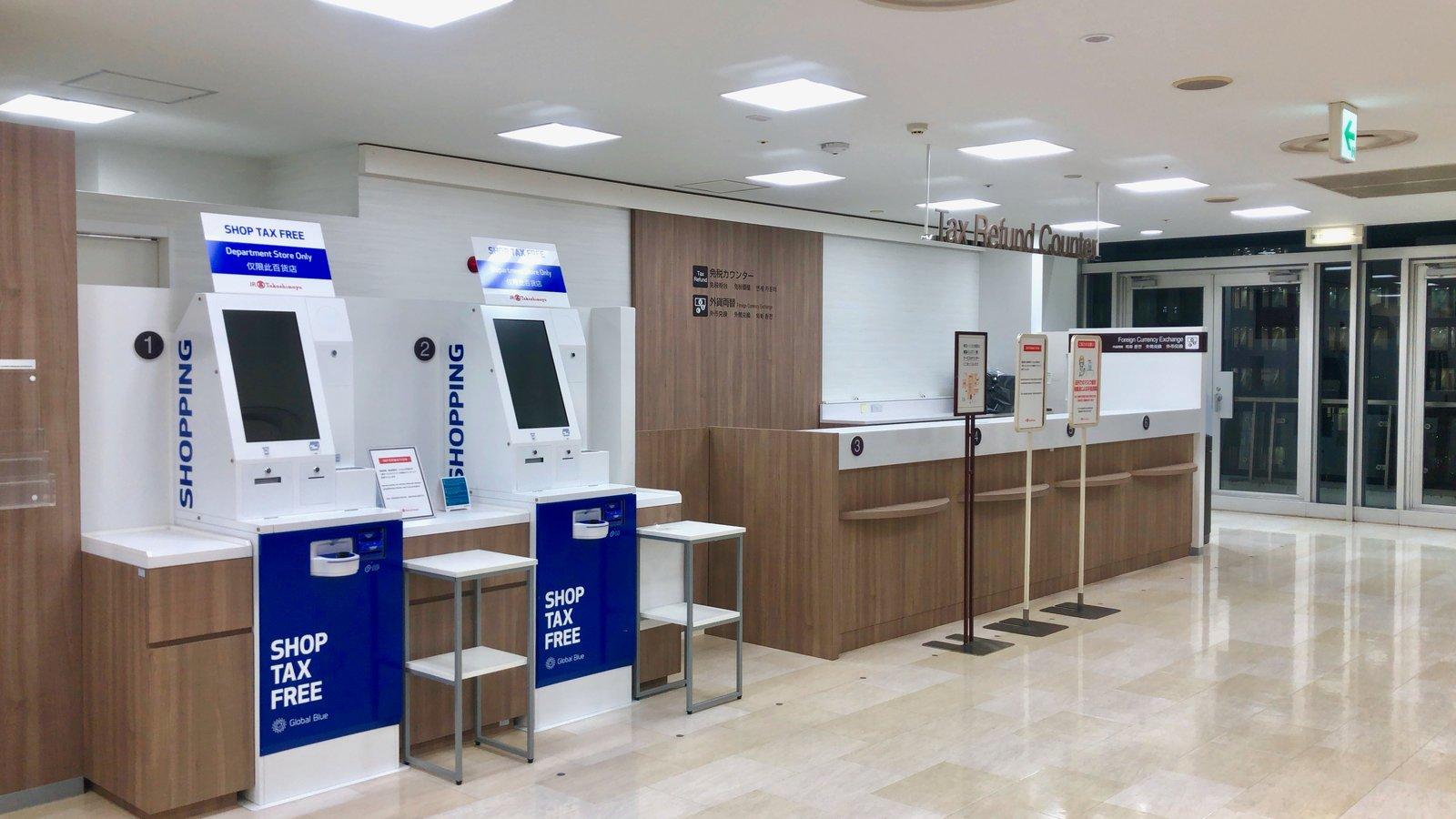
*Cover image: tax-free kiosks and Tax Refund Counter at JR Nagoya Takashimaya, by KKPCW, CC BY-SA 4.0, via Wikimedia Commons. The photo dates from 2022, before the refund system began.*
The December school holidays are peak season for Malaysian trips to Japan, and plenty of families have not been since before these changes. This guide covers what has changed in 2026, what has not, and the Malaysian rules for the trip home. Yen amounts are converted at Bank Negara's 26 November 2026 rate of roughly RM2.58 per 100 yen, so treat the ringgit figures as approximate.
Entry: still visa-free, up to 90 days
Malaysians holding an ordinary passport with an ICAO-compliant chip can enter Japan without a visa for up to 90 days for tourism, business meetings, conferences or visiting relatives, under an arrangement in place since July 2013. The Embassy of Japan in Malaysia and its Penang consulate confirm this. Working, studying or staying beyond 90 days needs a visa obtained in advance.
You may have read about JESTA, Japan's planned electronic travel authorisation for visa-exempt visitors. The law was passed in May 2026, but the launch target is fiscal year 2028 (April 2028 to March 2029) and no fee has been announced. It does not apply to any trip you are taking now.
Arrival: Visit Japan Web is recommended, not compulsory
Visit Japan Web is the Japanese government's website (not an app) for filling in your immigration and customs details before landing, so you scan QR codes at the airport instead of writing on paper cards. Japan Customs says it recommends declaring online but that the paper customs form can still be used. Register before you fly, and screenshot the QR codes in case the airport Wi-Fi is slow.
Departure tax: now 3,000 yen
Japan's International Tourist Tax rose from 1,000 yen to 3,000 yen per departure (about RM78) on 1 July 2026, according to the Japan Tourism Agency and Japan Customs. Airlines collect it in the ticket price, so you do not pay at the airport. Children under 2 and passengers in transit who leave within 24 hours are exempt. Tickets issued on or before 30 June 2026 kept the old rate, but some airlines charge the new rate if you change the date.
Tax-free shopping: the big change from 1 November 2026
Under the old system, shops removed Japan's 10% consumption tax at the till when you showed your passport. For purchases made on or after 1 November 2026, the Japan Tourism Agency's new refund method applies:
- At the shop, you pay the full price including tax. The minimum is still 5,000 yen (about RM129) before tax, per store per day, and general goods and consumables such as cosmetics and snacks now count together towards it. The old 500,000 yen cap on consumables and the sealed tax-free bags are gone.
- The shop sets how you get the refund, for example back to your card, through an app or in cash at the port. Ask before you pay.
- At departure, take the goods and your passport to a tax-free kiosk in the departure hall before you check in your bags. The machine gives a green result (done) or red (a customs officer inspects). At Narita, Haneda, Kansai, Chubu, Fukuoka, New Chitose and Naha you can use Visit Japan Web instead.
- Customs must confirm the goods are leaving within 90 days of purchase.
The trap is the checked bag. Once a suitcase is checked in, you cannot show its contents. Customs also checks each receipt as a whole, so if one item from a receipt is missing or already used, you can lose the refund for that entire receipt. Anything already eaten or used must be declared at the counter. Osaka Customs warns that the Kansai kiosks can get crowded, so leave extra time.
Other 2026 costs to budget for
- Kyoto accommodation tax went up on 1 March 2026 and now scales with the room rate: 200 yen per person per night under 6,000 yen, 400 yen from 6,000 yen, 1,000 yen from 20,000 yen, 4,000 yen from 50,000 yen and 10,000 yen from 100,000 yen, according to Kyoto City's tourism site.
- Himeji Castle charges adults 2,500 yen (about RM65), with a lower 1,000 yen rate for Himeji residents only.
- IC cards: ordinary Suica and PASMO cards went back on sale in March 2025, and the tourist Welcome Suica is sold at Narita and Haneda.
The Malaysian side of the trip
- MDAC: Malaysian citizens do not need the Malaysia Digital Arrival Card when coming home. It is for foreign visitors.
- Airport charges: a Malaysian flying economy from KLIA to Japan pays the international passenger service charge (RM73 from KLIA Terminal 1, RM50 from klia2) and the RM20 departure levy for economy flights beyond ASEAN, both already in the fare. Our airport tax explainer breaks these down.
- Duty-free allowance: Royal Malaysian Customs allows travellers arriving by air RM1,000 of goods duty-free, plus 1 litre of alcohol, three new pieces of clothing and one new pair of shoes, food worth up to RM150 and one of each personal-care appliance. Cigarettes, tobacco and vapes get no exemption. Customs' own knowledge base adds that Malaysians must have been abroad for at least 72 hours to claim it.
- If something goes wrong: the Embassy of Malaysia in Tokyo is at 20-16 Nanpeidai-cho, Shibuya-ku, general line +81-3-3476-3840 and emergency line +81-70-1877-5946. Registering your trip on the Wisma Putra eKonsular portal lets the embassy reach you in an emergency.
*Sources: Embassy of Japan in Malaysia and Consulate-General in Penang visa pages; Japan Tourism Agency tax-free pages and departure tax leaflet; Japan Customs; JNTO (11 May 2026); Kyoto City Tourism (26 February 2026); Himeji Castle; JR East (20 February 2026); Royal Malaysian Customs travellers' guide (updated 5 January 2026); Embassy of Malaysia in Tokyo. Read 27 November 2026.*