If you have ever compared personal loan adverts in Malaysia, you will have seen low-looking rates that turn out to cost far more. That is because many personal loans are priced on a flat rate: interest is worked out on the full amount you borrowed for the whole tenure, even as you pay it down. From 1 January 2027, banks can no longer do that.
What changes on 1 January 2027
Bank Negara Malaysia (BNM) issued its Policy Document on Personal Financing on 30 September 2025. Most of it took effect that day, but paragraphs 10.3 to 10.13 and 10.17 to 10.18 were held back until 1 January 2027 to give lenders time to change their systems. Those paragraphs do four things.
1. Flat-rate and Rule of 78 loans are banned. Paragraph 10.11 prohibits lenders from offering personal financing where interest or profit is computed using a flat rate or the Rule of 78 method. They can still offer a fixed or floating rate, but interest must be charged on the principal that is actually still outstanding. This brings personal loans in line with car loans, where the Hire-Purchase (Amendment) Act 2026 already did away with flat rates.
2. You must see the real cost before you sign. Under paragraph 10.13 the lender has to tell you the effective interest or profit rate and the total amount you will repay, and that applies to adverts and promotional material that quote a rate too. It must also say whether interest is calculated on daily or monthly rest and, for floating-rate loans, when the rate can rise and what that does to your instalment.
3. Borrowing over RM100,000 means a short course first. Paragraph 10.17 says anyone applying for a new personal financing product above RM100,000 must attend and complete a financial education module run by the lender or by AKPK, the credit counselling agency. A BNM spokesperson told reporters in November 2025 that the module takes about 15 minutes and covers effective interest rates, penalty charges and contract terms. The policy itself does not give a length, cost or format, and we could not find a published AKPK page for it yet.
4. Some home-loan top-ups count as personal loans. Paragraph 10.3 treats three kinds of home-financing money as personal financing: cash taken out above your outstanding balance when you refinance, top-ups that take your total above the original loan, and loans secured on a property you own outright. These must be assessed and repaid over no more than 10 years, and they show up in CCRIS under new names such as "Personal Loan under Refinancing (Secured against Property)". Top-ups used only for renovation, MRTA or MRTT, legal fees, education or business are exempt, as are some cases where you have already paid the loan down.
What has applied since September 2025
Four other rules in the same document are already in force: a maximum personal loan tenure of 10 years, a ban on pre-approved personal loans, a ban on loans where the bulk of repayment is due at the end and paid from EPF, pension or gratuity, and affordability checks for buy now, pay later once your combined limit reaches RM1,500.
Who is covered and who is not
The document applies to licensed banks, licensed Islamic banks and prescribed development financial institutions, and it includes loans repaid by salary deduction. It does not cover property or vehicle financing, credit cards and easy payment plans, charge cards, overdrafts, micro-financing or sole-proprietor business loans, share or unit trust financing, staff loans, pawnbroking and Ar-Rahnu, or education loans.
Cooperatives and licensed moneylenders are not banks, so this document very likely does not reach them. BNM does not address them, so if you borrow from either, ask the lender how it calculates interest and check with the regulator concerned (SKM for cooperatives, KPKT for moneylenders).
What about loans you already have?
The policy has no clause converting existing flat-rate loans. Comparison site iMoney said on 6 November 2026 that loans signed before 1 January 2027 keep their original terms. That is a reading of the policy rather than a BNM statement, so ask your bank about early settlement terms if you plan to refinance.
What the effective rate means for you
A flat rate always looks lower than the real cost. iMoney worked out that a 5% flat rate over five years is roughly 9.15% as an effective rate. Once every bank quotes effective rates from January, you will be able to compare offers directly instead of converting them yourself.
*Sources: BNM Policy Document on Personal Financing (30 September 2025), paragraphs 3, 5 and 10 to 11; The Edge and Malay Mail, 11 November 2025; Free Malaysia Today, 1 October 2025; iMoney, 6 November 2026. This is a factual explainer, not financial advice.*
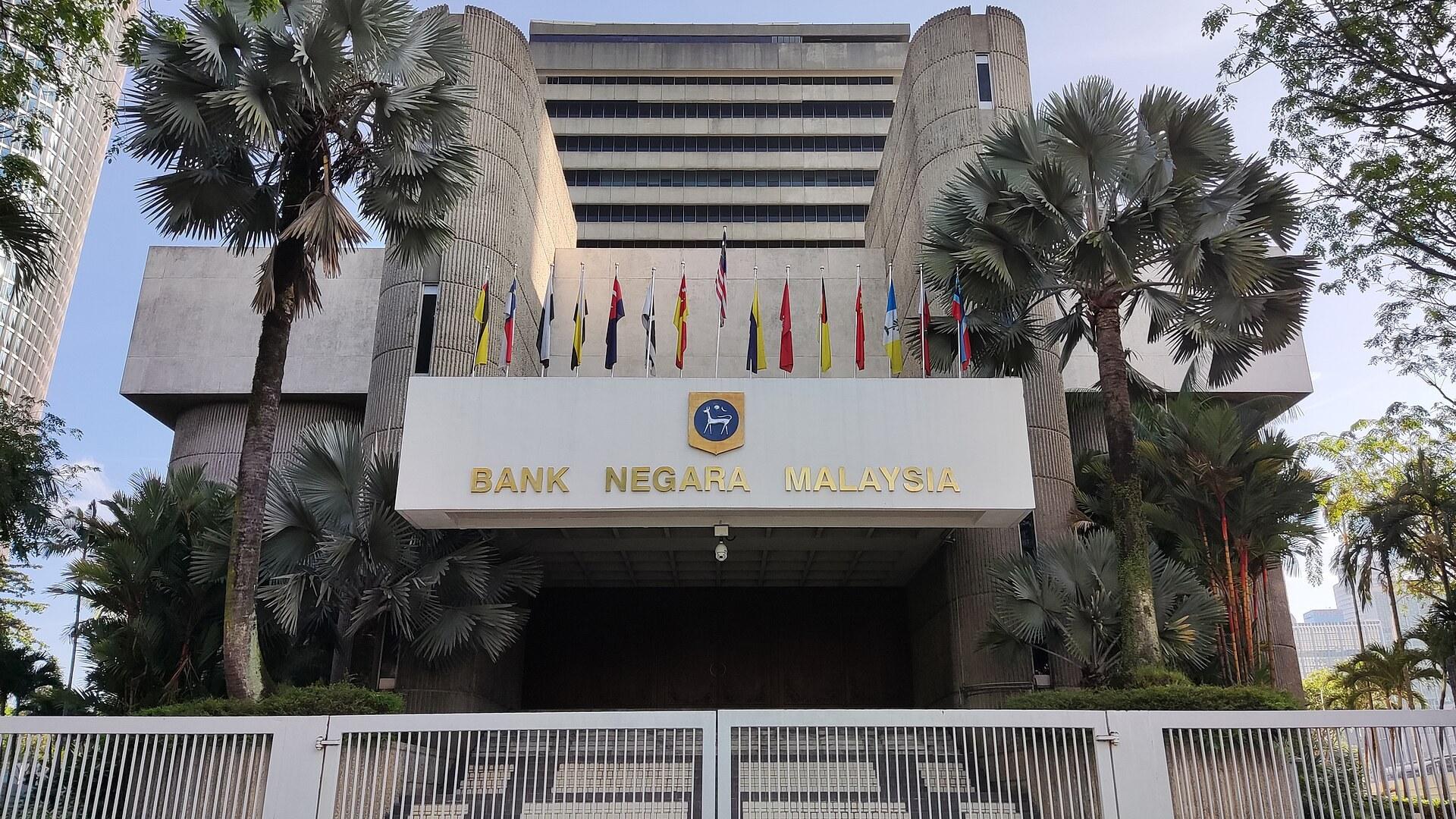
*Cover image: Bank Negara Malaysia headquarters, Kuala Lumpur, by Wee Hong, CC BY-SA 4.0, via Wikimedia Commons.*