Ask what a nursing home costs in Kuala Lumpur and almost every answer you get is a range, not a price. That is not evasion by the person answering. It is the market. Of eight Klang Valley operators we read on 9 September 2026, four publish a ringgit figure and four publish none at all, and among the four that do, one publishes four different figures for the same room.
The backdrop is not gentle. When the Health Ministry released the National Health and Morbidity Survey 2025 findings on older persons on 20 April 2026, the headline was that only 14.7 per cent of Malaysians aged 60 and above are ageing well. Dementia has risen to around 10 per cent and close to one in five older Malaysians now lives alone. Malaysia already has more than four million people aged 60 and above.
So this is a decision more families will make, and it is being made in the dark. Here is what the operators who do publish actually publish.
The two dials that set the bill
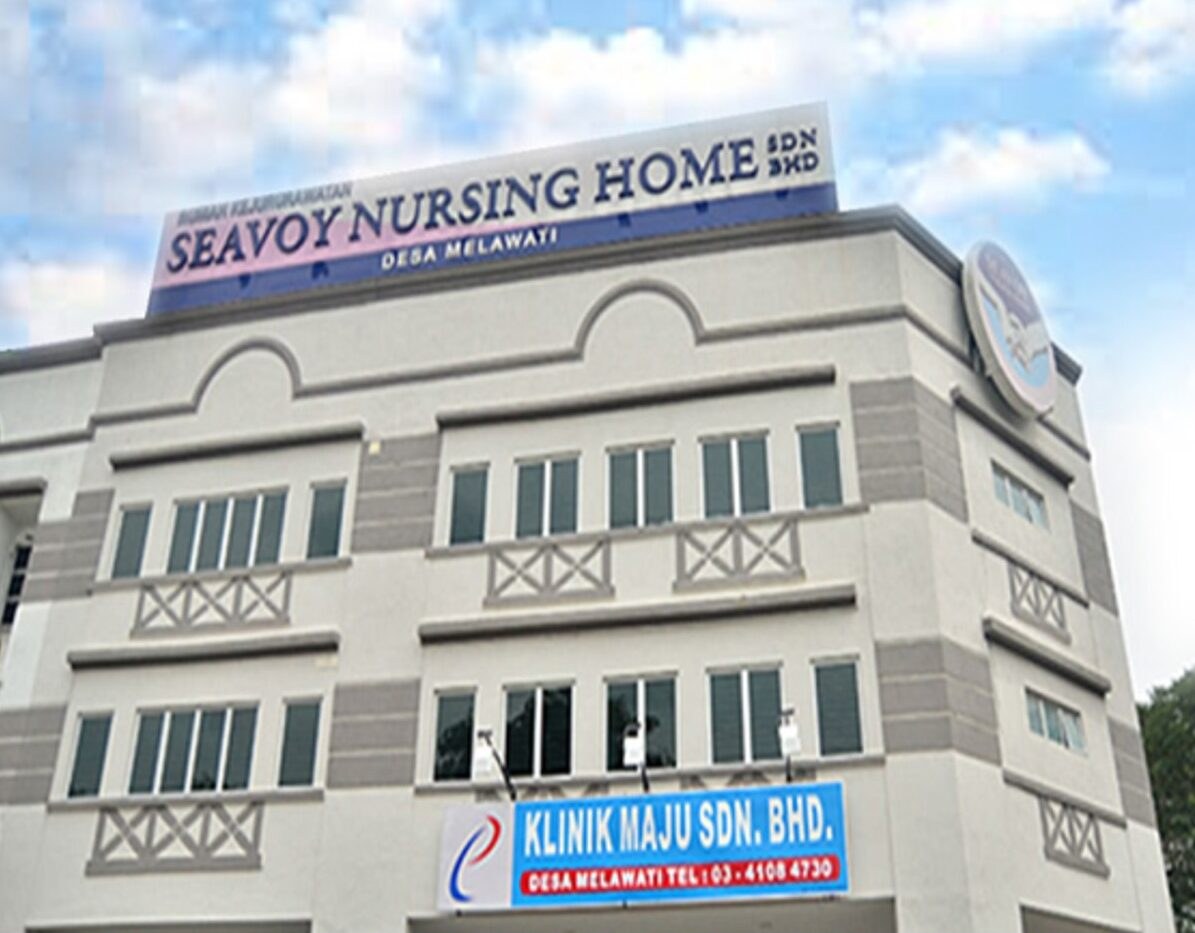
Only one Klang Valley home puts the whole thing on one page. Seavoy Nursing Home in Desa Melawati prices five room types against five dependency categories, and reading it across rather than down changes what you think you are buying.
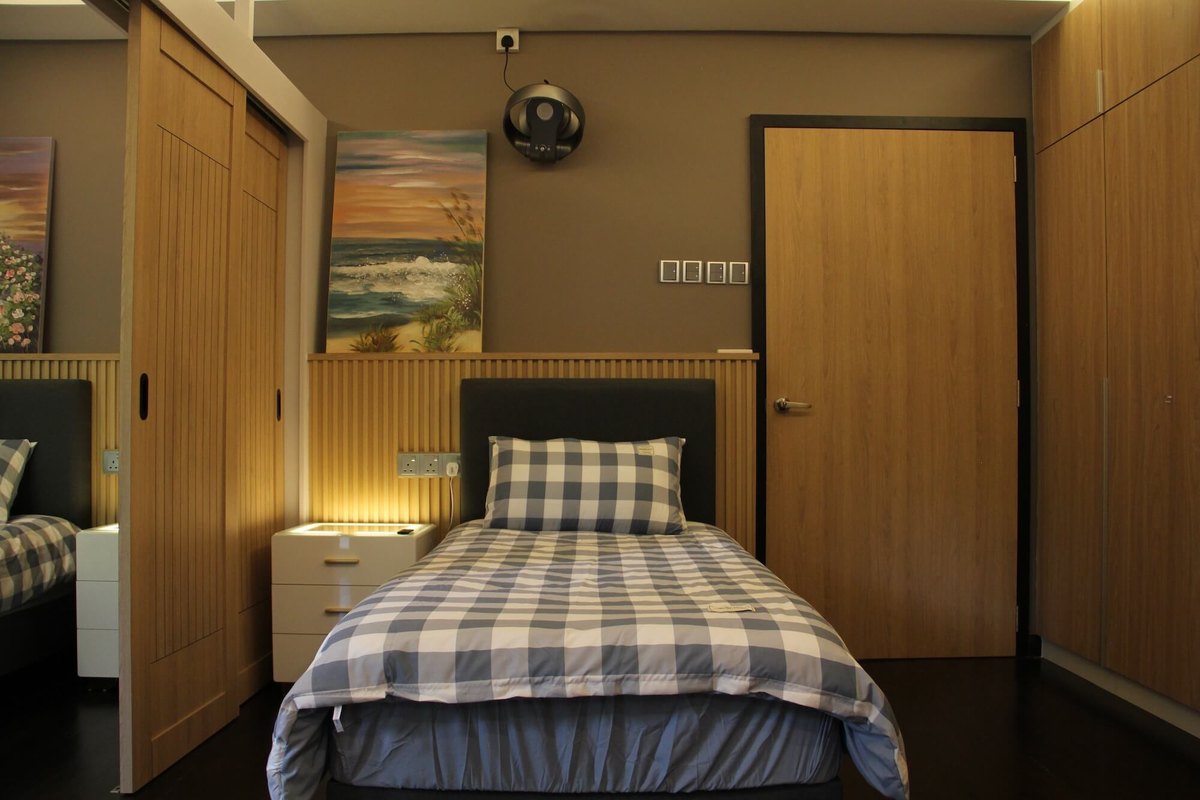
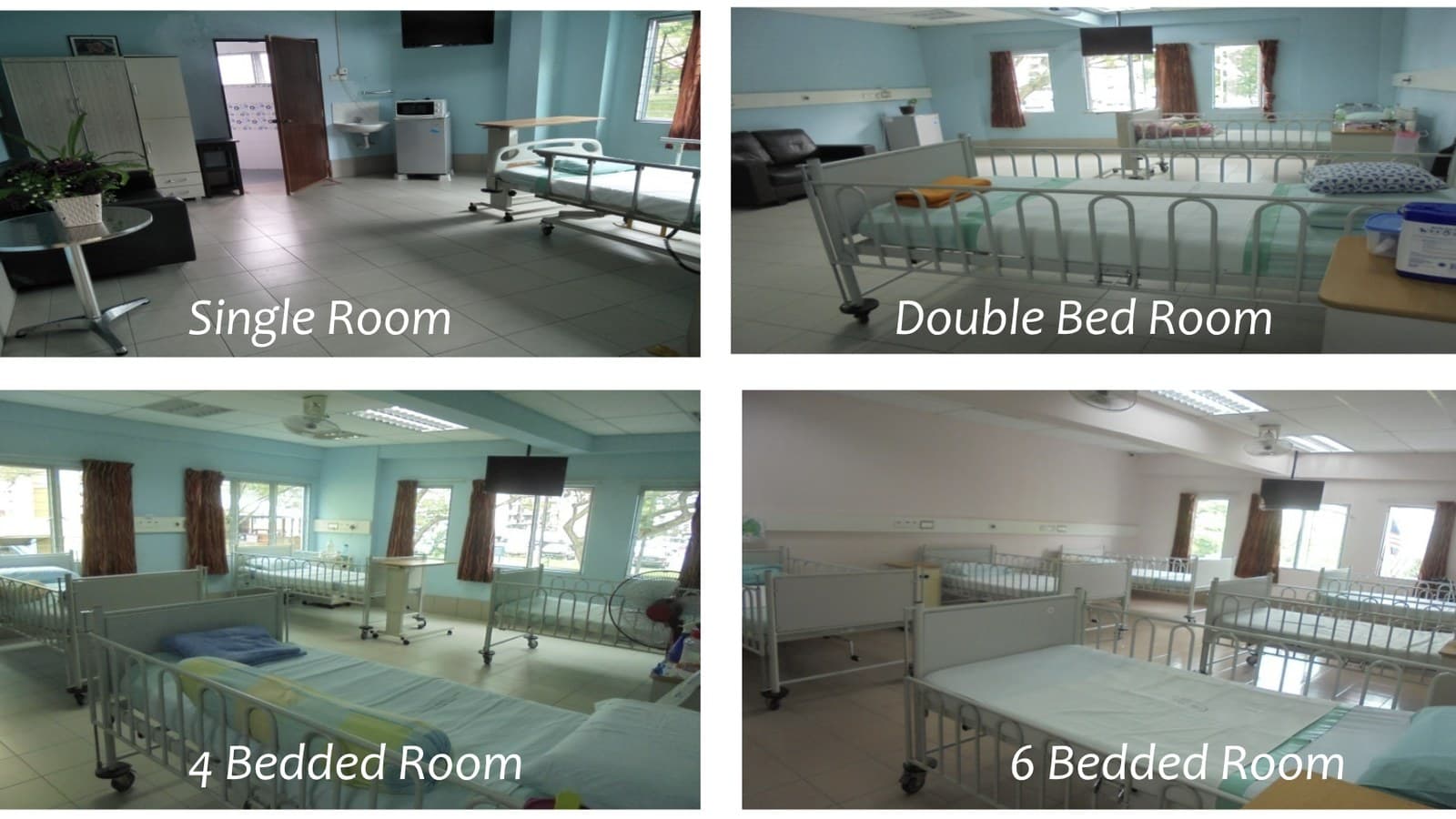
Take Category 1, a resident who can walk and eat with minimum supervision. That resident costs RM2,000 a month in a 6 to 8 bedded ward, RM2,700 in a 4 to 6 bedded ward, RM3,400 in a 2 bedded room, RM3,900 in a small single room and RM5,200 in a large single room. The room alone moves the monthly fee by RM3,200.
Now hold the room still and move the illness instead. In the 6 to 8 bedded ward, going from Category 1 to Category 4 (bedridden, no bed sores) takes the fee from RM2,000 to RM2,600. In the large single room, going from Category 1 to Category 5 (bedridden, intensive nursing and physiotherapy) takes it from RM5,200 to RM5,900.
That is the finding. Deteriorating health adds RM600 to RM700 a month. Choosing a private room adds RM3,200. Families agonise over the care level and take the room as a comfort decision. The arithmetic says it is the other way round.
The cheapest bed is closed to the residents who need it most
There is a second thing hiding in that grid, and it is easy to read past.
Seavoy's 6 to 8 bedded ward is priced for Categories 1, 2, 3 and 4. There is no Category 5 line. Every other room type in the list has one. The tier that costs RM2,000 a month simply does not accept the resident who needs intensive nursing and physiotherapy, so the family whose parent declines into that category cannot stay at the bottom of the price list. They move up a room type, and the bill jumps by the RM700 to RM1,000 that separates the wards, on top of the category increase.
Budget for the ward you will need in a year, not the one you need this month.
The ladder, priced
Genesis Life Care runs the other model. Rather than a room grid it publishes five care levels, and it applies them across four Klang Valley centres (Petaling Jaya, Klang, Kajang and Puchong) plus one in Johor Bahru.
Essential Care starts at RM2,500 a month for an independent resident in a shared room. Assisted Living starts at RM3,000 and adds help with bathing, dressing, mobility, toileting and assisted feeding. Nursing and High Dependency starts at RM3,800 and covers bedridden residents, NG and PEG tube feeding, repositioning and pressure area care. Complex and Palliative starts at RM4,500 and adds tracheostomy and oxygen support, complex wound care and end of life care. A private room at any care level starts at RM5,000.
Genesis is also unusually specific about what is not in that number: consumables such as diapers and feeding formula, specialist medications, doctor and specialist visits, and physiotherapy sessions are billed on top. Most operators say something like "conditions apply". This one lists the four items.
Worth seeing before you sign: three of its five centres sit in industrial or business park addresses (Amverton Business Centre in Klang, Kawasan Perindustrian Ria in Kajang, Taman Perindustrian Puchong) and the Johor Bahru centre is on Level 6 of a shopping tower. Its own site describes the Puchong centre as being in the heart of Bandar Puteri while publishing a Taman Perindustrian Puchong address. Neither is a fault. Both are things you want to know before a first visit, particularly if ground floor access or an outdoor area matters.
Same brand, same words, RM2,100 apart
Ixora Senior Care publishes the same sentence on three branch pages: all inclusive packages starting from a monthly figure, with weekly doctor consultations, emergency consultations, nursing procedures, pharmacy medication reviews and physiotherapy sessions included.
The figure is RM3,400 at Ixora Senior Care Taman Yarl in Kuala Lumpur and RM3,400 at Ixora Senior Care SS12 in Subang Jaya. At Ixora Care Suites Damansara Heights it is RM5,500. The description of what the package contains does not change. The postcode does.
One home, four prices for one room
Elderlove operates four Klang Valley addresses (Jalan Jubilee in Pudu, Puchong, Bandar Pinggiran Subang in Shah Alam and Bandar Sungai Long in Kajang) plus a branch in Bercham, Ipoh, and it publishes rates on every branch page. They do not agree with each other or with the site's own FAQ.
A 2 bedded room is listed at RM4,000 on the general nursing home page, RM4,250 on the Puchong page and RM4,550 on the Pudu and Bandar Pinggiran Subang pages. A 4 bedded room runs RM3,500, RM3,700 and RM3,950 across the same three pages. Then the FAQ on that same site answers the charges question with "our monthly rates range from RM2,900 to RM4,200", a ceiling that three of its own branch prices already exceed and a floor that appears nowhere else on the site.
Elderlove is not hiding anything. It publishes more numbers than most of the market. But if you quote the general page to a branch, expect the branch card to win. Its day care rates are consistent across branches at RM125 a day normal and RM135 a day dependent, dropping to RM110 and RM118 on a five day week.
The tax is set by the register, not by the care
This is the part almost nobody explains, and it can add hundreds of ringgit a month.
Answering a question from Khoo Poay Tiong (Kota Melaka) in Parliament in July 2026, Prime Minister and Finance Minister Anwar Ibrahim confirmed that elderly care centres have been subject to service tax since September 2018, and that the tax bites only where the value of taxable services exceeds RM500,000 a year. He said the threshold applies to welfare homes too, because the services they offer are classified as commercial in nature, and that the Finance Ministry and the Ministry of Women, Family and Community Development are conducting a detailed study to reassess the tax treatment of elderly care services regulated by the Social Welfare Department, including classifying centres as basic or premium so the tax can be applied more precisely. The general service tax rate has been 8 per cent since 1 March 2024.
Private healthcare services provided to Malaysian citizens are treated differently from welfare services under the service tax rules, which is why the industry argues that a home licensed by the Health Ministry and a centre registered with the Social Welfare Department can face different tax outcomes for very similar care. One Melaka operator, BIGTREE, which is itself Health Ministry licensed and therefore an interested party, publishes a comparison putting 489 Social Welfare Department registered centres against 19 Health Ministry licensed facilities nationwide, citing CKAPS in October 2025 and JKM in November 2025. We could not find those two counts published on a government page, so treat the ratio as indicative rather than official. The direction it points in, though, matches the parliamentary answer: the more clinical route is the rarer one.
Practical version: ask whether the quoted monthly fee is inclusive or exclusive of service tax, and ask it in writing. None of the eight operators we read states the answer on its price page.
"Licensed" is a word doing almost no work here
Three different regimes sit behind the phrase.
The Care Centres Act 1993 (Act 506) governs registration of care centres with the Social Welfare Department under the Ministry of Women, Family and Community Development. The Private Healthcare Facilities and Services Act 1998 (Act 586) governs Health Ministry licensing of private nursing homes and requires clinical staffing and inspection. The Private Aged Healthcare Facilities and Services Act 2018 (Act 802) was written to replace both with a single aged care licence. It was gazetted on 29 March 2018 and has still not been brought into operation, so eight years later there is no single register a family can check.
That vacuum shows up in the copy. Of our eight, only Genesis Life Care names a regulator plainly on its own pages (JKM registered, plus a separate Home Ministry licence for its employment agency arm, which is a different thing entirely and worth not confusing) and only The Senior Care lists more than one (registered under MBPJ, KKM and JKM). Agecare answers the direct question "are you a licensed operator?" in its own FAQ with "we are an integrated and fully licensed geriatric healthcare provider" and names no authority. The other five say nothing about registration at all.
For scale on what that vacuum holds, a Khazanah Research Institute paper cited in an April 2026 column in Malay Mail estimated that in 2022 between 700 and 1,000 residential care facilities in Malaysia were unregistered. The same column noted there are over 190 Pusat Aktiviti Warga Emas nationwide, working out to roughly 13,530 older Malaysians per centre against Singapore's 6,323 for a comparable facility.
The eight homes
Ordered by how much each one publishes, from the full grid down to the operators whose numbers only exist behind a phone call.
How to pick, and what to ask
Price the room you will need in a year. Every operator here charges more as dependency rises, and at least one closes its cheapest ward to the highest category outright. Ask for the rate at Category 4 or 5 equivalent, not the rate today.
Get the exclusions in writing. Diapers, feeding formula, specialist medication, doctor visits, physiotherapy and hospital escort are commonly billed on top. Genesis lists four of them; most operators list none. Ask for a written itemised quote, then ask what a typical resident's actual bill came to last month.
Ask which Act. Registered with the Social Welfare Department under Act 506, or licensed by the Health Ministry under Act 586? The answer decides whether a nurse is legally required on site, and it is the single most useful question a family can ask. A Sdn Bhd number and a council premises licence are neither of those things.
Ask about service tax in writing. Above RM500,000 of taxable services a year the tax applies, the general rate is 8 per cent, and the fee quoted to you may or may not include it.
Then ask the one-off charges. Seavoy publishes a RM460 admission medical assessment and a RM200 emergency doctor call. Most operators have equivalents and publish neither.
And visit at an awkward hour. Seavoy publishes visiting hours of 9am to 7pm on weekdays and 10am to 2pm at weekends. Go near the end of a shift, not at 11am on a Tuesday.
Re-checked 24 September 2026
We re-read every published price above against the operators' own pages on 24 September 2026. Nothing has moved: Seavoy's grid still runs RM2,000 to RM5,900, Genesis still starts its five levels at RM2,500, Elderlove's general page still shows RM3,500 and RM4,000 with the RM2,900 to RM4,200 FAQ range beside it, and Ixora still publishes RM3,400 at Taman Yarl and RM5,500 at Damansara Heights. All eight sites were live.
One number worth adding for families who are not ready for a full admission: day care. Seavoy charges RM150 a day, which over a 22 weekday month is RM3,300, more than its own RM2,000 residential ward. Elderlove's five-day plan at RM110 a day (RM118 dependent) comes to RM2,420 (RM2,596) over the same month. Seavoy's short-term holiday stay is RM250 a day with a 10 day minimum, so a respite fortnight starts at RM2,500.