Passport renewal is one of those errands Malaysians do once every five years, forget entirely, and then rediscover at the worst possible moment — usually three weeks before a flight. Two things routinely catch people out: the fee you pay is often not the one everyone quotes, and the online service is considerably narrower than its name suggests.
Everything below comes from the Immigration Department of Malaysia's (Jabatan Imigresen Malaysia, or JIM) own published pages — the passport rate table, the department's Client Charter, the office directory and the MyOnline Pasport terms and conditions — first checked on 26 August 2026 and re-checked on 1 October 2026.
The fee table, including the row most people get wrong
The Malaysian international passport, officially the Pasport Malaysia Antarabangsa (PMA), is issued with five-year or ten-year validity from the date of issue.
Adults aged 18 to 59 pay RM200 for five years and RM350 for ten.
Here is the band that is routinely misreported: children under 12 pay RM100, not RM200. The RM200 child rate applies from age 12 up to 18. If you are renewing for a primary-schooler, you are paying half what most guides tell you. Neither child band can take the ten-year book.
Seniors aged 60 and above pay RM100 for five years or RM175 for ten — a straight half-price concession on both tiers.
Students under 21 on an overseas bachelor's programme pay RM100, five-year only, and must show an offer or sponsorship letter or a valid matriculation card. Hajj pilgrims are on the same RM100 five-year footing, on production of a Lembaga Tabung Haji offer letter.
OKU cardholders pay nothing. The department's table lists a valid OKU cardholder aged 18 and above as free on the ten-year book and not eligible for five years, and an OKU cardholder under 18 as free on the five-year book. There is no RM175 tier for OKU applicants — the concession is a full waiver. Immigration Department officers and staff are likewise free, on the ten-year book.
The part nobody budgets for: losing it
The department publishes a separate replacement ladder, and it escalates hard.
An adult who loses or wrecks a five-year passport pays RM400 for the first replacement, RM700 for the second, and RM1,200 for the third and every one after that. On the ten-year book the ladder runs RM550, then RM850, then RM1,350.
Seniors, under-12s, overseas students and Hajj pilgrims start lower — RM300, RM600, RM1,100 on the five-year book — but the escalation is the same shape. Seniors on the ten-year book pay RM375, RM675, then RM1,175. Teenagers aged 12 to 17 get no discount here: their five-year ladder is the adult one, RM400 / RM700 / RM1,200. Even OKU cardholders, who pay nothing for the original, pay RM200 / RM500 / RM1,000 for replacements.
Replacement is not automatic either. You need a police report (for loss, fire or natural disaster), and approval rests with the Director-General of Immigration; the department says the investigation outcome is communicated within five working days of the application. That is the same five working days the Client Charter allows for a lost or damaged case — against one hour for an ordinary counter renewal.
The ten-year arithmetic, and the six-month rule that changes it
Ten years of coverage costs RM350 as one book against RM400 as two five-year books — a RM50 saving and one fewer counter trip. For seniors the same comparison runs RM175 against RM200, saving RM25.
That is real but modest, and it comes with a trade-off nobody mentions at the counter: a passport that has to last a decade has a fixed number of pages. If you travel heavily for work, or hold visas that take full pages, filling the book before it expires means paying again anyway — at the higher fee. Travel a few times a year and the ten-year book is the better buy. Fly monthly and count your pages first.
The six-month carry-over now depends on which book you pick. The department's passport page still says that up to six months of unused validity from the old book moves into the new one, provided it is not a lost, damaged or under-investigation case. But on 12 August 2026 Director-General Zakaria Shaaban announced that this no longer applies to the ten-year book. Some airlines abroad had refused to check in Malaysians whose new passports showed more than ten years' validity, because they read the six-month rule differently, so Immigration capped the PMA at exactly ten years until the issue is settled with the airlines and ICAO.
What that means in practice:
- Five-year renewal: unused validity still carries over, up to six months, so the new book can run five years and six months.
- Ten-year renewal: you get exactly ten years. Renew with eight months left on the old book and those eight months are simply gone.
- Already holding a book valid for more than ten years? Bernama put the number issued since July at about 26,000. Immigration offers a free replacement capped at ten years, and those holders get priority at the counter. Zakaria said the next day that books valid for exactly ten years have no travel problem, and the ten-year option itself is not going away.
So if you are going for the ten-year book, renewing early costs you every day left on the old one. Time it for when your current passport is down to about six months, the point where many countries would start refusing it anyway.
Counter or online? The counter is faster
This is the genuine surprise, and it is in the department's own Client Charter:
- Malaysian international passport at the counter — one hour after payment
- Online renewal application — one working day
- Malaysian passport in Peninsular Malaysia for a Sabah- or Sarawak-born applicant — five working days
- Lost or damaged passport or identification certificate — five working days
- Surat Akuan Pengenalan (identification certificate) — 30 working days
The charter adds the usual caveat: these times apply in normal conditions and exclude incomplete, problematic or referred applications.
So MyOnline Pasport saves you a queue, not a day. You fill the form and pay at home, then attend an issuing office to collect — and the collection trip is a trip either way. If your appointment book is empty tomorrow morning and your passport expires next month, walking into a counter is the faster route.
Who cannot use MyOnline Pasport
The published terms are specific, and they exclude more people than you would guess. MyOnline Pasport handles renewals only — never a first passport — and:
- Applicants must be 13 years and above. The department separately lists children aged 13 and under as counter-only, so anyone at exactly 13 should run the system's own Check Application Eligibility tool before paying.
- OKU applicants, Hajj pilgrims, students heading overseas for a bachelor's degree, and children 13 and under must attend a counter — even though every one of those categories qualifies for a reduced or waived fee.
- The online rates are RM200 for ages 13 to 59 and RM100 for 60 and above. The senior concession does work online. The ten-year book does not — that is a counter application.
- Your current passport must be in good condition — not damaged, scribbled on, water-damaged or burnt — and still in your possession. If it is lost, you are a counter case by definition.
- Malaysians abroad without valid immigration status, or without a valid long-term visa or pass, cannot renew online.
- Payment is by debit card, credit card or FPX internet banking — not FPX alone.
If the system returns "Permohonan Bermasalah. Sila Rujuk Pejabat Imigresen", the department lists three usual causes: your stored fingerprint data is missing or corrupted and needs rescanning at a counter, you do not meet the stated conditions, or the details you entered conflict with what the system holds.
Making a false declaration on the form is not a paperwork slip. The terms cite the Passport Act 1966 (Act 150).
The photo rules, and the AI trap
This is where online applications die, and the specification is stricter than the phrase "passport photo" suggests:
- White background, no shadow. No other colour is accepted.
- Dark clothing covering the shoulders and chest. A tudung or hijab must be dark, unpatterned, and must not cover the face.
- No glasses, no contact lenses, and no accessories on the face, ears or head.
- A softcopy taken by a professional photo studio. Polaroids and selfies are not accepted.
- The face must be current — taken within the last month.
- Watch for phone cameras that produce a mirrored image; the department flags this specifically.
A photo that misses the spec gets the application deferred, not cancelled: you re-upload through the department's Photo Re-upload service and wait again. If the photo problem cannot be fixed, you can go to the collection office and have the picture retaken there.
A photo that is generated or altered with artificial intelligence is rejected outright, and the fee is not refunded. The terms say so in as many words — TOLAK, no refund. That is RM200 gone for a filter.
What to bring, and where you actually collect
Nothing is posted to you. Collection is in person at the issuing office you selected in the system.
- Aged 18 and above: your MyKad, your current passport, and the printed payment receipt.
- Under 18: the applicant's MyKad, birth certificate and current passport, plus the accompanying parent's or guardian's MyKad and the printed receipt — and the parent or guardian must physically be there. The passport is not released otherwise.
For counter applications the department lists MyKad or a Temporary Identification Document (KPPK 09), a birth certificate for under-18s, the parent's or guardian's MyKad for minors, and the previous passport for renewals.
Worth knowing before you drive somewhere: the department's directory splits offices into issuing offices, which print the book, receiving offices, which take the application and forward it, and UTC counters inside one-stop centres. Overseas, only seven missions issue passports — London, Melbourne, Jakarta, Singapore, Hong Kong, New York and Jeddah. Every other Malaysian mission is a receiving office that forwards your file to headquarters in Putrajaya, which is why applications made elsewhere take longer.
The new passport, and why not to rush for it
Malaysia began issuing a redesigned international passport on 1 June 2026, with the rollout completing through July. The new book carries 94 security features, up from 49 in the previous version, with upgraded holograms, ultraviolet printing, hidden visual elements and forensic features; the biodata page is now polycarbonate and the holder's photograph is printed in colour rather than by black-and-white laser engraving.
Director-General of Immigration Zakaria Shaaban has said plainly that holders whose passports still have more than six months to run do not need to change them now — you get the new book when your current one expires. Paying RM200 to swap an otherwise valid passport for a prettier one is not a saving.
The book is also doing well abroad. In late September Immigration noted that the Malaysian passport now ranks second in The Passport Index's 2026 global ranking, tied with Singapore and behind the UAE. That ranking counts 175 destinations: 129 visa-free and 46 visa-on-arrival, with 23 still requiring a visa in advance (Malay Mail, 28 September 2026).
Counters are closing in phases
Through 2026 the department has been closing passport counters in phases across 71 passport-issuing branches nationwide for maintenance. During a closure window, counter applications, MyOnline Pasport and passport printing all stop at the affected branches — the online route does not save you.
August's two phases hit the overseas network. Phase 8 ran 15–21 August 2026, covering the Immigration attaché offices in Jeddah, Jakarta and Hong Kong. Phase 9 ran 22–24 August 2026, covering Singapore, Melbourne, London and New York. Between them that is all seven overseas issuing offices, closed inside ten days — which matters enormously if you are a Malaysian abroad on a short window.
Outages are not limited to the scheduled phases. The High Commission in London suspended passport *printing* from 22 September 2026 because of a technical issue. Its counter kept accepting applications, and the notice says printing resumed as normal on 25 September. As of 1 October no Phase 10 notice has appeared on imi.gov.my.
More phases are possible. Check the announcements list on imi.gov.my before you travel to any counter, at home or overseas.
Practical timing
Two rules worth applying regardless of any published turnaround.
Many countries require at least six months of remaining validity on arrival. Your passport is effectively expired six months before the date printed in it. Check the expiry date now, not when you book — and note the neat symmetry for a five-year renewal: six months is also the maximum unused validity the department will carry into your new book, so renewing right at that point costs you nothing in wasted time. On a ten-year renewal nothing carries over any more, so the closer you renew to that six-month mark, the less you lose.
Do not plan a renewal around a stated turnaround. One hour is what a counter commits to under normal conditions; school holidays, year-end peaks, phased branch closures and system downtime all exist. If you have a trip inside the next two months and your passport expires within a year of it, renew now.
Related reads
- The New MyKad Is Here: Where to Get It and What It Costs — the other identity document being reissued in 2026, and what losing it twice costs
- Renewing Your Road Tax and Driving Licence Online — the same online-versus-counter question, with a different answer
- KLIA to KL City 2026 — once the passport is sorted, the cheapest way to the airport
Sources
Fees, categories, replacement rates, office directory, validity carry-over and photo specifications: the Immigration Department of Malaysia's Pasport Malaysia Antarabangsa and Pejabat Penerima dan Pengeluar Pasport pages at imi.gov.my. Processing times: the department's published Piagam Pelanggan (Client Charter). Online eligibility, rates, photo rules and the AI-rejection clause: the MyOnline Pasport terms and conditions at imigresen-online.imi.gov.my. Phased counter closures: the department's Phase 8 and Phase 9 announcement notices. The ten-year carry-over change: Immigration's 12 August 2026 statement as reported by Bernama, The Star and FMT, and the Director-General's 13 August clarification (RTM). London printing suspension: the High Commission of Malaysia, London notice of 21 September 2026 and its 25 September update. Passport ranking: Malay Mail, 28 September 2026. New passport specifications and the Director-General's advice: reported statements by Immigration Director-General Zakaria Shaaban, May 2026.
Fees and procedures are set by the Immigration Department and can be revised without much notice. This is a plain-English summary of published government information, not immigration advice — for anything unusual about your own case, deal with the department directly.
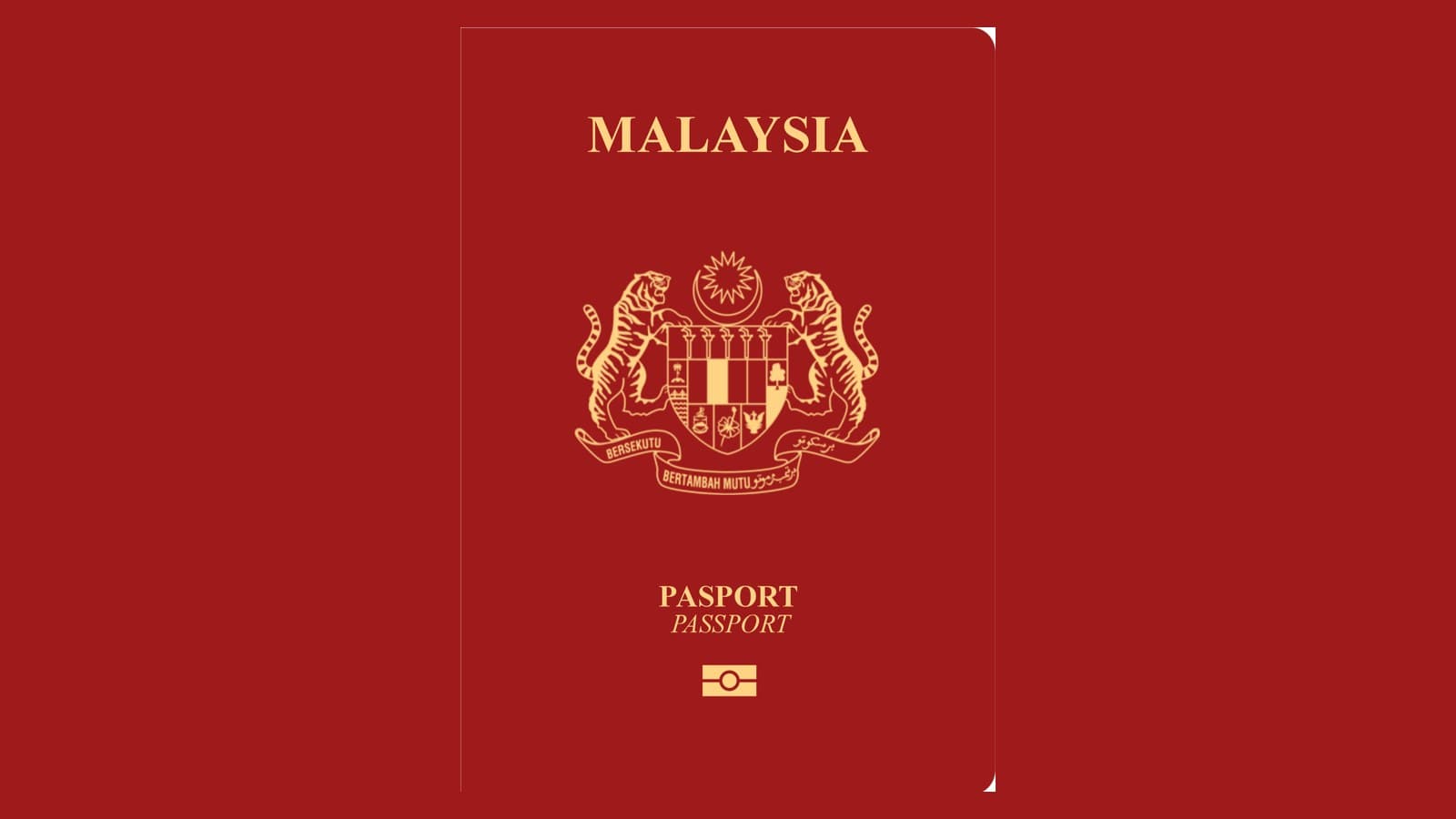
*Cover image: Cover artwork of the Malaysian international passport, via Wikimedia Commons (public domain).*