A Cantonese classic that never left
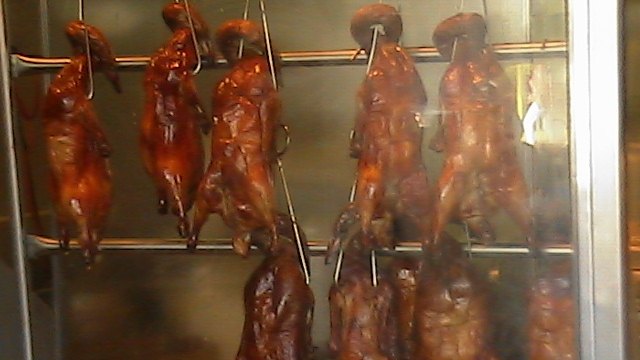
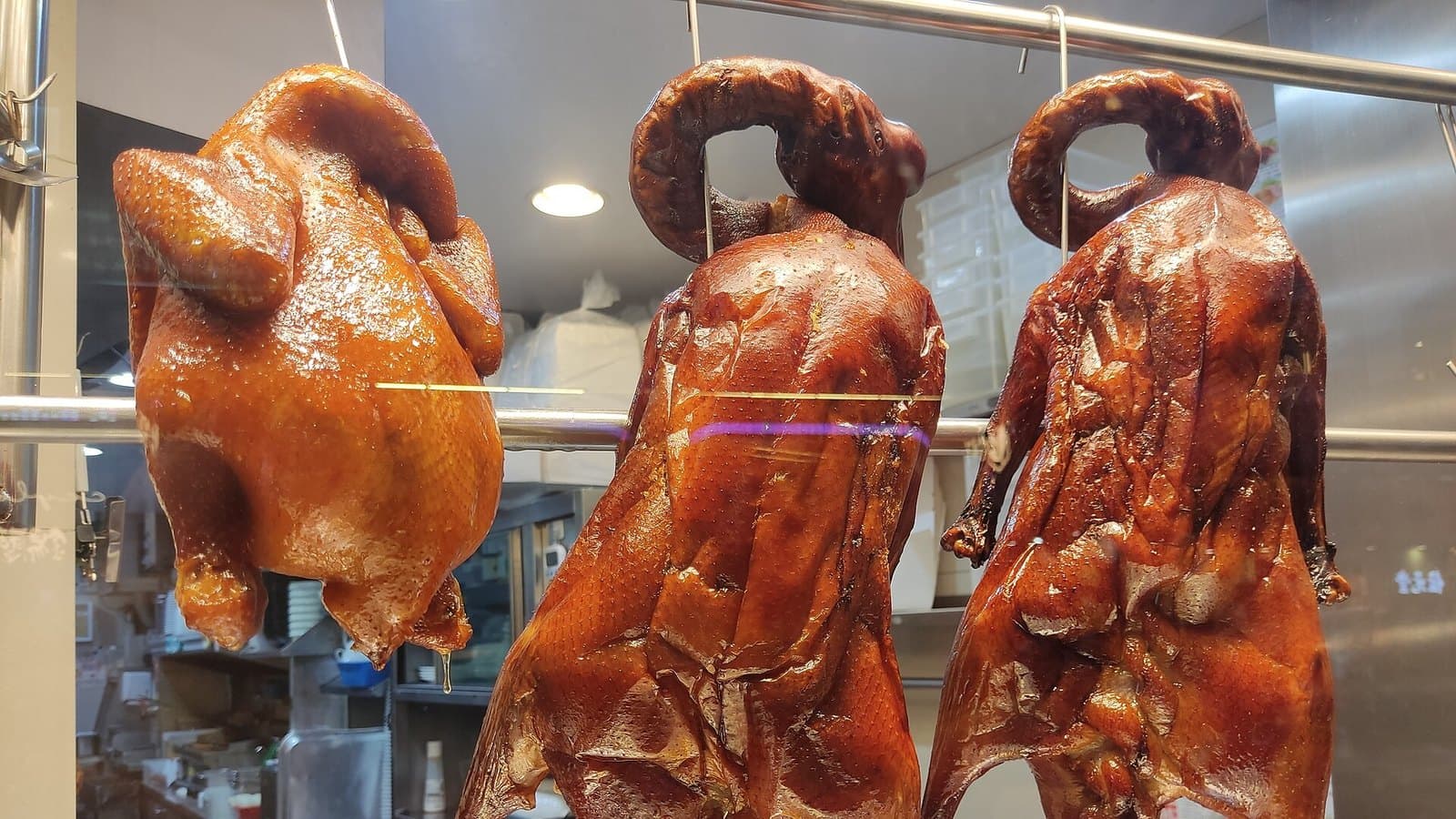
Long before "hawker culture" became a tourism buzzword, roast meat — siu mei (烧味) in Cantonese — was simply how a huge share of Kuala Lumpur and Petaling Jaya ate lunch. Walk into almost any old-school kopitiam corner or dedicated Cantonese restaurant and you'll find the same glass cabinet: mahogany-red char siu glazed and sticky, pale roast chicken hanging by the neck, and a whole roast duck or two cooling under a heat lamp, skin blistered from the roasting fire. This tradition arrived with Cantonese migrants in the early-to-mid 20th century and has stayed remarkably intact — many of the stalls on this list are still run by the second or third generation of the same family, using charcoal ovens instead of gas where the shop's landlord and the fire department still allow it.
What's changed is the audience. A dish that used to be an everyday lunch option is now, in a handful of cases, a destination in its own right — one Pudu roast pork stall on this list only opens for three hours a day and has a Michelin Bib Gourmand to show for it, while a Kepong duck stall has built a 30-plus-year queue purely on word of mouth and, more recently, TikTok.
Char siu, siu yuk, roast duck: the family tree
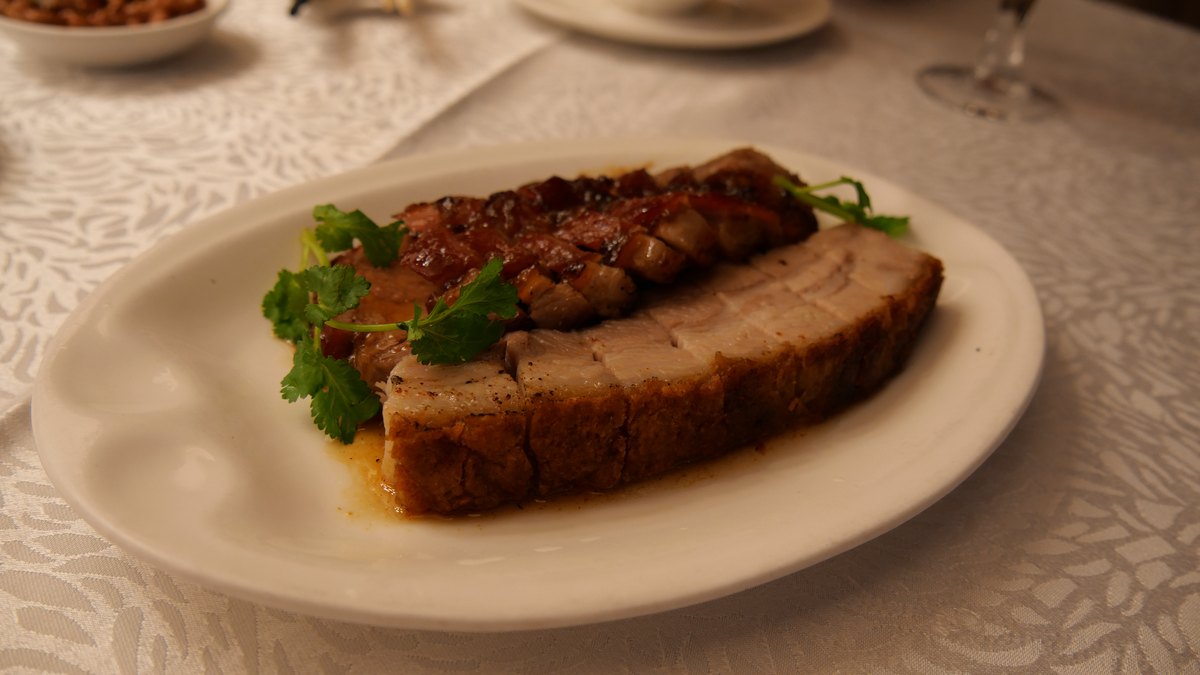
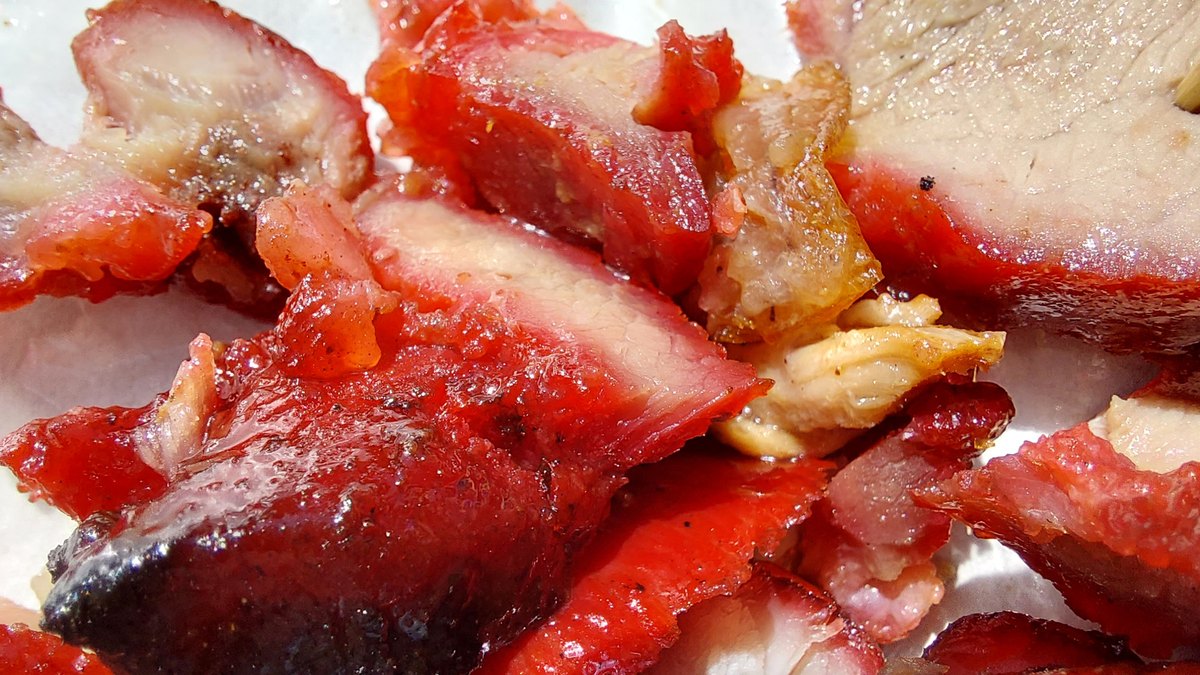
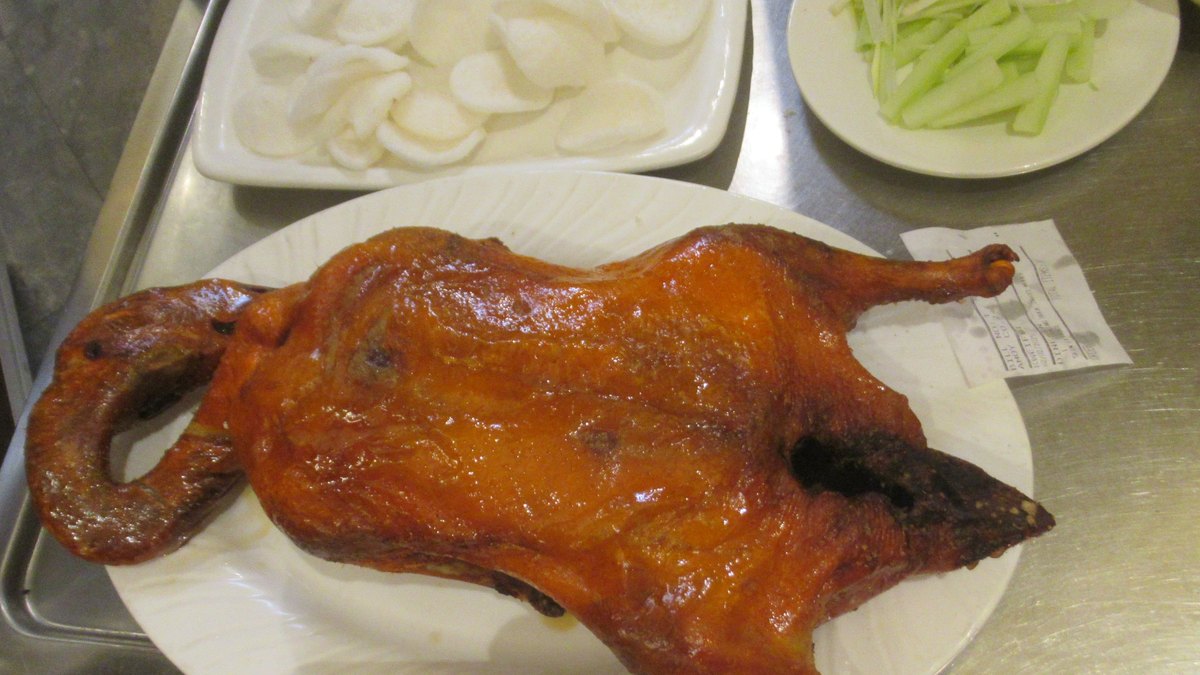
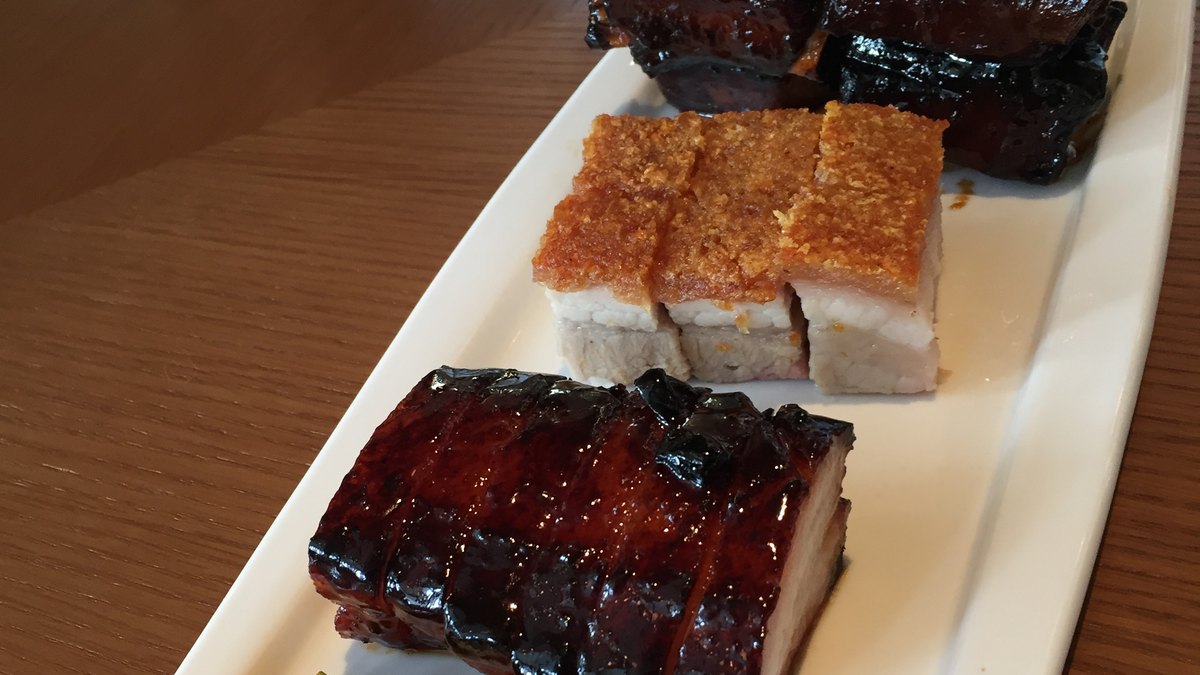
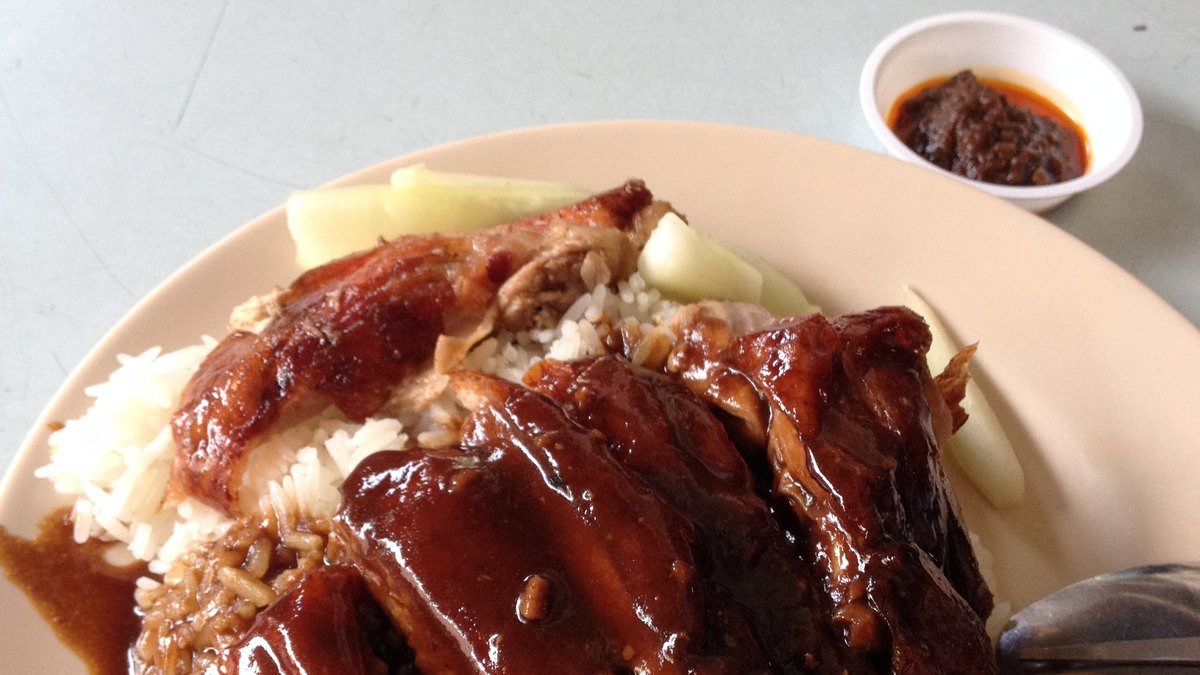
These four dishes share a marinade philosophy but very different techniques. Char siu (叉烧) is pork shoulder or belly marinated in a five-spice, honey and fermented bean curd mixture, then roasted on hooks or skewers until the surface caramelises into that familiar reddish glaze. Siu yuk (烧肉), sometimes called siew yoke, is pork belly roasted skin-side up until the skin blisters into a dry, crackling shell — no glaze, no marinade on the skin itself, just salt and heat. Roast duck (烧鸭) is usually air-dried before roasting so the skin crisps rather than steams, often stuffed with aromatics and basted or finished with hot oil for shine. Roast chicken (烧鸡), less of a headline act but frequently sold alongside the other three, gets a similar air-dry-then-roast treatment for a deeper, smokier flavour than the poached "white cut" style.
What separates a good plate from a great one
The giveaways are consistent across all four dishes. For char siu, look at the fat-to-lean ratio in the cut you're served — a shop that lets you choose (or defaults to) a mix of both, rather than serving a driedout all-lean cut, is usually one that takes the dish seriously. The glaze should taste of more than sugar; a good char siu sauce carries fermented bean curd's savoury edge and a hit of five-spice, not just caramelised syrup. For siu yuk, the test is entirely in the skin: it should shatter audibly when you bite it, not chew like rind, and the fat layer beneath should have rendered down rather than sitting in a thick, waxy band. For roast duck, check whether the skin has actually crisped rather than gone rubbery from steaming in its own juices — a duck that's been left sitting under a heat lamp for hours loses this fast, which is exactly why the best stalls sell out and stop, rather than keep pushing out product all day.
How we chose this list
We searched specifically for Cantonese roast meat specialists — stalls or restaurants where char siu, siu yuk, roast duck or roast chicken is the headline draw, not a side dish tacked onto a chicken rice or wonton mee menu. Every entry below was cross-checked against at least two independent sources this run — food blogs, Tripadvisor or Yelp reviews, the Michelin Guide, or the venue's own Facebook page — and we deliberately left out several well-known names (a Section 17 roast chicken shop, a Kepong stall known mainly for its chicken rice, a Pudu institution better known for its full Cantonese banquet menu) because they're already covered in more detail elsewhere on this site under chicken rice and old-KL-institution listicles. Prices are only quoted where a source this run stated a specific figure; otherwise we've kept descriptions qualitative rather than guessing.
What a plate actually costs in 2026
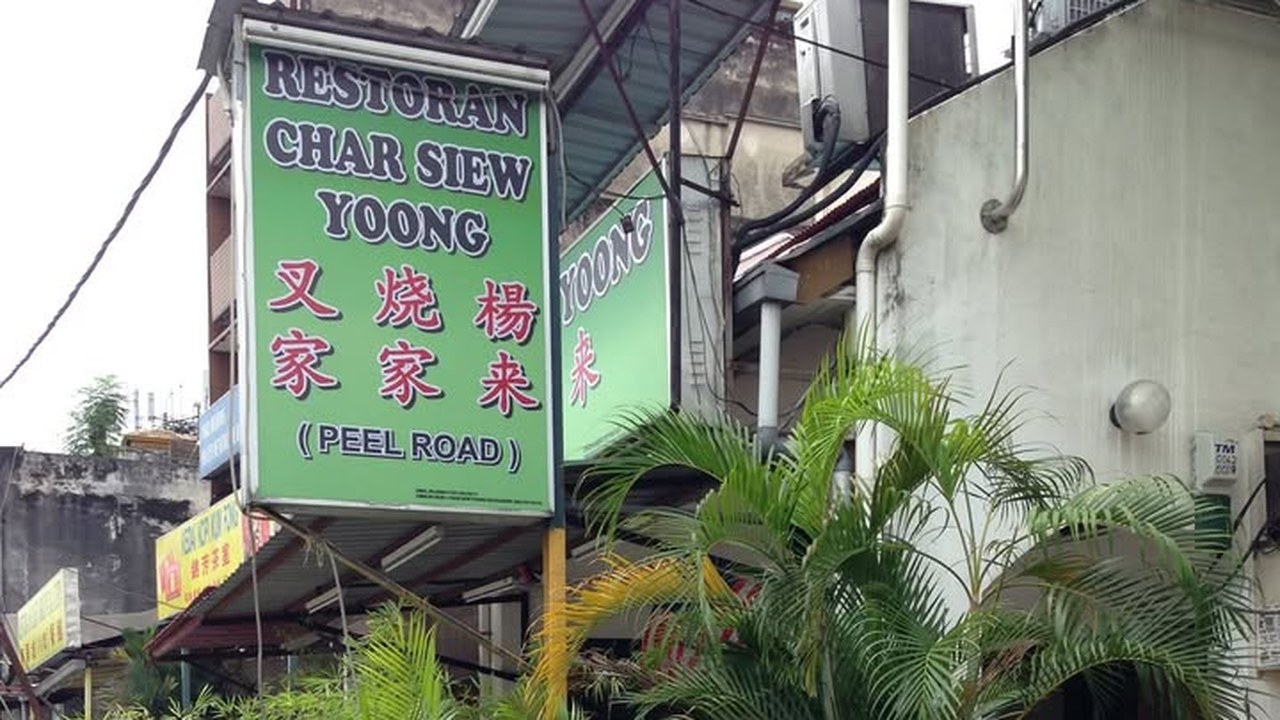
Roast meat is one of the few remaining KL lunches where the hawker stalls and the sit-down chain sit in genuinely different price brackets, and Google's own crowd-sourced spend bands make the gap easy to see. Six of the seven entries here — Char Siew Yoong, Wong Mei Kee, Sun Ming Kee, Kepong Weng Kee, BBQ Kong Meng and Sunrise — all land in the RM20-40 per person band, based on between 73 and 1,058 diner reports each. Village Roast Duck is the outlier at RM40-60 per person, which is what the air-conditioning, the table service and the mall rent buy you.
Individual dishes track the same pattern. Wong Mei Kee's roast pork is RM16 a portion; Sun Ming Kee quotes RM13 for a roast chicken and char siew combo and RM16 for charcoal roast pork; Char Siew Yoong's triple-meat rice set is RM19, with a meat plate closer to RM29. A whole roast duck to take away sits around RM68 at Kepong Weng Kee, though that figure is from early 2025 and none of these shops publish a printed price list online — the number on the wall is the only one that counts.
Which one to pick
If you are chasing the single best plate and can build a morning around it, go to Wong Mei Kee and accept the terms: three hours a day, closed Mondays, no phone booking, no delivery, queue before noon. If you want the same quality without the pilgrimage, Char Siew Yoong and Sun Ming Kee both open for a full six-hour lunch service and are far more forgiving of a late start.
If it is specifically roast duck you want, the choice is between three specialists, and the deciding factor is geography and timing rather than quality: Kepong Weng Kee (north, 1pm-5pm, closed Thursdays), BBQ Kong Meng (east, on the Cheras-Ampang border, 11am-5pm, closed Wednesdays) and Sunrise (west, in PJ, a brutal 11.30am-2.30pm window, closed Mondays). All three take phone reservations for a whole bird, which is the single most useful thing to know about this category — the queue is for walk-in portions, not for pre-ordered ducks.
And if you are feeding a mixed group, bringing someone who wants to sit down, or eating after 3pm on any day at all, Village Roast Duck is effectively the only option on this list. Every other entry has shut its ovens by 5pm at the latest.
Merdeka week: who is open on Monday 31 August
National Day 2026 falls on Monday 31 August, and Monday is the standing rest day for two of the seven. Wong Mei Kee and Sunrise Roast Duck will both be closed. Char Siew Yoong, Sun Ming Kee, Kepong Weng Kee and BBQ Kong Meng all show normal Monday hours on their Google listings, though each carries a "hours might differ" holiday flag, so a phone call is cheap insurance. Village Roast Duck trades its usual 10am-10pm.
The same logic applies to Malaysia Day on Wednesday 16 September, with the pattern rotated: that is BBQ Kong Meng's rest day, while Wong Mei Kee and Sunrise reopen. Sun Ming Kee's own line is that it always opens on public holidays, but its listing showed it closed over the Maulidur Rasul holiday this week, so treat that as a strong likelihood rather than a promise.
Related reads
- Best Chicken Rice Restaurants in KL & PJ — the other half of the Cantonese lunch counter
- Best Claypot Rice Restaurants in KL & PJ — charcoal cooking, same neighbourhoods
- Bak Kut Teh in the Klang Valley — for when the craving is pork but not roasted
*Image: a Cantonese siu mei shop window hung with roast duck and roast chicken (illustrative, not one of the shops listed above) — KWANRZEEM Won LIMDDABBIE (Wikimedia Commons, CC BY-SA 4.0). Item photos: #1 is Char Siew Yoong's own photo from its official Facebook page. #2 Peachyeung316 (CC BY-SA 4.0), #3 DasChinatowner (public domain), #4 Michael (public domain), #5 CNEcija12345 (CC BY-SA 4.0), #6 Jacklee (CC BY-SA 4.0) and #7 Banej (CC BY-SA 4.0), all via Wikimedia Commons — representative plates of each shop's headline dish, not photographs of that specific shop's serving.*