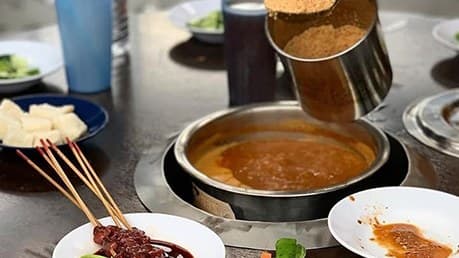
What Satay Celup Actually Is
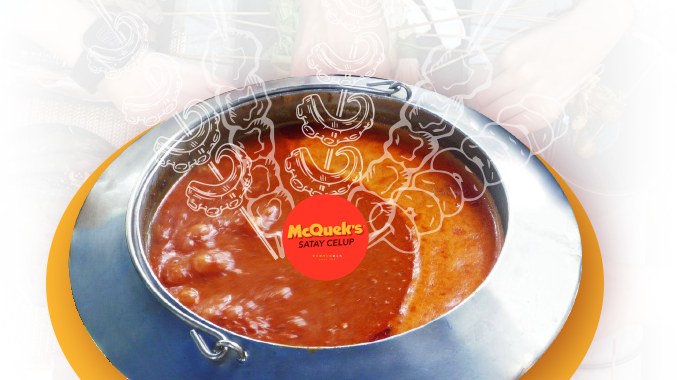
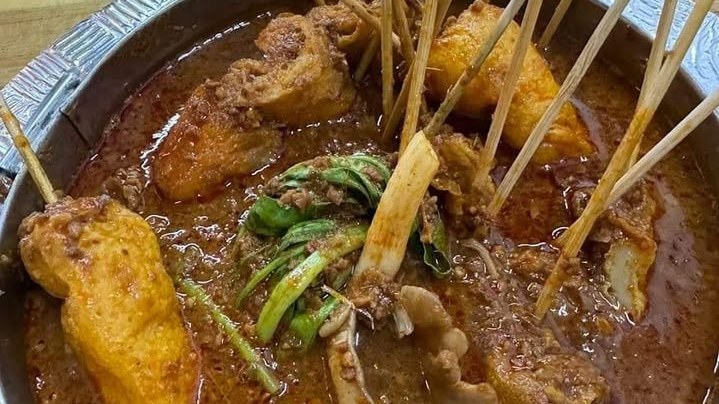
Satay celup (literally "dipping satay") is a dish you will not find outside Melaka — and locals will tell you that firmly. It takes the raw materials of a steamboat (skewers of meat, seafood, tofu, vegetables and processed items like fish balls, pulled straight from a chiller) and cooks them the way regular satay is served: dunked into a thick, dark, constantly bubbling pot of peanut-based sauce sitting in the middle of the table over a flame. You pick your own skewers, drop them in, wait for them to cook through, then eat straight off the stick once they're done — no rice, no plate, just the communal pot everyone at the table shares.
The dish is generally traced back to the mid-1950s in Melaka, credited to a hawker whose family eventually built Capitol Satay into the city's most talked-about satay celup name. It differs from regular satay (sate) in that the meat isn't grilled over charcoal — it's boiled in the sauce itself — and it differs from a normal steamboat in that the "broth" is a rich peanut gravy rather than a clear or spicy stock. Satay celup restaurants in Melaka price skewers per stick, commonly from around 80 sen and climbing by item (seafood and specialty skewers cost more than basic vegetables or processed items). In practice that lands most tables in the RM20–RM40 per person band that Google reports for Capitol, McQuek's, Ban Lee Siang, Ryan Kota, Ming Chi and Ku Cha Bi alike; Kingtu is the outlier at RM1–RM20 a head, and the one fixed-price option is the halal buffet at Chatterz, at RM68 per adult.
This list is deliberately different from our separate roundup of Melaka's Nyonya and Peranakan restaurants — none of the eight spots below overlap with that piece. These are specialists in one dish: the peanut-sauce pot.
Plan Around the Rest Days First
Satay celup is an evening dish — nothing on this list serves lunch, and the earliest door to open is Ban Lee Siang's at 1.30pm on a Sunday. The bigger trap is the weekly rest day, because six of the eight spots take one and they do not fall on the same day.
Wednesday is the worst night to want satay celup in Melaka. Two of the three most famous names — Ban Lee Siang and McQuek's — are both shut, and Ban Lee Siang stays shut on Thursday as well, the longest weekly break here. Thursday also takes out Ming Chi. Tuesday removes Ryan Kota. Monday removes Capitol, whose Google listing, re-checked on 17 September 2026, now marks Mondays closed after showing Monday evening hours on 8 September. And Kingtu, which older guides (including an earlier version of this one) recommend as the quiet midweek alternative to the tourist-strip queues, now trades Friday to Sunday only — so it is the opposite of a midweek fallback.
That leaves one shop open every single night: Ku Cha Bi in Taman Malim Jaya, 6pm–11pm. Capitol in Kota Syahbandar is the next safest bet, open Tuesday to Sunday and until 2am or 3am. If you are driving in on a Wednesday or a Thursday, book one of those two. On a Monday, skip Capitol and Kingtu: McQuek's, Ban Lee Siang, Ryan Kota, Ming Chi and Ku Cha Bi are all trading.
One more thing that catches visitors out at the counter: Capitol stopped accepting cash and credit/debit cards on 23 August 2026, and now takes e-wallet payment only — Touch 'n Go eWallet, DuitNow, WeChat Pay or Alipay. The shop's own notice asks foreign customers without one of those to speak to counter staff before ordering. The Chatterz buffet is cashless too.
Heritage Core: Bandar Hilir & Kota Syahbandar
Capitol Satay Celup — Widely credited as the pioneer of satay celup in Melaka, Capitol traces its roots to the mid-1950s, when the founder's grandfather sold satay from a kandar (shoulder-pole) stick before the family eventually opened a stall in front of the old Capitol cinema on Lorong Bukit Cina. After more than 30 years at that Bukit Cina address, the original outlet closed in November 2021 amid pandemic-era pressures, and the business relocated to a new, air-conditioned shop at 30, Jalan KPKS 3, Kompleks Perniagaan Kota Syahbandar, reopening around March 2022. It's now run by the third generation of the same family, and remains the name most tourists ask for first — expect a queue that can stretch well past an hour on weekends. The sauce here is noted for being thick and heavily spiced with aromatics. Its Google listing, re-checked on 17 September 2026, shows 5pm–2am Tuesday to Thursday, 5pm–3am on Friday and Saturday, 5pm–2am on Sunday, and Monday closed — far later than the 11pm-to-midnight closings elsewhere on this list. The same listing showed Monday evening hours as recently as 8 September, so the Monday rest day has only just reappeared; if Monday is your only night in Melaka, ring 013-911 4393 first. Payment is e-wallet only.
McQuek's Satay Celup — Started as "Kuok's Teochew Satay" in 1930, McQuek's is one of the longest-running satay celup names in the city, now on its third generation of the Guo family after roughly 90 years in business. The main branch sits at 231/288 Jalan Parameswara in Bandar Hilir, an easy walk from the Bandar Hilir tourist cluster, and operates from mid-afternoon into the night. McQuek's sources its own ingredients closely — the family has spoken publicly about sourcing onions from Thailand, garlic from China and peanuts from India, and growing their own galangal and lemongrass — and it's often recommended as a calmer, less-queued alternative to Capitol with a comparably strong sauce. It runs 4pm–11pm and closes on Wednesdays, so a midweek trip built around McQuek's needs to be a Tuesday or a Thursday.
Chinatown-Adjacent: Ong Kim Wee & Kota Laksamana
Ban Lee Siang Satay Celup — Located at 45-E, Jalan Ong Kim Wee, a short stroll from the Jonker Street area, Ban Lee Siang is frequently named alongside Capitol as one of the two spots locals argue over. Reviewers who say they've tried "almost every" satay celup shop in Melaka often rate Ban Lee Siang as the most consistent in taste, with a fridge-and-tray self-service system where you pick skewers yourself before the pot of sauce arrives at your table. Recent visitor reports put regular skewers at around RM1.30 each and the longer specialty skewers at about RM1.60, which puts a normal table in the RM20–RM40-a-head range. Its hours are the most awkward on this list: it closes on both Wednesday and Thursday, and on trading days it opens 3pm Monday, Tuesday and Friday, 2.30pm Saturday and 1.30pm Sunday, shutting at 11pm. That early Sunday opening makes it the only realistic option here for an early-evening rather than late-night meal.
Ryan Kota Satay Celup — A newer, air-conditioned entrant at 21/22, Jalan KLJ 10, Taman Kota Laksamana, Ryan Kota has built a following for a sauce visitors describe as fragrant with lemongrass, sengkuang (jicama) and ginger rather than purely sweet-and-nutty. Each table gets its own freshly prepared pot, and the side-alley location means parking is easier than in the tourist core — reviewers note a minimum spend requirement per table, reported at around RM40. It's a good pick if you want the experience without the Bandar Hilir crowds — as long as you are not going on a Tuesday, its rest day. The other six nights it runs 5pm–1am, later than every shop here except Capitol.
Suburban Institutions: Cheng, Malim Jaya & Kenanga
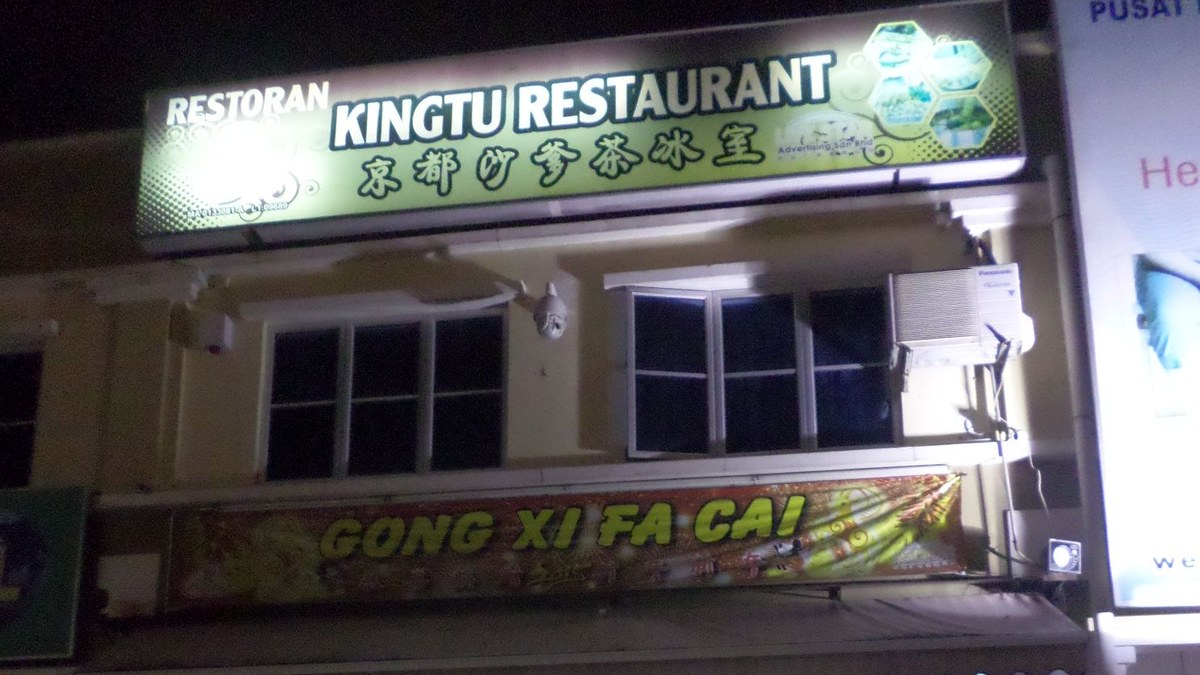
Kingtu Satay Celup (Kingtu Restaurant) — Tucked into a residential stretch at 9, Jalan CU 4, Taman Cheng Utama, Kingtu is regularly cited as one of the oldest satay celup operations in Melaka, and is frequently recommended precisely because it isn't in the tourist zone: it has more indoor seating and air-conditioning, so the notorious queues that build up outside Capitol and Ban Lee Siang are far less of an issue here. The menu leans smaller than some of the bigger names, but its peanut gravy has a loyal following among those who like it spicier. The important caveat is scheduling: its listed hours are now Friday to Sunday only — 7pm–11.30pm on Friday and Saturday, from 6.30pm on Sunday — so the frequent recommendation to use Kingtu as a midweek escape from the tourist queues no longer works. It is, however, the cheapest spot in this roundup, with a reported spend band of RM1–RM20 per person against RM20–RM40 almost everywhere else.
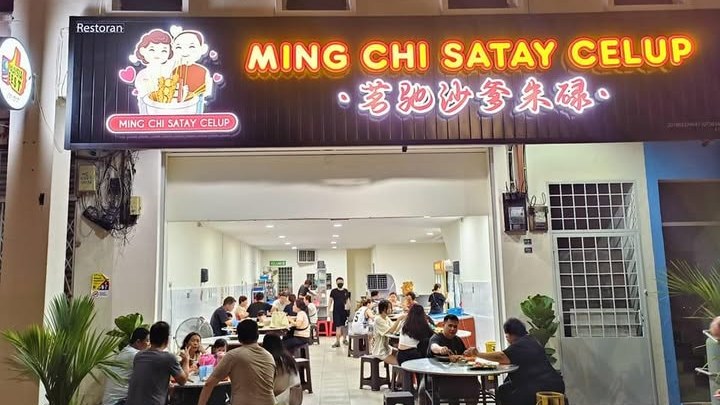
Ming Chi Satay Celup (茗驰沙爹朱律) — On Jalan Kenanga, Ming Chi is a kopitiam-style operation run by the Koh family into its third generation, with a home recipe the family says goes back roughly four decades. It offers a notably large spread — more than 60 different lok-lok-style items are said to be laid out daily — and the sauce recipe is positioned as the shop's unchanged signature. Like most Melaka satay celup spots it only opens in the evening: 5.30pm–11.30pm, closed on Thursdays.
Ku Cha Bi Satay Celup (古早味沙爹朱律) — In Taman Malim Jaya, a quieter residential area outside the old town, Ku Cha Bi has been running for roughly three decades and is now on its second generation. The name literally means "old-school flavour," and the shop is known locally for the freshness of its raw ingredients — vegetables, meat and seafood are said to be restocked daily — with a sauce that balances nutty and spicy without leaning too heavy or too sweet. It is at 1-19, Jalan Rahmat 1 and opens daily 6pm–11pm — no weekly rest day, which makes it the only shop here you can count on any night of the week now that Capitol has gone back to closing on Mondays.
The Halal Option: What Actually Survives
Most of Melaka's best-known satay celup shops serve pork, which puts the dish out of reach for Muslim diners — and the dedicated halal shops that used to fill that gap have closed.
NZ Satey Celop is gone. The Limbongan outlet at No. 19, Jalan Kristal Merah 2, widely described as the city's first halal satay celop shop and still listed as halal by the official Tourism Melaka portal, is marked permanently closed on Google, its newest review is four years old, and the owner's own Facebook page carried a post in May 2025 saying he had given up the shop and was starting again from a burger stall pitch. The two other halal names that circulate — Chucuk Chucuk on Jalan Delima in Bukit Beruang and Satay Celup Abdullah Lim / Cowboy Lim on Jalan Kenanga 3/8 — are both flagged permanently closed as well. The Tourism Melaka page that still lists NZ also still lists Capitol at its pre-2021 Lorong Bukit Cina address, which is a useful reminder that the official portal is not being kept current.
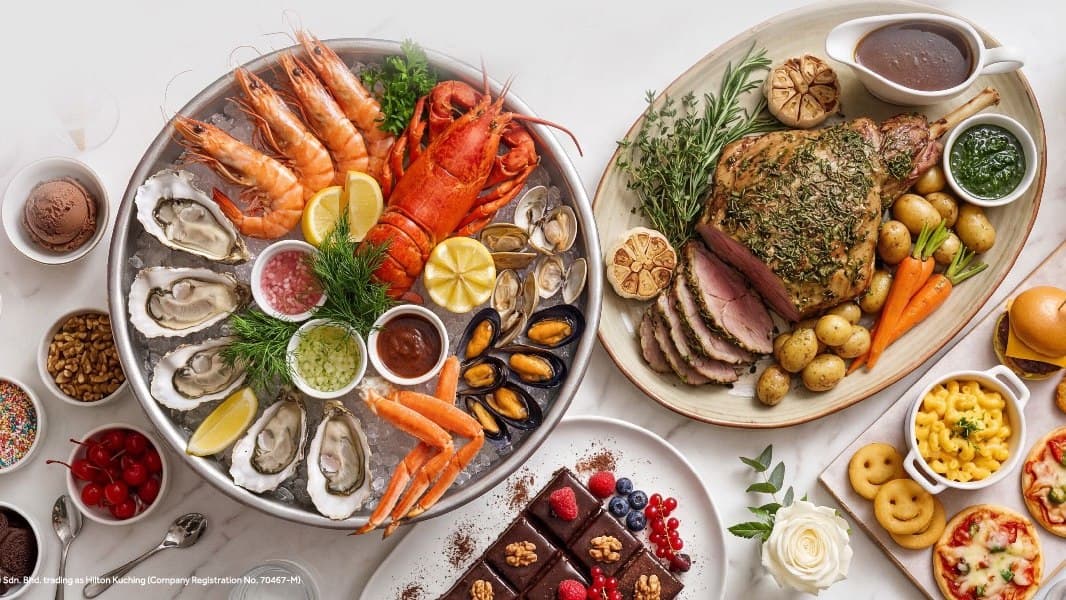
Chatterz, Hatten Hotel Melaka — What is left, and what we can verify, is the all-you-can-eat Satay Celup Buffet at Chatterz on Level 11 of Hatten Hotel Melaka, Jalan Merdeka. The hotel's own campaign artwork for the buffet carries the JAKIM Malaysia Halal mark alongside the BeSS (Bersih, Selamat, Sihat) hygiene mark, which is a stronger basis than the second-hand "it's halal" claims attached to most listings. It runs Fridays and Saturdays only, 6pm–9.30pm, and prices are fixed rather than per stick: RM68 per adult, RM48 per senior citizen, RM28 per child. Payment is cashless only, and reservations go through +606 221 9448 or WhatsApp +6012 969 7295. The buffet page, re-checked on 17 September 2026, still lists the same Friday–Saturday run and prices, which have applied since 1 May 2026.
It is a hotel buffet rather than a shophouse, and the format is a fair way from a plastic stool on Jalan Ong Kim Wee. But at the time of writing it is the only satay celup in Melaka we can point a Muslim visitor to with a certification mark behind it.
What We Left Out
NZ Satey Celop, which appeared as the halal pick in the previous version of this list, has been removed — the Limbongan shop is marked permanently closed on Google, its newest review is four years old, and the owner posted in May 2025 that he had given up the shop. Chucuk Chucuk in Bukit Beruang and Satay Celup Abdullah Lim in Taman Kenanga, the two other halal names in circulation, are flagged permanently closed as well; the halal slot on this list now goes to the JAKIM-marked buffet at Chatterz, Hatten Hotel. Kah Him Satay Celup on Jalan Tun Perak appears on the Tourism Melaka portal's list but we have not been able to verify enough about its current trading to rank it here.
A few other names that circulate online didn't make the cut either. "Kong Fei Satay Celup" and "Restoran Yoke" — both sometimes mentioned in casual online lists — could not be verified as currently trading satay celup businesses in Melaka despite repeated searches; the closest match for "Yoke" was an unrelated dim sum restaurant in Ipoh, not Melaka. Sun May Hiong Satay House on Jalan Kota Laksamana, a genuinely famous and long-running Melaka institution, was deliberately excluded because it specializes in grilled satay (satay bakar) served with a distinctive pineapple-peanut dipping sauce — a different format from the shared boiling-pot satay celup this list covers, even though the two dishes get lumped together casually. A stall referred to inconsistently online as "Satay Celup Nyonya" or "Satay Celup Supper Station" in Taman Melaka Raya was also dropped, since its name and identity couldn't be pinned down consistently across sources. Finally, this list is intentionally separate from our "8 Best Nyonya & Peranakan Restaurants in Melaka" piece — none of the eight spots above appear there, since that roundup covers Baba-Nyonya kitchens rather than satay celup specialists.
Related reads
Building a full Melaka trip around the peanut pot? These four go with it:
- 8 Best Nyonya & Peranakan Restaurants in Melaka — ayam pongteh, Nyonya laksa and cincalok, for the daytime meals satay celup can't cover.
- 8 Best Heritage & Boutique Hotels in Melaka — shophouse stays on Heeren Street and Jonker Walk, walkable to the Bandar Hilir satay celup shops.
- Family-Friendly Things to Do in Melaka — what to do before the 5pm queues start.
- 8 Melaka Food Institutions Worth Planning a Trip Around — chicken rice balls, cendol and Nyonya kitchens with their own rest days, to pair with a satay celup night.
*Image: A satay celup table with its shared pot of bubbling peanut sauce — photo via McQuek's Satay Celup (mcquek.com). Chatterz buffet image: Hatten Hotel Melaka (hattenhotel.com).*