7 Family-Friendly Things To Do in Labuan 2026
Labuan's reputation runs on wreck diving, duty-free shopping and ambuyat — a good weekend with friends, less obviously a family trip with young kids in tow. But the island is 92 square kilometres, nothing on it is more than about 20 minutes away, and the two best rainy-afternoon stops cost nothing at all. That combination makes it one of the cheapest family destinations in Malaysia, provided you know what is actually open and what it costs.
We re-checked every entry below on 27 August 2026 against the Department of Museums Malaysia listings (themselves updated 24 August 2026), Labuan Tourism's own attraction guides, and Google Maps' live hours. Two things came out of that re-check that are worth flagging up front, because most Labuan guides — including an earlier version of this one — get them wrong:
- You do not need a licensed tour agent to visit Kampung Patau-Patau. The water village is connected to shore by a road bridge and public walkways. No gate, no ticket, no booking. A guide is an upgrade, not an entry requirement.
- Pulau Papan boats are arranged at the Sea Sports Complex jetty, not exclusively through agents — roughly RM30–50 per person on a shared run, or RM200–400 to charter.
And one thing that is genuinely missing from most Labuan family lists: the Bird Park.
1. Labuan Marine Museum — free, with a touch pool and a 42-foot whale skeleton
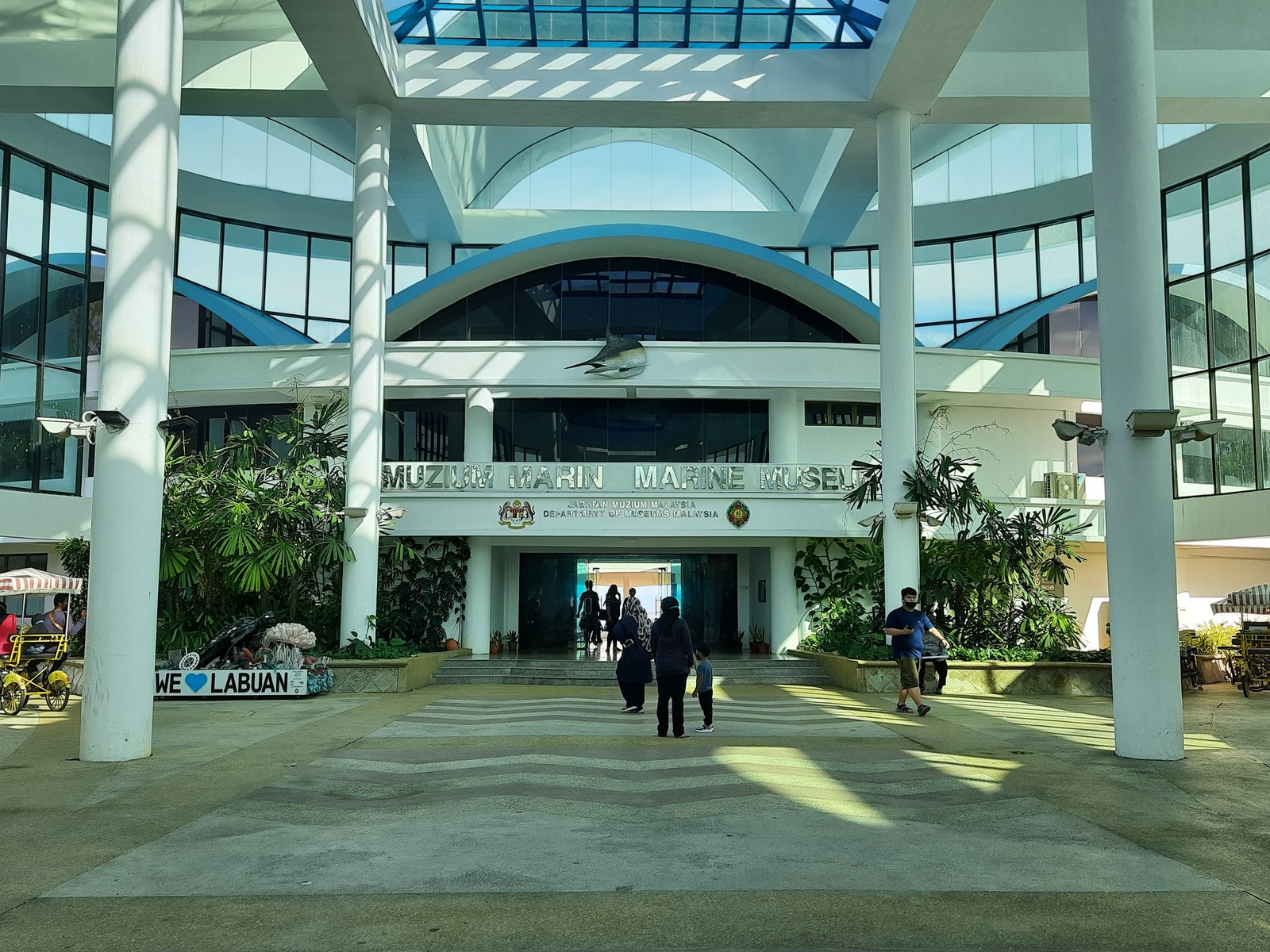
Tucked inside the Labuan International Sea Sports Complex on Jalan Tanjung Purun, this shell-shaped, two-storey museum holds 14 aquariums of varying sizes downstairs and three coral-reef aquariums upstairs, plus a marine specimens gallery and a section on the four famous shipwrecks lying in Labuan waters.
The touch pool is the obvious family draw — sand sharks, black-tip sharks, king crabs, starfish, snails and stingrays, handled under staff supervision. The one most visitors do not expect is the centrepiece of the collection: a 100-year-old, 42-foot Indian fin whale skeleton, found at Sebatu Beach in Malacca, displayed at the Raffles Museum in Singapore and the National Museum in Kuala Lumpur before it ended up here. The museum holds 572 specimens and objects in total, including diving gear and traditional fishing tools.
Entry is free; open daily 9am–5pm, closed only on the first two days of Hari Raya Aidilfitri and the first day of Aidiladha. Car park, surau, toilets, food court and a recreational park on site, and bus number 1 from town stops nearby. Tel 087-425 927.
2. Labuan Bird Park — 600-plus birds, and a 2pm Monday opening
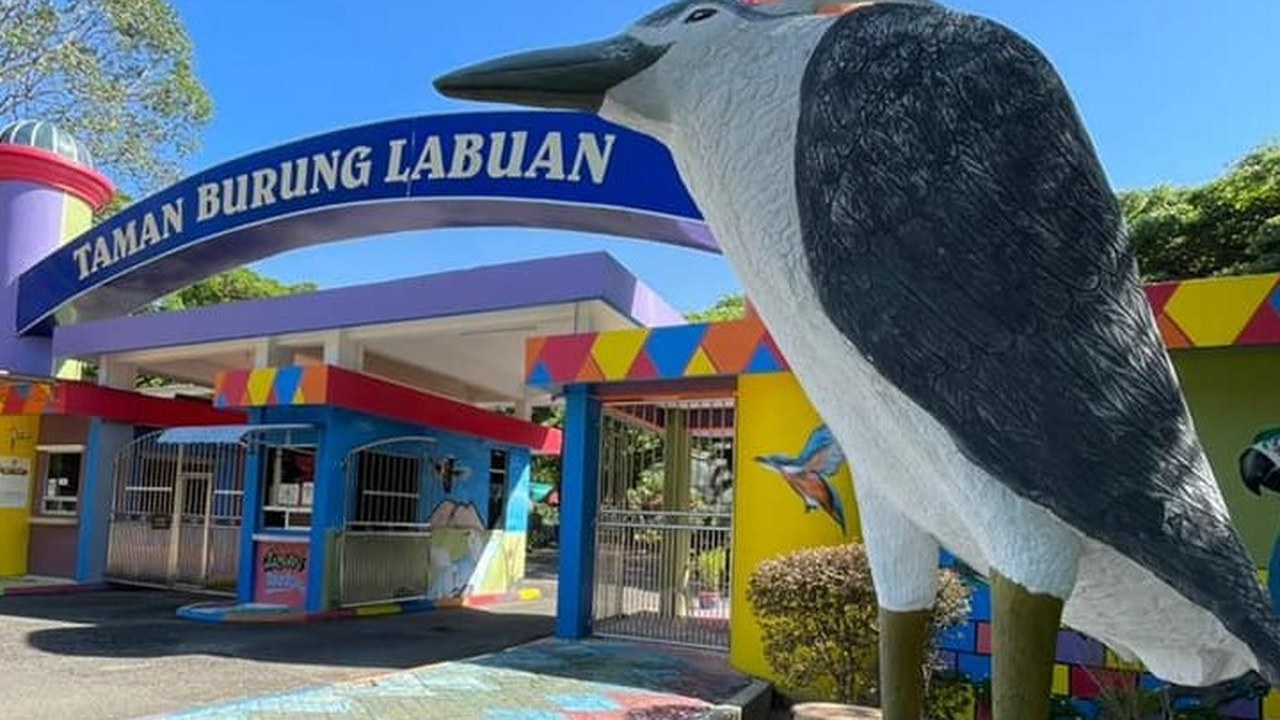
This is the island's one proper paid family attraction, and the one most Labuan lists leave out entirely. Taman Burung Labuan occupies 6.9 hectares near the northern tip of the island, directly opposite The Chimney — about 16km and 20 minutes from town, so plan a car or a Grab.
More than 600 birds live in three large geodesic domes linked by four tunnels, so this is a walk-in aviary rather than a row of cages: hornbills overhead, parrots at feeding stations, and — the part kids actually remember — peacocks, ostriches, ducks, swans and chickens roaming free on the paths. Feed and pellet packs are sold at the entrance for about RM1 each.
Widely published rates put admission at roughly RM3 for a Malaysian adult, RM1 for a child, RM2 for students and senior citizens and RM5 for non-Malaysians, with under-6s free. The park does not publish a rate card online, so treat those as indicative and confirm at the gate — every source agrees it is a token fee.
The thing to plan around is the hours. Google Maps and Labuan Tourism both show Tuesday to Sunday 9am–4.30pm, but Monday opening at 2pm. Turn up on a Monday morning and you will be standing at a closed gate. Allow one to one and a half hours. Tel 087-463 544.
3. Labuan International Sea Sports Complex — water sports, and the island-boat jetty
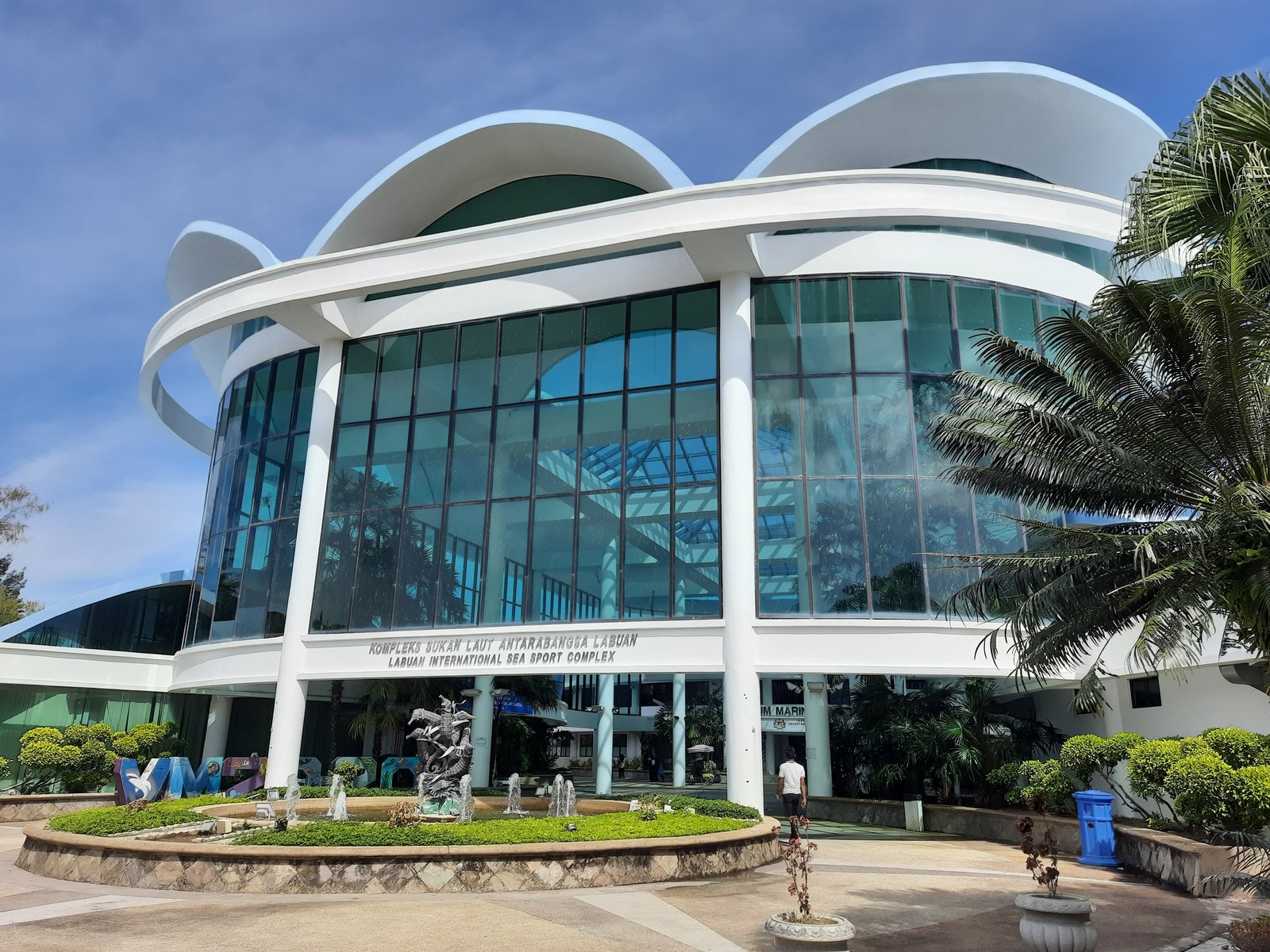
Right next door to the Marine Museum on the same waterfront, this 5.91-acre complex opened in 2001 and is set up for sailing, jet-skiing and kayaking, with an administrative block, eateries and souvenir shops.
Two reasons to build a morning around it. The operators based here rent equipment and run guided sessions, and the water off Tanjung Batu faces the sheltered Brunei Bay rather than the open sea — consistently calm, which matters for a first jet-ski session. And this is the departure point for every island-hopping boat from Labuan, so if you want an island day, this is where you arrange it.
In the evening, the waterfront road behind the beach fills with seafood and satay stalls, which makes a natural end to a day that started at the museum next door.
4. Layang-Layangan Beach — the island's best sunset, free, near-empty on weekdays
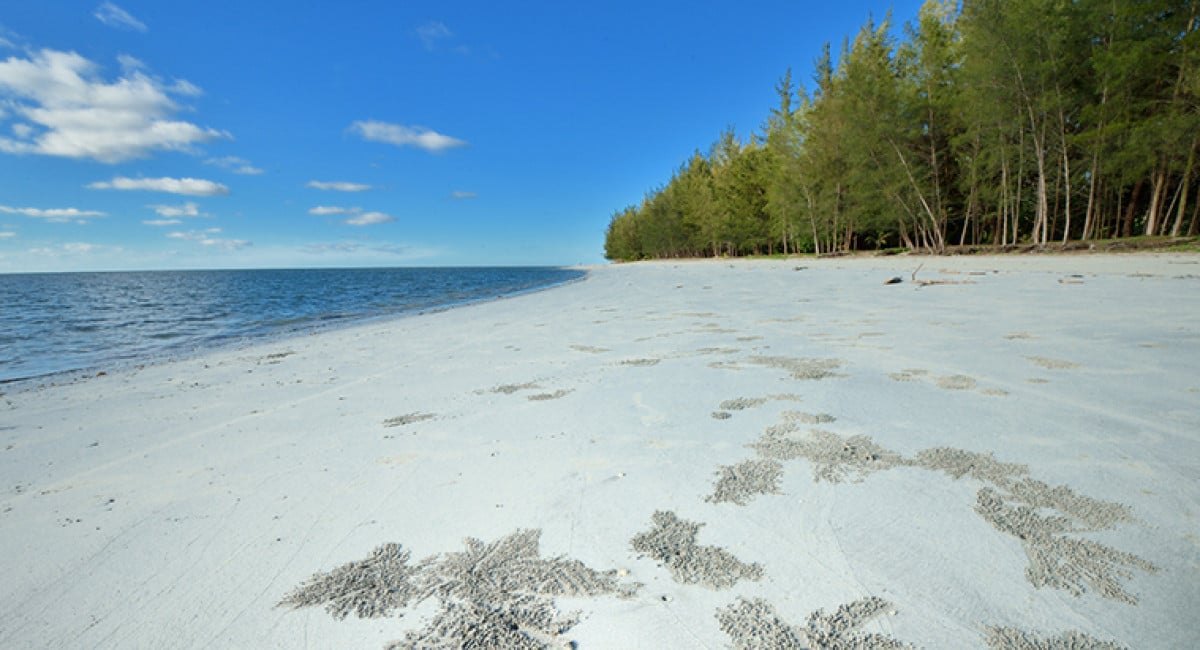
Near the northwest tip, about 15 minutes by car from town (Grab RM12–15, free parking), Layang-Layangan is one of three Labuan beaches — with Batu Manikar and Pancur Hitam — recognised in the UNEP COBSEA Clean Beach Award in 2008, which is why locals still call this stretch the "UN beach".
It is wilder and coarser-sanded than Pancur Hitam, with vegetation running close to the waterline, and on a weekday you may have a long stretch of coast almost to yourselves. It is widely rated the island's best sunset spot, there is a regular night market nearby for a cheap dinner after, and the Peace Park memorial is a short walk away.
One honest caveat: if your kids need food stalls, toilets and a gentler slope into shallow water, Pancur Hitam on the west coast is the better family beach — broad soft sand, calm shallow water, stalls, toilets and parking, about 10 minutes from town and RM8–12 by Grab.
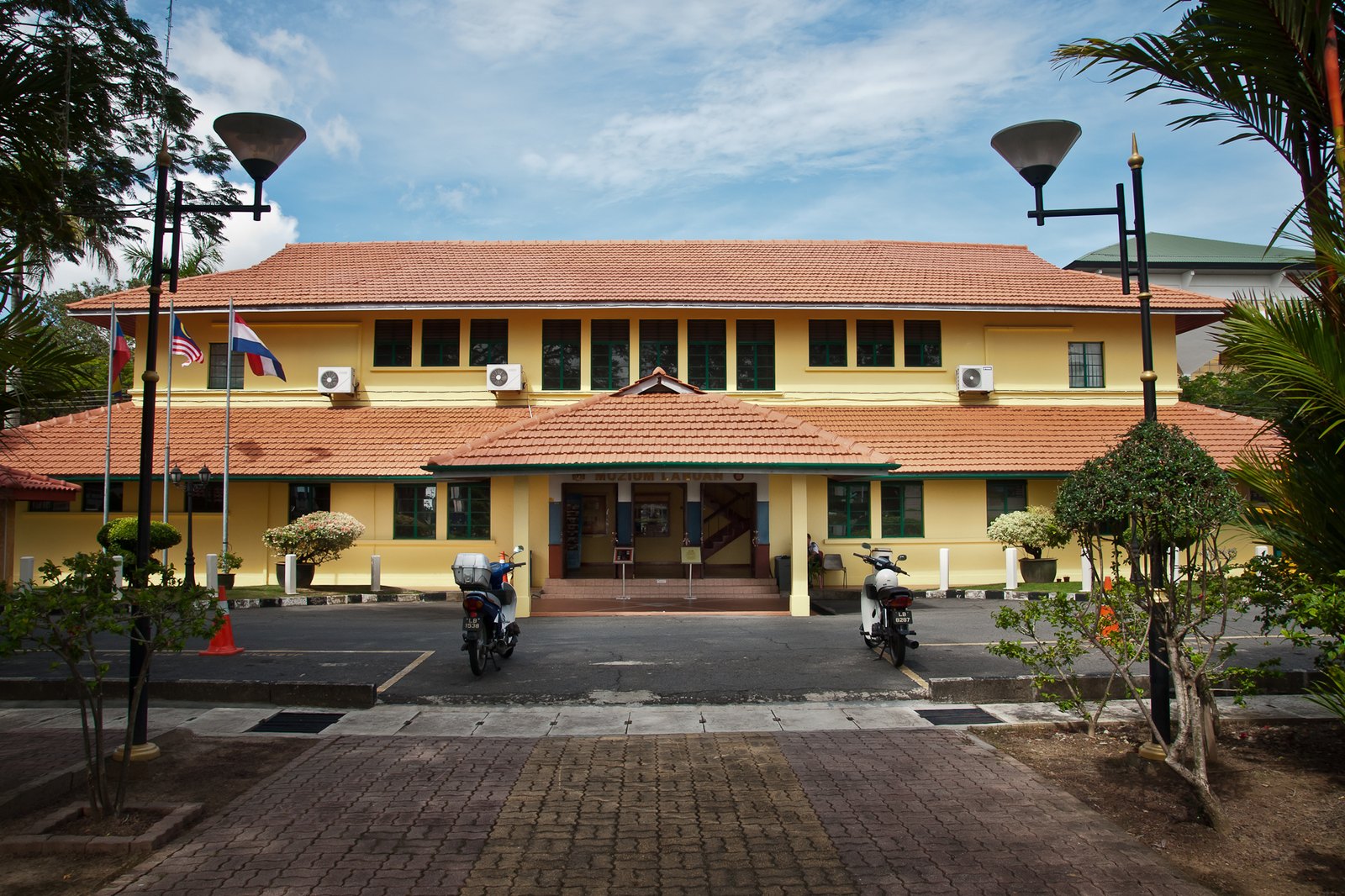
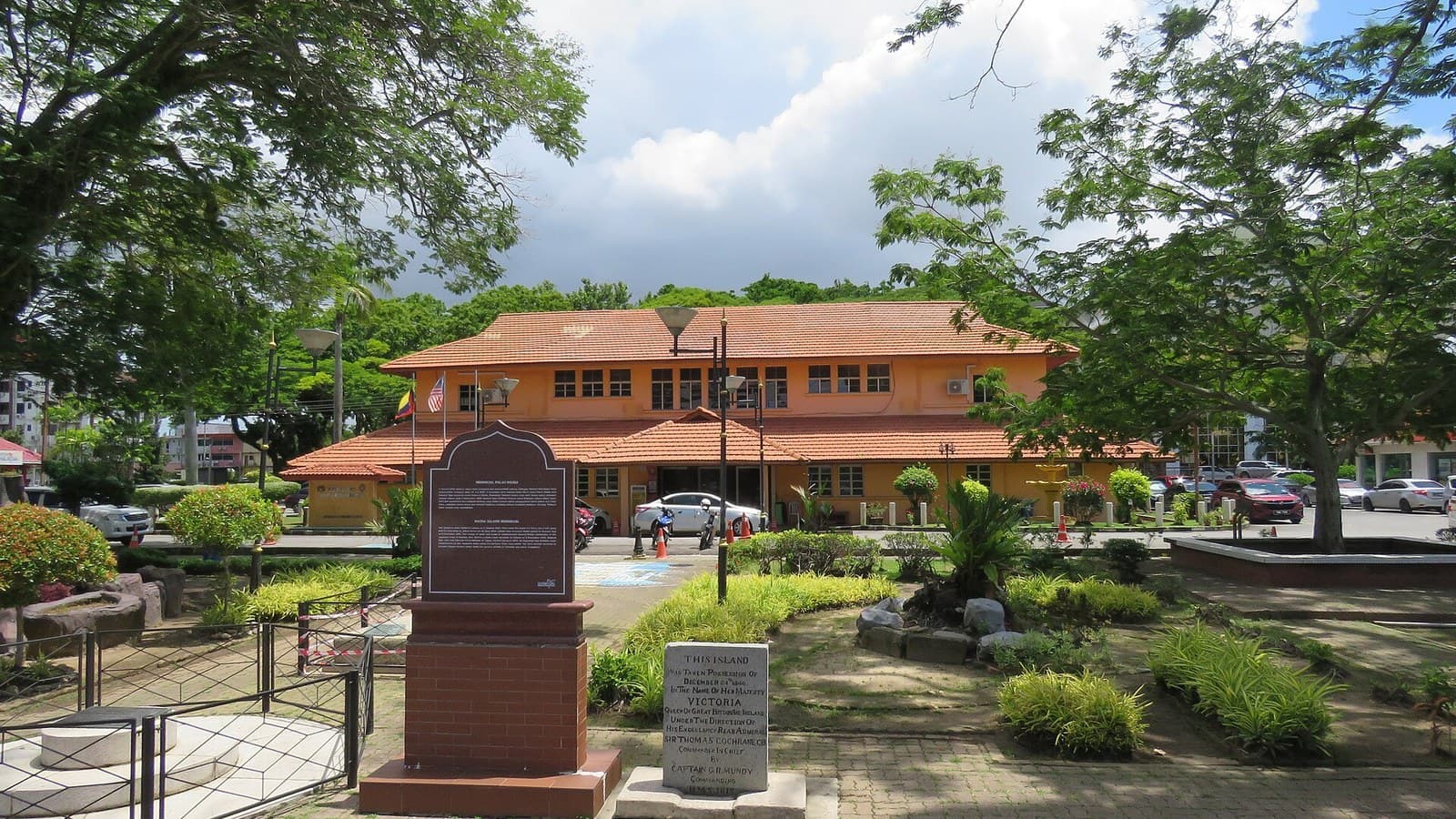
5. Labuan Museum — free, 707 exhibits, and the desk Labuan was signed over on
A two-storey colonial building on Jalan Dewan opposite Labuan Square, built in the 1950s as the British Administration Office and later the district office. The museum opened in 2004 and holds 707 exhibits across two galleries — downstairs runs chronologically from prehistory through the Brunei Sultanate, British rule, WWII and Federal Territory status; upstairs covers the island's Brunei Malay, Kedayan, Chinese, Kadazandusun, Indian and Sikh communities.
For kids, it is the full-size replica Kedayan house and the dioramas of old streetscapes that hold attention. For adults, the standouts are a Neolithic stone quern found on Pulau Burung, Allied anti-submarine weaponry from the war, and the actual pen, chair and table used when Labuan was declared a Federal Territory in 1984.
Free, daily 9am–5pm, same two Hari Raya closures as the Marine Museum. There is a post office, TM Point, tourism information centre and restaurant on site, and it is roughly 8 minutes from the airport by taxi. Tel 087-414 135.
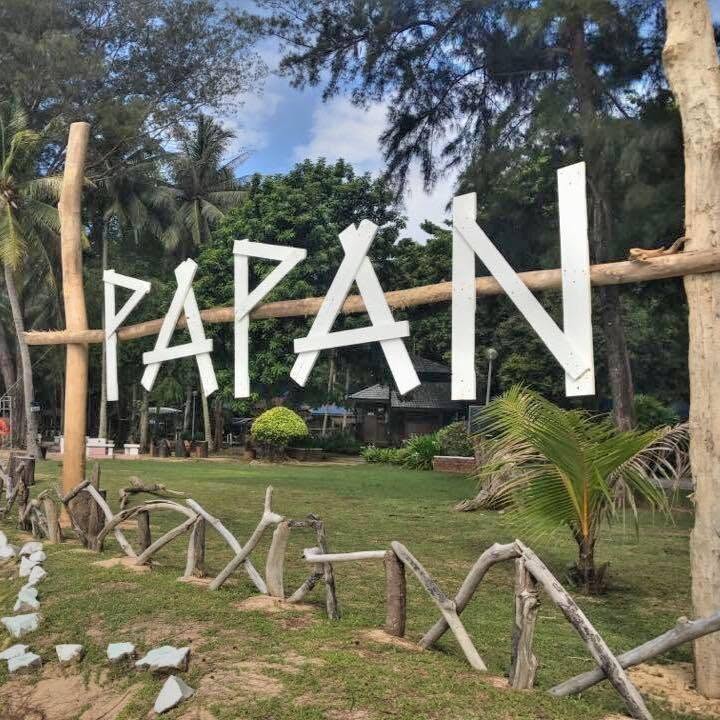
6. Pulau Papan — the closest island, about RM30–50 per person
Papan is the nearest of Labuan's surrounding islands, roughly 15 minutes across sheltered water, which is exactly why it suits families with young children better than Rusukan or Kuraman further out. The beach is modest, but the water is calm and shallow close to shore, and unlike the undeveloped outer islands it has sheltered picnic areas and basic toilets. Bring snorkel gear for the rocky edges.
The correction: this guide previously said private trips are not allowed and an authorised agent is required. Labuan Tourism's own island-hopping guide says otherwise. All island boats leave from the jetty by the Sea Sports Complex, and you can arrange one there, through your hotel, or through a dive operator. Budget roughly RM30–50 per person on a shared run to the popular islands, or RM200–400 to charter — which makes sense for four or more, and lets you add Rusukan Kecil for snorkelling or Kuraman for a beach lunch.
Book a day ahead during the March–May peak and over public holidays; otherwise walk-up arrangements are usually fine. Bring cash — there are no ATMs or card facilities on the islands.
7. Kampung Patau-Patau — a free stilt-village walk, no ticket needed
Labuan has two water villages built on stilts over the sea, home to Brunei Malay communities: Kampung Patau-Patau, the larger and more visited, six minutes from Victoria town on the west coast; and the quieter Kampung Bebuloh beside the Bebuloh Laut geosite.
Both are open to independent visitors. There is no gate, no ticket and nothing to arrange — the villages connect to shore by road bridge and walkways, and the main boardwalks are public thoroughfares. Grab runs about RM5–8 to Patau-Patau and RM10–12 to Bebuloh. Allow one to two hours of walking; late afternoon is best at Patau-Patau for light and temperature, early morning at Bebuloh for the fishing activity.
A guide is worth it if you want more than a walk. A 2–3 hour guided visit arranged through your hotel or a local operator typically includes a home-cooked meal and introductions to residents, and some Patau-Patau families offer homestays if you want to sleep over the water. Be respectful — these are homes, not an exhibit. Ask before photographing anyone.
How to pick, if you only have a day
If you have one day, do the waterfront first: the Marine Museum and Sea Sports Complex share a stretch of Jalan Tanjung Purun and combine into one easy half-day. Drive north after lunch for the Bird Park — any day but Monday morning — and finish at Layang-Layangan for sunset, with the night market nearby for dinner.
If you have two days, give day one to the water (a morning boat to Pulau Papan, then the Marine Museum next door in the afternoon) and day two to land (Bird Park in the morning, Labuan Museum after lunch, Kampung Patau-Patau in the late afternoon light).
If you have toddlers, skip the island and do Pancur Hitam instead — the shallow, gently sloping water and on-site toilets and stalls do more for a family with a three-year-old than a boat ride does.
And if it rains, both museums are indoors, both are free, and neither closes on a Monday. That is the whole plan-B.
Related reads
- 8 Things To Do (And Eat) in Labuan 2026 — the wreck-and-heritage version of this island, for older kids and adults
- Best Seafood Restaurants in Labuan 2026 — where to eat after a day on the water
- Best Hotels & Resorts in Labuan 2026 — including the Palm Beach end of the island, near the Bird Park
*Image: Labuan Museum, Bandar Labuan — Calistemon (Wikimedia Commons, CC BY-SA 4.0)*