Ask other parents what a kindergarten costs and you will usually hear a monthly figure. That number is the least useful one. What decides the bill is what comes on top of it: registration fees that are never refunded, deposits collected up front, meal plans charged separately, and half-day sessions that cost almost as much as a full day.
So instead of ranking schools, this is a fee check. On 14 September 2026 we read the published fees of eight preschool options in KL and the Klang Valley on each operator's own website, or the government page for the free option. Most chains in this market publish nothing: Q-dees, Little Caliphs, Brainy Bunch, Eduwis, The Children's House, Julia Gabriel and Beaconhouse all gave no ringgit figures on their own sites, which is why they are not below. That is not a judgement on their teaching.
What the law says about fees
Two points are worth knowing before you visit any tadika.
KPM approves private tadika fees. In the Dewan Negara on 26 August 2025, Education Minister Fadhlina Sidek said every private tadika teaching 4 to 6 year olds must register under the Education Act 1996 and have its fees and other charges approved by KPM, as reported by BERNAMA and RTM. She said an operator can only apply for an increase three years after its last approved rate, and the increase cannot be more than 30%. So you can reasonably ask a tadika to show you its approved fee schedule, and question a new charge that is not on it.
Why this matters for 2027 fees. Budget 2027, tabled on 9 October 2026, raises the minimum wage from RM1,700 to RM2,000 from June 2027, with an exemption for micro, small and medium businesses with sales under RM50 million, according to the Ministry of Finance summary cited by RinggitPlus. Utusan Malaysia reported on 15 October 2026 that private taska and tadika fees could rise by up to 20% as a result; the Persatuan Tadika Malaysia chairman, Elvis Gan Kah Keng, said that was an illustration of wage costs, not a rate the association proposes. A 20% rise on a RM1,000 monthly fee is RM200 a month, or RM2,400 over 12 months. If your tadika announces a 2027 increase, ask when its last KPM-approved rate took effect and whether the new rate has been approved.
Preschool from age 5 starts in 2027, and it is not compulsory. Prime Minister Anwar Ibrahim announced on 20 January 2026, at the launch of the Rancangan Pendidikan Malaysia 2026-2035, that preschool will start at five and Year 1 at six from 2027. The Malaysia MADANI portal quotes him saying the change is not yet compulsory for parents. Anything telling you preschool became compulsory in 2026 is wrong.
For under-4s, childcare centres (taska) come under the Child Care Centre Act 1984 and register with JKM rather than KPM.
How to compare fees properly
- Add up year one. Monthly fee x the months billed, plus registration, application, deposit, materials and meals. The operators below rarely state how many months a year they bill, so ask.
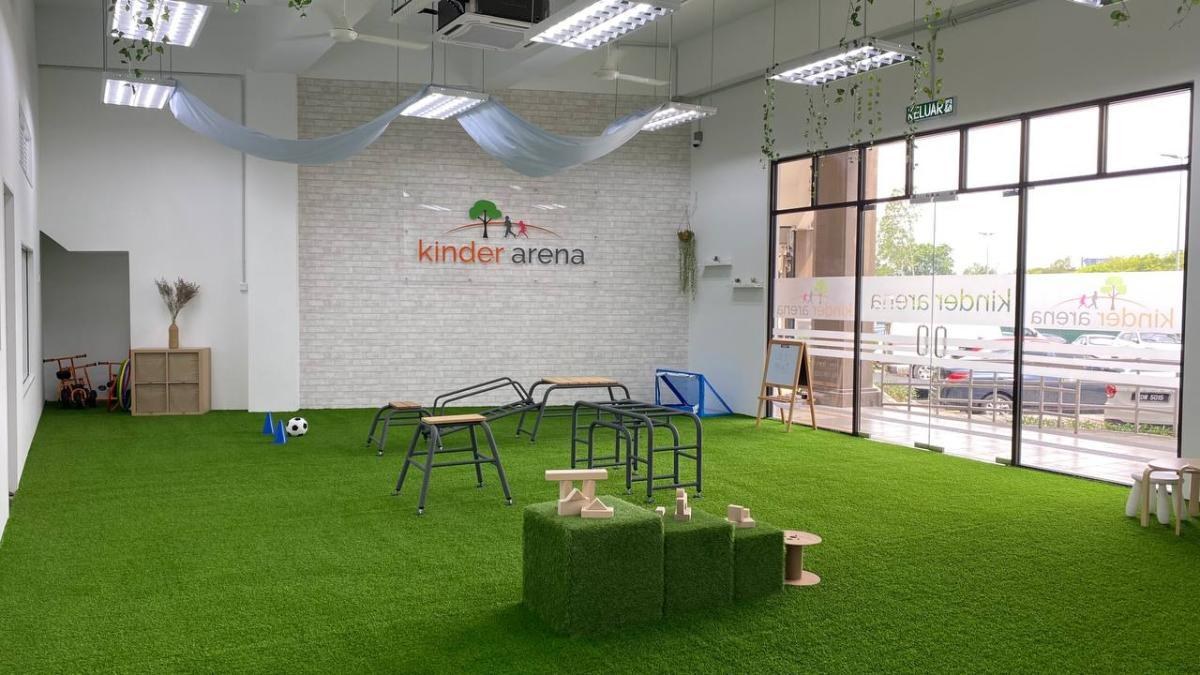
- Check what the fee includes. Kinder Arena includes meals, books and materials. Tenby charges a compulsory meal plan on top and does not publish its price at Setia Eco Park.
- Price the half day honestly. Half day is often the full-day fee minus a small discount, not half of it.
- Ask whether the price is per centre. Chains and franchises often publish one national figure, but KPM approves fees centre by centre.
Two things that do not affect a normal tadika bill
Service tax. Since 1 July 2025, 6% service tax applies to private education, including kindergartens, but only where fees exceed RM60,000 per student per academic year, according to the Royal Malaysian Customs Department's guide on private education services. Books, uniforms, food, transport and refundable deposits are exempt anyway. The dearest early-years fee below, RM23,400 a year, is well under the line.
Tax relief is capped per parent. The Budget 2026 tax measures made the RM3,000 childcare relief permanent from YA2026 and widened it: the age limit rises from six to 12, and on top of KPM-registered kindergartens and JKM-registered childcare centres it now covers registered daycare and after-school transit centres. The RM3,000 cap still applies however many children you have, so a tadika bill for one child and a transit-centre bill for an older sibling share the same RM3,000. If spouses are assessed separately, only one of them can claim, and you need a receipt from the centre.
Free and subsidised options
Tabika Perpaduan under the Ministry of National Unity charges nothing: the ministry said on 12 January 2026 that 33,307 children aged 4 to 6 started the 2026 session at 1,781 of them nationwide. In Selangor, the state's TUNAS scheme pays RM50 a month directly to a registered tadika for children aged five or six from households earning RM5,000 or less, where a parent is a registered Selangor voter. It does not cover KL residents.
The free option runs on a calendar. Applications are not open year round. National Unity Minister Aaron Ago Dagang announced that entry to the 2027 Tabika Perpaduan session opened on 15 March 2026 and closed on 31 August 2026, reported by Free Malaysia Today on 17 March 2026. The intake is for Malaysian children aged 4 to 6 with a birth certificate and MyKid, applications go through the Jabatan Perpaduan Negara dan Integrasi Nasional portal online or at the tabika itself, and priority goes to families whose home or workplace is within 10km of the centre. So a free place is a March-to-August decision for the following year, not something you can arrange the week before term starts. If you are reading this after August 2026, the next window to watch is the one for the 2028 session, which on this year's pattern opens around March 2027.
How to pick
Start with what you actually need: hours, language and location. A full-day programme ending at 3.30pm is no use to two parents working until 6pm, so compare the end time, not the label. Then ask every shortlisted school for four things in writing: the monthly or term fee, every one-off fee, what the deposit is and when it is refunded, and whether meals are included. With those four numbers the comparison takes five minutes. Without them, the cheapest-looking school can easily cost the most.