When Malaysian schools reopen on 4 January 2027, children starting Year 1 and Form 1 will be the first cohorts in primary and secondary school to learn under a new national curriculum, the Kurikulum Persekolahan 2027 or KP2027. It replaces the KSSR and KSSM frameworks that have run since 2011 and 2017, and it arrives in stages: preschool moved over in 2026, Year 1 and Form 1 follow in 2027, and Year 2 and Form 2 in 2028, Deputy Education Minister Wong Kah Woh told the Dewan Rakyat in February, as The Star reported.
The Education Ministry (KPM) has announced the changes in pieces over the past year, through ministers' statements, parliamentary replies and briefings by its Curriculum Development Division (BPK). This explainer pulls them together from those statements as reported by RTM, Bernama, The Star, NST and Utusan, and from the text of the Education (Amendment) Bill 2025, all checked on 29 November 2026. Where reports conflict or a detail has not been published, we say so.
The school year and who starts Year 1
KPM's 2027 academic calendar starts both groups of states on 4 January 2027. Group A (Kedah, Kelantan and Terengganu) ends the year on 2 December and Group B (all other states and the federal territories) on 3 December. Our school holidays guide has the full term and holiday dates.
2027 is also the first year that six-year-olds may start Year 1. Entry at six is optional and there is no quota or screening test, according to KPM. Children born in 2021 can enter at six, alongside the usual seven-year-old cohort born in 2020. KPM received 73,386 applications for six-year-olds and 405,033 for seven-year-olds, Bernama reported in June, and is adding 2,596 modular classrooms and hiring 3,150 contract teachers. Parents who missed online registration can still register manually at their district education office (PPD) between 16 and 31 December 2026, KPM's director-general told Utusan.
What changes in Year 1
Primary school is reorganised into three levels of two years each: Level I (Years 1 and 2) for literacy, numeracy and character, Level II (Years 3 and 4) for applying skills, and Level III (Years 5 and 6) for analysis and innovation.
The biggest change for a Year 1 child is a new integrated subject, Alam dan Manusia: Pembelajaran Bersepadu ("Nature and Humanity: Integrated Learning"). It replaces separate Science, Health Education, Visual Arts and Music lessons. The Star reported in October that it gets six periods a week, taught jointly by two teachers, plus a 15-minute character-building slot every day before recess. In Years 3 and 4 it splits into a science-and-technology subject and an arts-and-world subject, and a Teknologi dan Digital subject starts in Level III and runs into secondary school.
On languages, the ministry said on 5 November that Bahasa Melayu in national schools, Chinese in SJKC and Tamil in SJKT stay at 12 periods a week, after reports of a cut to 10 drew objections from MCA and MIC. We found no official figure yet for English periods under KP2027.
Maths time in primary rises to 608 hours over six years, with a concrete-pictorial-abstract approach. History moves out of lower primary: under KP2027 it is taught in Years 5 and 6 and from Form 1, with civic and political literacy built in. Malaysian Sign Language becomes an optional subject from Year 1 in schools with special-education programmes for hearing-impaired pupils.
What changes in Form 1
Form 1 pupils also take Teknologi dan Digital, and Bahasa Arab Komunikasi is offered as an additional language. Education Minister Fadhlina Sidek said in November that both Year 1 and Form 1 will stress digital literacy and the safe, ethical use of AI, using KPM's DELIMa platform. In a written reply in October, the ministry said basic technical and vocational elements will come in through project work, with teacher modules being prepared and facilities added in phases.
Exams and assessment
UPSR and PT3 are not coming back, Fadhlina confirmed in January. School-based assessment stays at the core. The new piece is the Learning Matrix (Matriks Pembelajaran), a central test set by the Malaysian Examinations Syndicate that the board describes as diagnostic and not high-stakes, meaning it is not used to rank pupils or schools. Year 4 pupils sat it on 6 to 8 October 2026, and Form 3 pupils will sit it from 2027. Reports differ on whether History is one of the tested subjects.
Money for parents
Budget 2027 raises the start-of-school aid, Bantuan Awal Persekolahan (BAP), to RM200 per pupil, up from RM150, for about 5.3 million pupils, RTM reported. Payment dates had not been announced when we checked. We found no official KP2027 list of textbooks, workbooks or uniforms parents must buy, and no published delivery timeline for the new textbooks.
Compulsory secondary school: passed, not yet in force
Separately, Parliament passed the Education (Amendment) Act 2025 last year to make secondary schooling compulsory, and royal assent was announced on 25 November 2025. The bill lets the minister make secondary education compulsory by gazette order, requires parents of Malaysian children living in Malaysia to enrol them and keep them in school, and sets a penalty of up to RM5,000, six months' jail or both. But the Act only takes effect on a date the minister gazettes. In June 2026 the deputy minister said it was in the final stage of gazettement, and as of 29 November we found no commencement notice. KPM has said the aim is awareness rather than punishment, with secondary enrolment already at 94%.
Open questions
The West Malaysia teachers' union asked for a teacher-numbers audit before co-teaching begins, warning of extra workload, and commentators have questioned whether training will be ready in time. KPM says teachers are being trained through its teacher-training institutes. This page will be updated as KPM publishes the Year 1 timetable and textbook details.
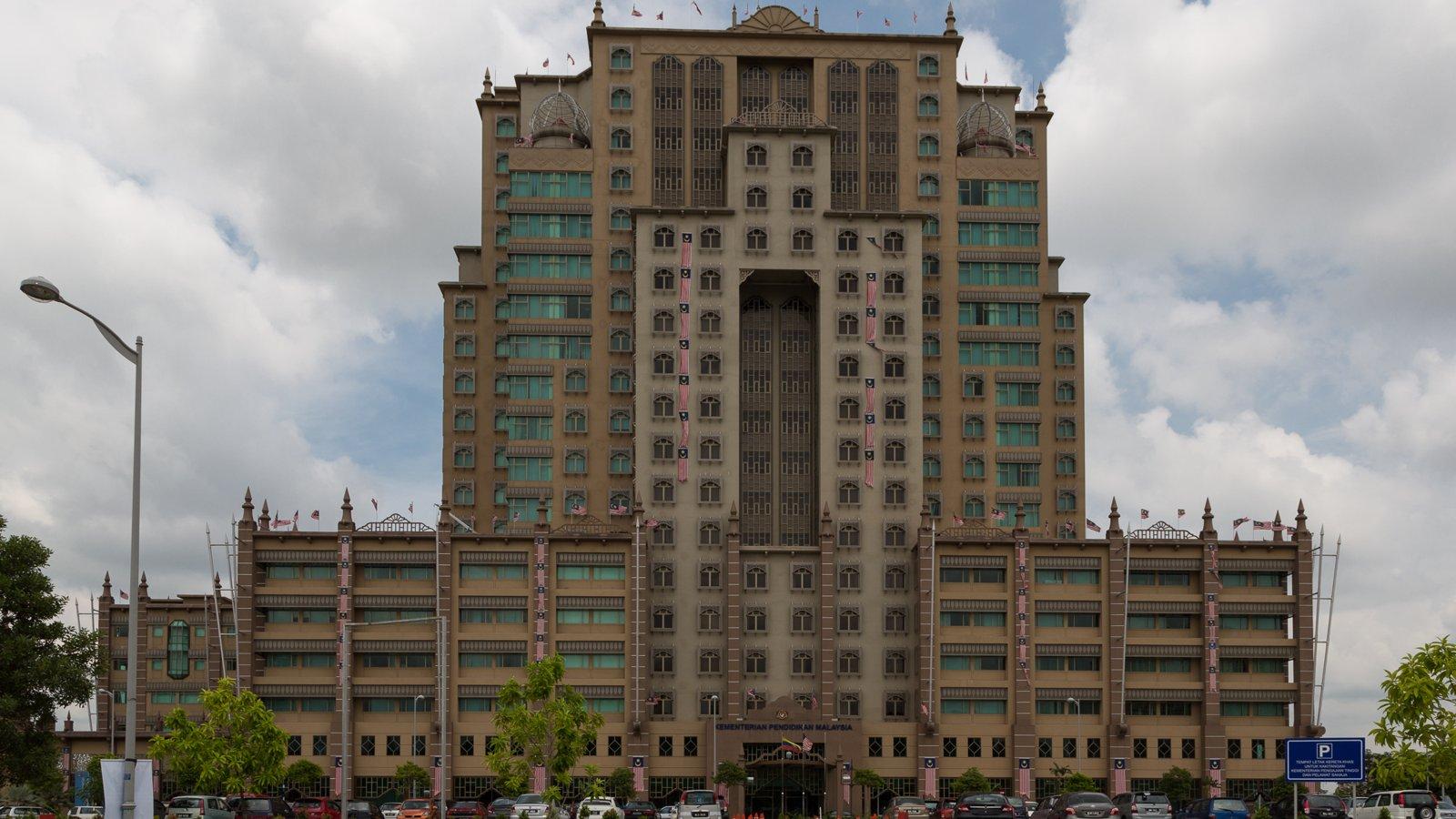
*Cover image: Ministry of Education headquarters, Putrajaya, by CEphoto, Uwe Aranas (CC BY-SA 3.0), via Wikimedia Commons*