Most Malaysian homeowners know a house extension needs approved plans. Fewer realise that smaller jobs, such as retiling the kitchen, replacing the gate or adding an awning out back, can also need the council's permission, and that the list of what counts changes the moment you cross a municipal boundary. In March 2026 the National Council for Local Government approved guidelines to standardise renovation procedures across the country, The Star reported, but as of 29 November 2026 we could find no published text or start date. For now, each council's own rules apply.
This guide is built from the documents the councils publish themselves: DBKL's minor-works permit guideline (3rd edition, updated 30 September 2025) and its strata renovation guideline, MBPJ's building-control forms, MBSJ's building FAQ, fee forms and compound table, and MBJB's minor-works and awning permit guides. We read them on 29 November 2026. It is general information, not legal advice, and for anything structural your architect or engineer should confirm the route.
Kuala Lumpur: DBKL's minor-works permit
DBKL's Permit Kerja Kecil covers landed houses, offices and shops that already have a CF or CCC. The fee is RM100 per permit, one type of work per permit, and the job must finish within three months. Work is allowed Monday to Saturday, 9am to 6pm, and the permit has to be displayed on site.
Needs a permit: replacing a gate, replacing a fence with a wall (up to 1.5m on terrace and link houses), perimeter drains, grilles welded on site, floor and wall finishes including tiles and cladding, replacing existing windows, doors and roller shutters, plaster ceilings, new roof tiles where the trusses stay, bigger water tanks, plumbing repairs, and solar panels or an EV charger on a non-strata home.
No permit needed: air-conditioners, factory-made grilles, wiring, lights and CCTV, painting inside and out, gutters, wallpaper, panel (non-plaster) ceilings and built-in cabinets.
The owner can apply without hiring an architect, at the OSC counter or through OSC 3.0 Plus Online, with the title or S&P, photos and an owner's declaration signed before a Commissioner for Oaths. Anything that adds floor area or a storey, or changes the structure, layout or facade, falls outside this permit and needs a building plan.
Petaling Jaya: MBPJ's stricter list
MBPJ's form PB.B13 for minor works without a plan explicitly includes changing floor or wall tiles, changing the roof finish and painting the walls inside and out, so jobs that are permit-free in KL need approval in PJ. The published fees are RM250 for processing plus a building-materials placement fee of RM324 for a terrace or RM810 for a semi-D or bungalow. Where there is no management body, MBPJ also charges RM300 per roro bin and a waste deposit of RM300 (3 tonnes) or RM600 (7 tonnes). Contractors must be CIDB-registered, and work runs 8am to 6pm with no work on Sundays or public holidays.
MBPJ's standard-plan form shows what skipping approval costs: for work started before approval, the fine is printed as the fee multiplied by ten, RM5,740 on a RM574 application.
Subang Jaya: MBSJ
MBSJ's FAQ says a fence or awning with no wall hacking can go on its standard plans (Pelan Setara Kediaman) at RM100 per item, approved in one day if complete. Unlike DBKL, it must be submitted by a registered draughtsman or architect. Extensions need full plans from a registered consultant through OSC 3.0 Plus. MBSJ's compound table lists RM12,500 for renovating without approval, and its FAQ says the council can instead issue a 30-day notice to demolish.
Johor Bahru: MBJB
MBJB lets owners of houses with a CF build minor additions to its standard plans, with a permit valid for one year, but submissions go through OSC 3.0 Plus with plans signed by an architect, engineer or draughtsman. Its awning permit is unusually clear on price: a one-off processing fee of RM50 for a corner lot or RM30 for an intermediate lot, then RM30, RM90 or RM150 for one, three or five years on a medium or high-cost house (RM10, RM30 or RM50 on a low-cost house). Awnings must be on the ground floor, in polycarbonate, metal deck or glass. The owner can apply at the counter on Level 11 of Menara MBJB or by email.
Condos and apartments
In strata buildings the first gate is the management body. By-law 27 in the Third Schedule of the Strata Management (Maintenance and Management) Regulations 2015 says no renovation may start without the JMB or MC's prior written approval, lets it ask for a deposit and a completion date, and bars works that weaken structural walls or dump debris in common areas. If the council's approval is also needed and is refused, the management body's approval is treated as withdrawn. DBKL's strata guideline gives a one-month completion window for works approved by management, and a 2023 KL Commissioner of Buildings circular bars turning a living or dining area into an extra bedroom in KL residential and serviced-apartment strata.
What happens if you skip it
Under section 70 of the Street, Drainage and Building Act 1974 (Act 133), as set out in DBKL's strata guideline, unapproved building work can be fined up to RM25,000, with a court order to alter or demolish. Ignoring a written order can mean up to RM50,000 or three years' jail, plus RM1,000 a day. Councils can also compound the offence at five to twenty times the normal fee instead of prosecuting.
The practical rule: before the contractor starts, ask for the permit number. Reputable firms handle the application as part of the job. Our Klang Valley interior design and renovation firms list is a starting point if you are still choosing one.
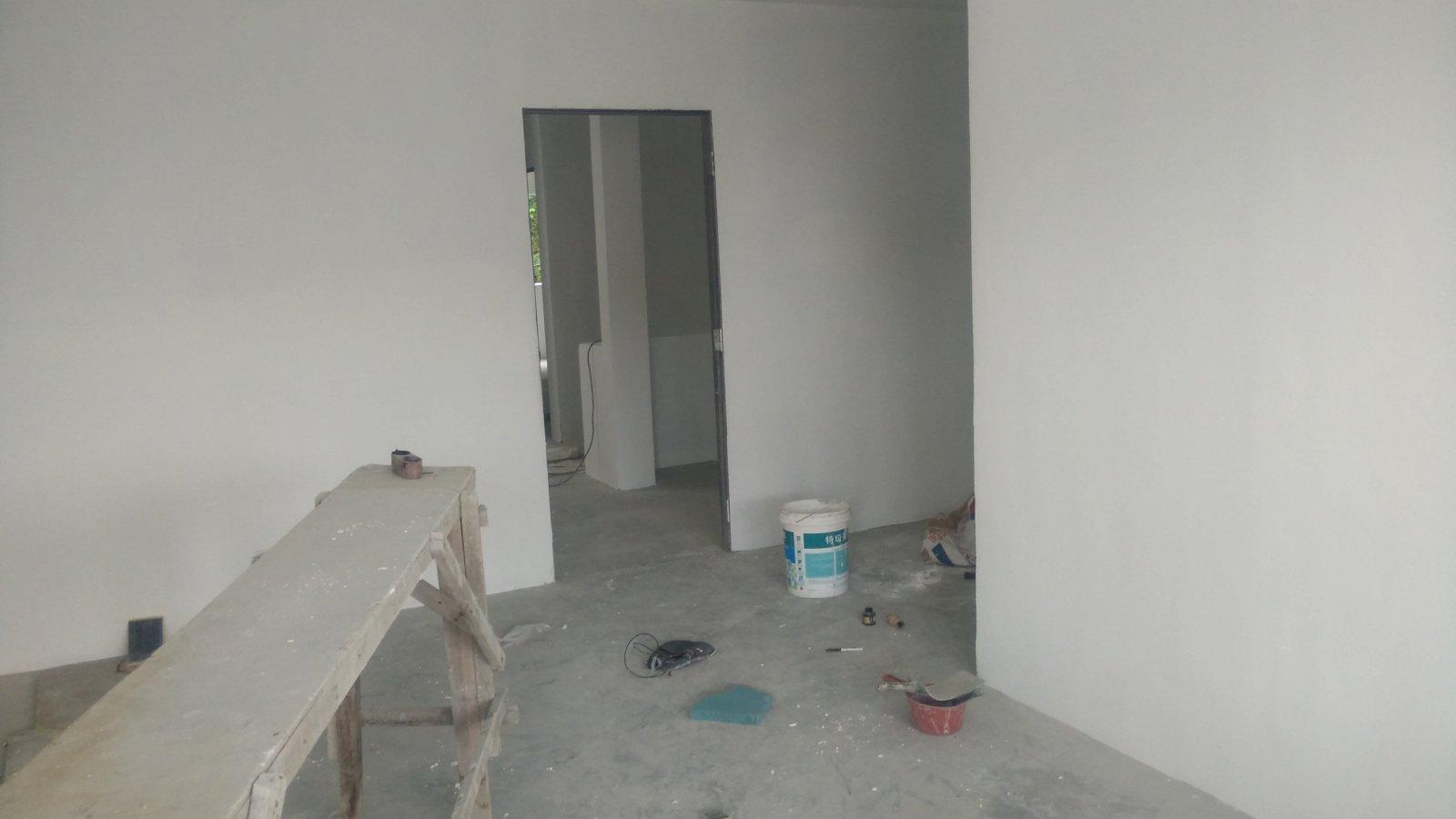
*Cover image: renovation of a two-storey terraced house in Selangor, by Frostpolar (CC BY-SA 4.0), via Wikimedia Commons*