A car you stopped driving years ago can still be yours on paper. JPJ figures quoted at the launch of the old-vehicle grant in January showed 19.69 million cars registered up to 31 December 2025, and 4.07 million of them (20.7%) with road tax inactive for three years or more.
The government is now moving on the ones left on the street. On 30 October 2026, Communications Minister Fahmi Fadzil said Cabinet had agreed to amend the guidelines on abandoned vehicles after complaints about delays and poor coordination, Bernama reported. KPKT and the Transport Ministry will take it forward. Housing Minister Nga Kor Ming said KPKT is reviewing whether the law needs strengthening, to clarify jurisdiction and speed up disposal without compromising owners' rights. No revised guideline or start date has been published, so treat anything more specific as unconfirmed.
Doing it yourself is still the cleaner ending. Here is how.
Deregistration and disposal are separate
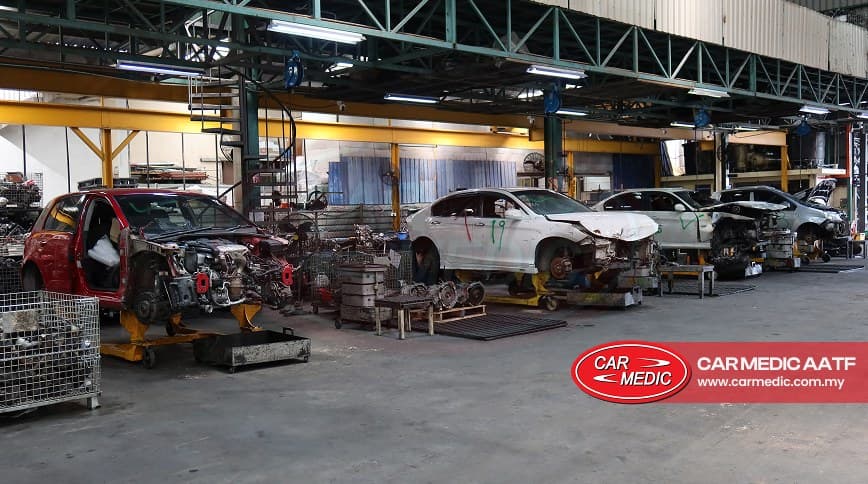
Deregistration cancels the car's active registration in JPJ's records. Disposal is the physical dismantling. Car Medic, the licensed facility that JPJ's online system started with in March 2024, describes the gap both ways. A car crushed but still registered can keep attracting summonses and notices in your name. A car deregistered but passed to an ordinary yard can still have its chassis, plates or parts misused, and be traced back to you.
An AATF (Authorised Automotive Treatment Facility) is licensed by the Department of Environment. A scrap yard's business licence, or a scheduled-waste licence, is not the same thing. Car Medic's advice is to ask for the AATF licence and check it against the department's list.
The steps
- Contact an AATF with the registration and chassis numbers, plus photos of the car and chassis number.
- The status check. The car needs a valid record with no JPJ or police blacklist, no active ownership claim, and no permit, Customs or import restriction.
- Deregister through e-Dereg. This runs through the AATF, not a JPJ counter. The registered owner normally takes part in person, using MyKad and a thumbprint.
- Get the JPJK1D letter, sent by email, then confirm the status on JPJ's online services or the MyJPJ app.
- Hand over the car and keep the towing and collection records. Remove your belongings and any toll device first.
- Get the Certificate of Destruction once it has been processed. Keep it with the JPJK1D.
Situations that change the process
- Car loan: the financier's claim generally has to be released first. If you settled long ago, check that the claim has actually come off the record.
- Lost geran: usually not a dead end. Car Medic says e-Dereg is digital and generally does not need the physical geran. At JPJ's manual cancellation, the owner can declare it on form JPJK1C.
- Owner has died: family ties alone may not be enough. Expect to show estate or administration papers.
- Company car: bring company registration documents and written authority, such as a board resolution.
- Road tax refund: Loke has spoken of a partial refund, and Car Medic says JPJ handles any refund through form JPJK6. Whether you get one depends on JPJ's rules and the remaining validity, so don't count on it.
What it costs, and what you might get paid
Car Medic says documentation, deregistration, collection and disposal are free across West Malaysia, subject to location, condition and eligibility. Loke has said owners are paid based on the vehicle's value, but no rate is published. Value depends on make, model, condition and completeness. A car that still runs may be worth more sold as a used car, which Loke himself pointed out at the grant's launch.
Sabah and Sarawak: Loke said in January there were no AATFs there. Car Medic's free collection covers West Malaysia only. Proton's page names disposal panel companies in both states, including Kien San Metal in Sarawak and Unimek in Sabah, for the grant, but it does not describe them as AATFs. Ask your state JPJ office which route applies before you hand over a car.
The RM4,000 grant: don't plan around it
Launched on 27 January 2026 with RM10 million for about 5,000 owners, it covered cars aged 20 years and up, traded towards a new Proton or Perodua. The government paid up to RM2,000 and the carmaker matched it. The Saga and e.MAS 5 got RM2,000 in total, and press reports at launch limited Perodua to the Aruz and Ativa. Proton's page limits applicants to the owner, spouse, parents, children and siblings.
Loke said on 22 August that the funds ran out within three months and that "we don't have additional funding at the moment". He also floated a motorcycle version of about RM1,000, possibly by the end of 2026 or early 2027 if funded. That is a proposal, not a scheme. Proton's page still advertises the car grant, so ask a showroom in writing whether a claim would be honoured before you scrap anything on the strength of it.
*Sources: Bernama (30 Oct 2026), NST (28 Jan 2026), Malay Mail/Bernama (26 Feb 2026), The Rakyat Post (24 Aug 2026), EdgeProp (Loke's 17 March press conference), Paul Tan (21 Mar 2024, 27 Jan 2026), Proton Malaysia, and Car Medic's guide and FAQ, read 5 November 2026. Car Medic's terms are its own, and it is an operator with an interest in this service.*
*Image: Car Medic AATF*