Most Malaysians who die leave no will, and for non-Muslims that does not mean nothing happens. It means a 1958 statute writes the will for you. The formula is fair on paper and often surprising in practice: a wife or husband who assumed everything would pass to them can end up sharing the house with their in-laws.
This explainer is built on the text of the Distribution Act 1958 (Act 300) in its reprinted form, the Wills Act 1959 (Act 346) sections on age, execution, witnesses and revocation, Amanah Raya Berhad's Basic Will Writing product disclosure sheet dated 1 November 2025, BSN's will-writing page for MyAngkasa Amanah Berhad, a Rockwills service centre's fee schedule effective 1 May 2025, and Skrine's note on the Small Estates (Distribution) (Amendment) Act 2022. It is a factual guide to how the law works, not legal advice for your situation.
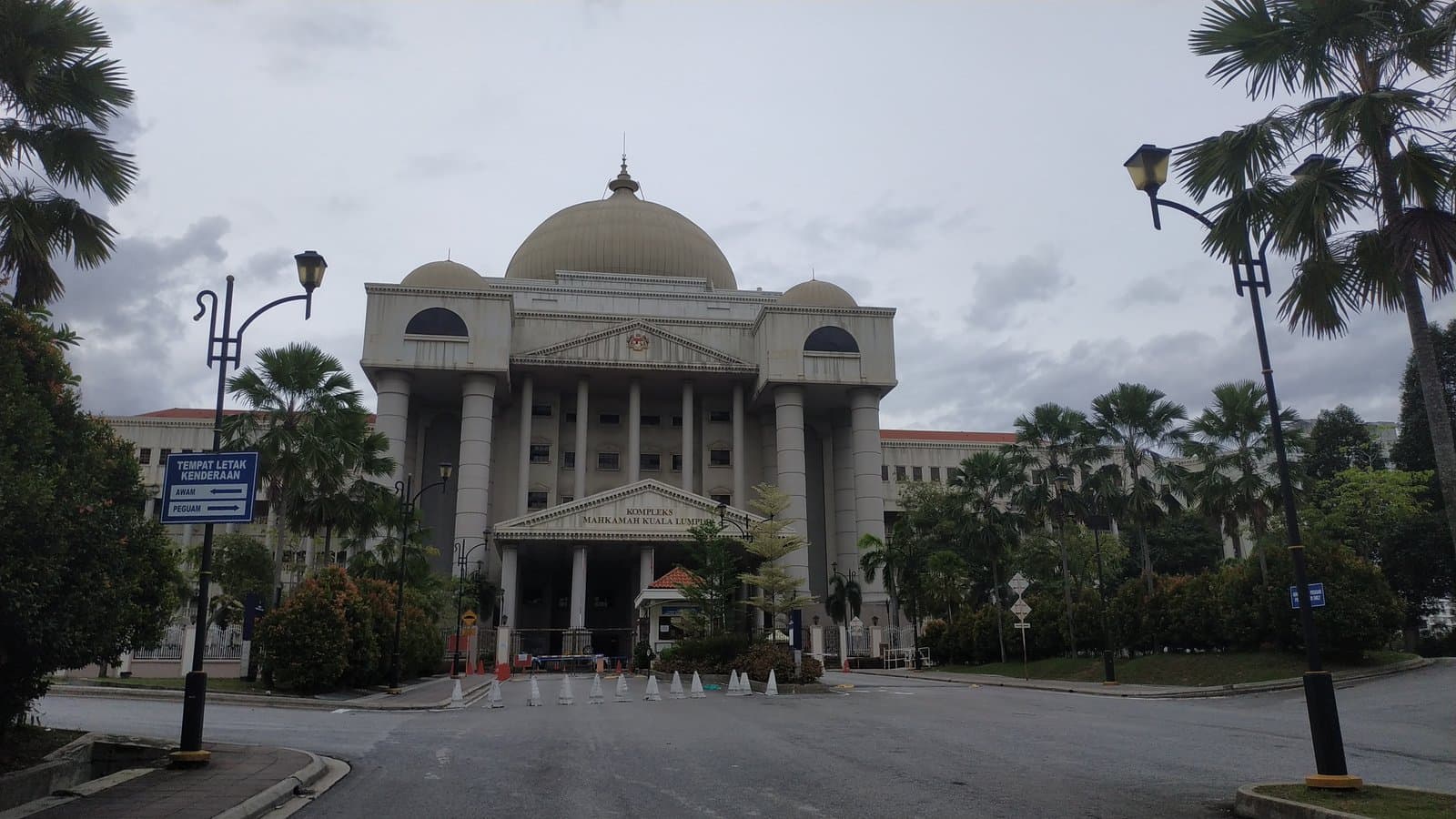
*Cover image: Kompleks Mahkamah Kuala Lumpur, where High Court probate and administration applications for the city are heard. Photo: Renek78, CC BY-SA 4.0, via Wikimedia Commons.*
Who this applies to
The two Acts cover non-Muslims. The Distribution Act states that it applies to Peninsular Malaysia, and a 1986 order extended it to Sarawak, where it excludes Muslims and the estates of Sarawak natives. Sabah has its own intestacy and wills laws. The Wills Act applies to West Malaysia, and AmanahRaya lists the minimum age for making a will as 18 in Peninsular Malaysia and Sarawak and 21 in Sabah.
For Muslims, neither Act applies. Estates follow faraid, and AmanahRaya's disclosure sheet sets out the limit on a wasiat: at most one-third of the net estate can go to people who are not faraid heirs, and anything beyond that needs the heirs' consent after death.
What happens if you die without a will
Section 6 of the Distribution Act divides what is left after debts and administration costs. "Issue" means children, and grandchildren in place of a child who has died.
The full split is in the table at the end of this article. The three cases most families hit: a spouse and children with no living parent take one-third and two-thirds; add a living parent and it becomes spouse 1/4, children 1/2, parents 1/4; a spouse and parents with no children split it half and half.
With no spouse, children or parents, the estate goes in order to brothers and sisters, then grandparents, then uncles and aunts, then great-grandparents, then great-grand-uncles and aunts. If none survive, the Government takes it.
A worked example. An estate worth RM600,000 after debts, left by someone survived by a spouse, two children and a mother: the spouse receives RM150,000, the children RM150,000 each, and the mother RM150,000. If the family home is most of that RM600,000, the spouse becomes a part-owner with the mother-in-law and the children. Shares for children under 18 are held on trust until they come of age.
What makes a will valid
The Wills Act sets the formalities, and they are strict:
- You must be of age of majority, which is 18.
- The will must be in writing.
- You sign it, or acknowledge your signature, in the presence of two witnesses who are present at the same time, and both sign in your presence.
- A witness should never be a beneficiary. Under section 9, a gift to a witness, or to a witness's husband or wife, is void. The rest of the will still stands, so a careless choice of witness quietly disinherits one person.
- Marriage revokes a will (section 12). A will made while single stops working the day you marry, and if you die before writing a new one, the Distribution Act applies.
- You can revoke a will with a later will, a signed writing declaring that you revoke it, or by destroying it with that intention.
Nothing in the Act requires a will to be registered or lodged anywhere. It has to be found, though, which is why will writers sell custody.
What a will does not reach
AmanahRaya's disclosure sheet spells out a point many people miss: a will does not override an earlier nomination. Your EPF savings go to your EPF nominee, and an insurance policy with a nominee pays that nominee, whatever the will says. Review those nominations separately.
What it costs
- AmanahRaya basic will, sold through Bank Islam: RM500 in cash or on other cards, RM300 on a Bank Islam credit card, RM350 when taken with selected Bank Islam products. Covers Muslim and non-Muslim wills, names AmanahRaya as executor, and is not subject to SST. Estate administration fees are charged separately after death.
- MyAngkasa Amanah, sold through BSN: RM540 including 8% SST, Muslim or non-Muslim, with MyAngkasa Amanah as executor.
- A Rockwills service centre's published schedule: RM600 for a basic will of up to 9 clauses, RM750 to RM900 for intermediate, RM1,100 to RM1,600 for comprehensive, plus RM120 to appoint Rockwills Trustee as executor. Lifetime custody options cost more.
All three price the will, not the work after death. The executor's fee for administering the estate is a separate, later bill.
After a death: where the estate goes
With a will, the named executor applies to the High Court for a grant of probate. Without one, the route depends on size. Skrine's note on the 2022 amendment explains that an intestate estate worth up to RM5 million can be distributed by the Land Office (JKPTG) as a small estate, applied for on the MyLand portal, and an estate of movable property only up to RM600,000 can go to AmanahRaya. Larger estates go to the High Court. The small-estate route is for estates without a will.
If you are dealing with a death right now, start with the burial permit and death certificate, which every one of these routes asks for.