Topic
#budget 2027
10 articles
Year-End Bonus in Malaysia 2026: How Much Goes to Tax, EPF and SOCSO, With Worked Examples
A year-end bonus in Malaysia is taxed in the year you receive it, not the year it rewards, so a bonus paid in December 2026 falls under the 2026 tax rules and one paid in January 2027 under Budget 2027's new rates and RM12,000 personal relief. EPF takes 11% of it, SOCSO and EIS take nothing, and the monthly tax deduction in the bonus month is only an estimate. Here is how each deduction works, with two worked examples.
Affordable Housing Schemes in Malaysia 2026: PR1MA, Residensi Wilayah, Rumah Selangorku and SJKP, Who Qualifies and How to Apply
Malaysia's affordable home schemes overlap and each has its own income cap, price ceiling and resale lock. We read the official portals and the Budget 2027 speech on 17 October 2026: PR1MA takes household incomes of RM2,500 to RM15,000, Residensi Wilayah caps prices at RM300,000, Rumah Selangorku starts at RM114,750, and SJKP guarantees loans for people without a payslip.
Minimum Wage in Malaysia 2026: RM1,700 Today, RM2,000 From June 2027, and Who the SME Exemption Covers
Malaysia's minimum wage is RM1,700 a month for almost every employer, worth RM8.72 an hour. Budget 2027 raises it to RM2,000 from June 2027, but firms with sales under RM50 million are exempted for now. We read the gazetted order, the Act behind it and the Budget speech to show the daily and hourly rates, what counts as wages, what the exemption still leaves open and how to report an employer who underpays.
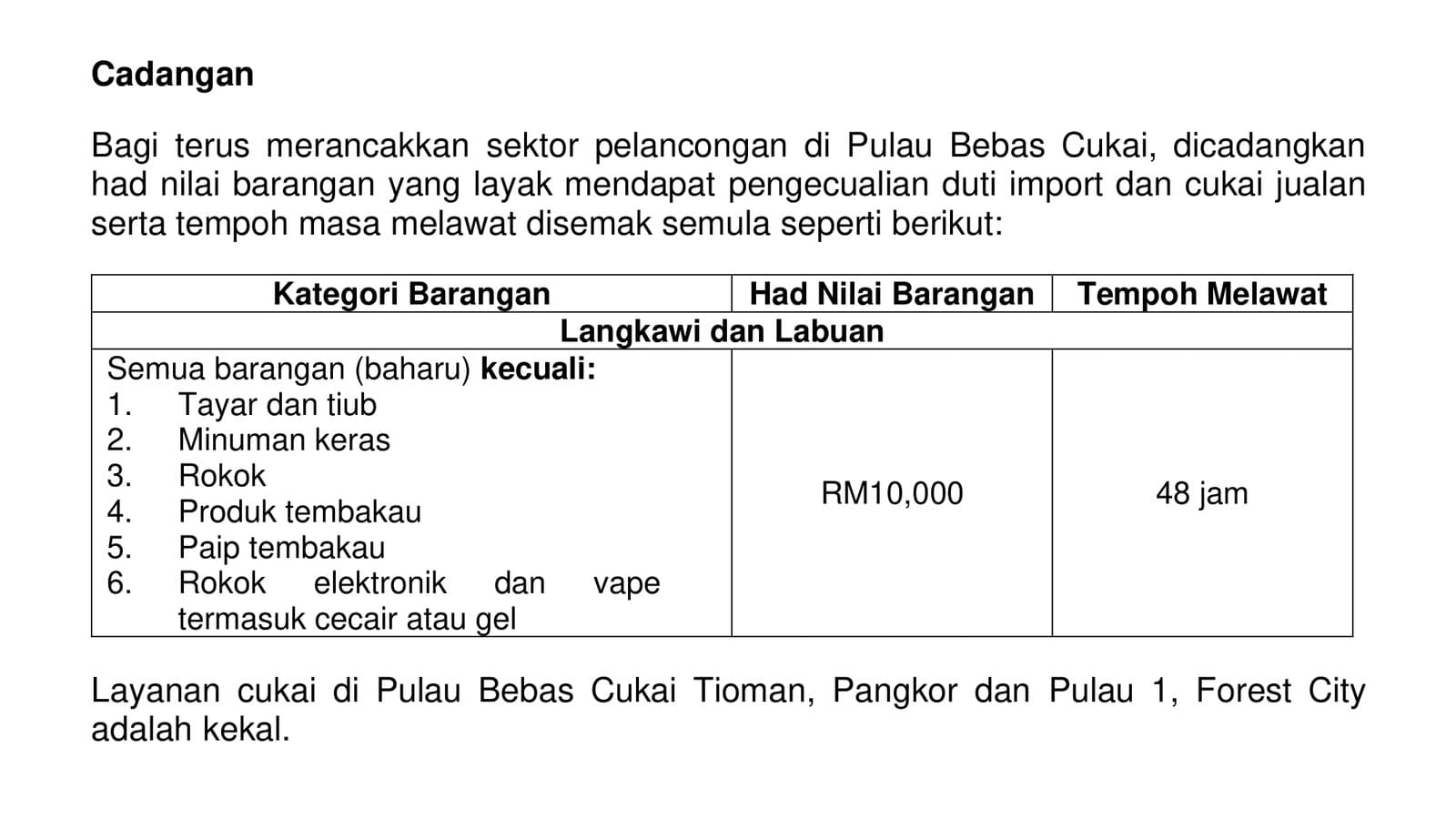
Langkawi and Labuan Duty-Free Limit Rises to RM10,000 in 2027: What Changes, and the Labuan 48-Hour Catch
From 1 January 2027, Budget 2027 raises the duty-free allowance on goods you take out of Langkawi and Labuan from RM1,000 plus small item caps to a single RM10,000 limit on almost all new goods. Liquor and tobacco stay out, and Labuan's qualifying stay doubles from 24 to 48 hours.
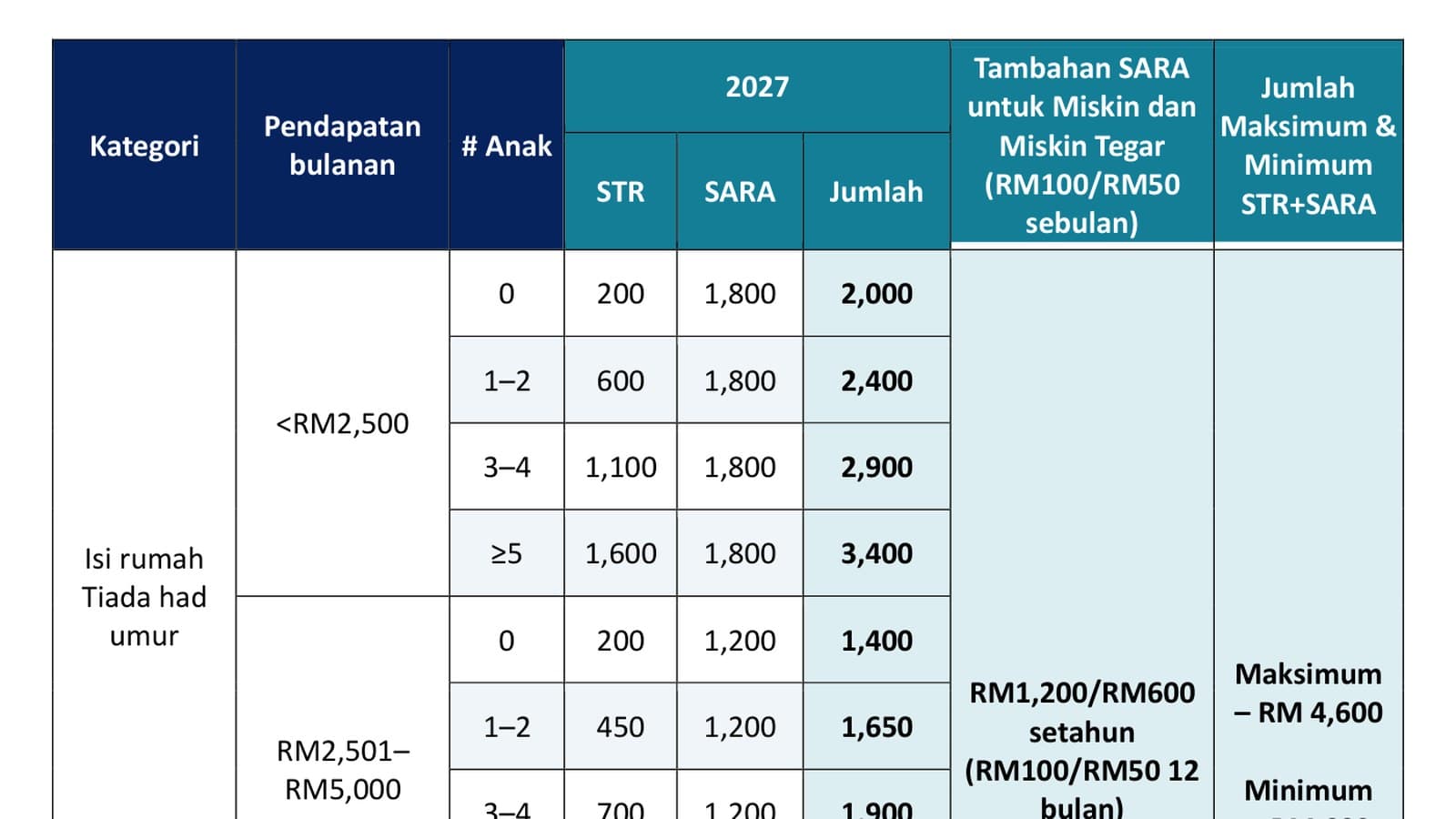
Budget 2027 Cash Aid: What STR and SARA Pay Each Household in 2027
Budget 2027 raises STR and SARA to RM16 billion, but for most STR households the yearly total does not change. Cash shifts into SARA grocery credit, the poorest childless households gain RM100, and about 13 million adults outside STR get RM100 of SARA MADANI twice. We compared the 2026 and 2027 tables line by line.
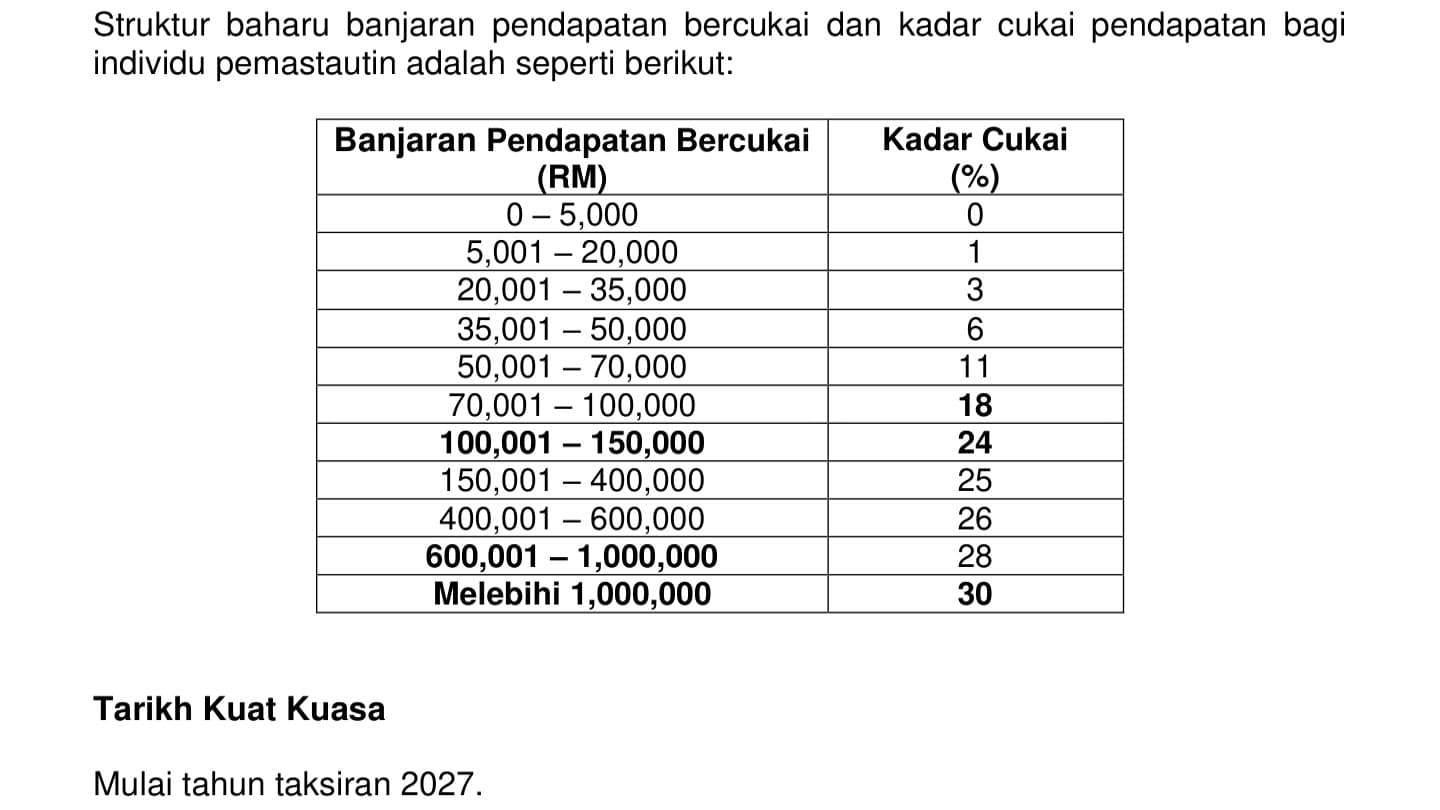
Budget 2027 Income Tax Changes: Two Lower Rates, a RM12,000 Personal Relief, and What You Actually Save
Budget 2027, tabled on 9 October 2026, cuts the resident tax rate on chargeable income between RM70,001 and RM150,000 by one point, raises the personal relief from RM9,000 to RM12,000 for the first time since 2010, and widens six existing reliefs to cover postnatal care, sports shoes, children's tuition, AI subscriptions and pet adoption. Income above RM1 million now hits 30% instead of 28%. Everything starts from the year of assessment 2027, so it applies to income earned in 2027 and the return you file in 2028. We read the figures off the Finance Ministry's own tax-measures annex and worked out what five salary levels save.
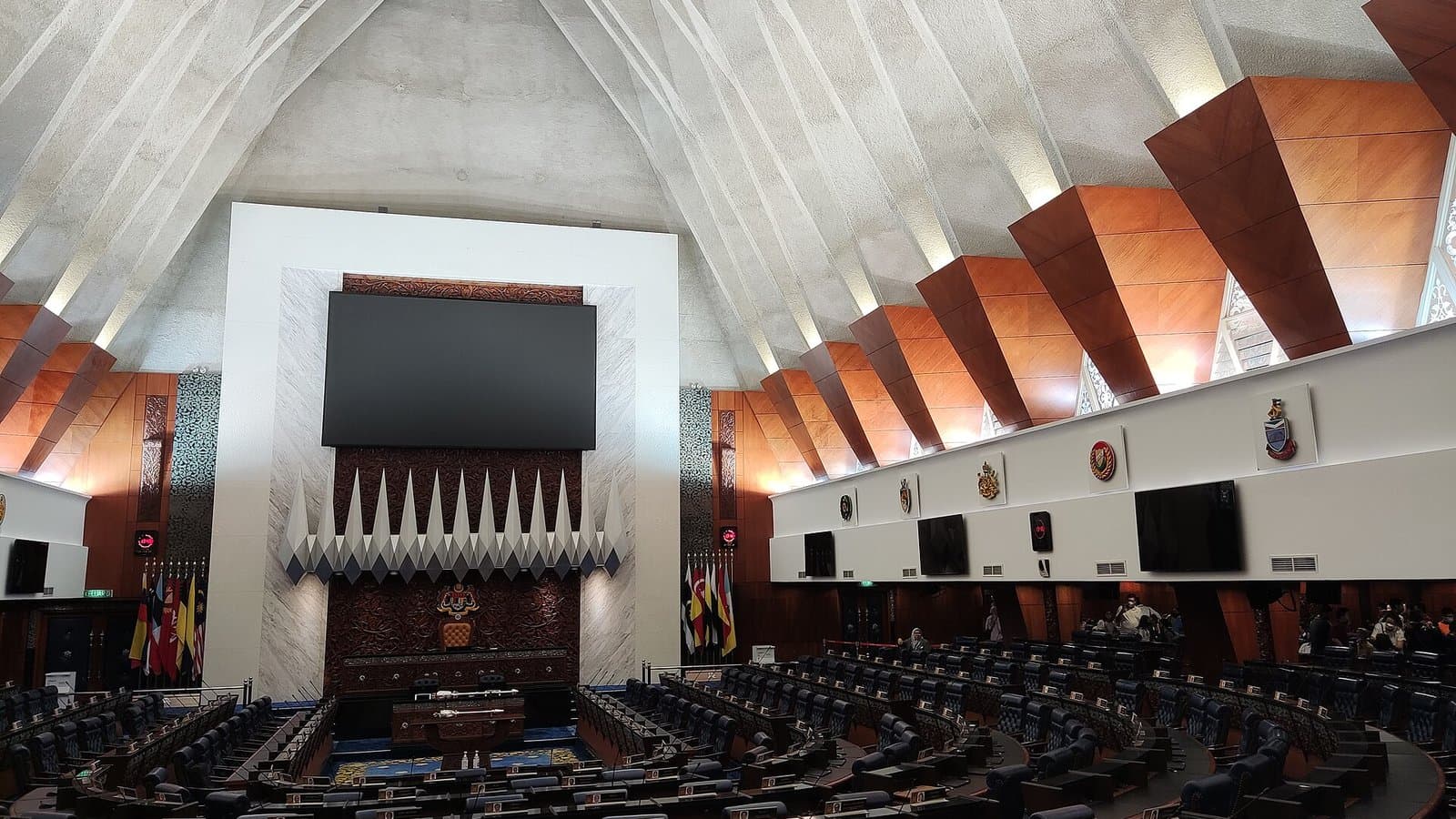
Budget 2027 on 9 October: What Is Already Decided, What the Pre-Budget Statement Signals, and When Any of It Reaches You
Budget 2027 will be tabled in the Dewan Rakyat on Friday 9 October 2026. Here is what the Finance Ministry's own Pre-Budget Statement says, the ten focus areas it named, the figures it chose to publish, which measures are already law or already running so will not be new on the day, and how long a new tax relief takes to reach your return.
Six New Tax Reliefs Started Counting on 1 January 2026, and You Claim Them in 2027
The relief list you use for the return you file this year is the year of assessment 2025 list, and nothing on it has changed. Six other reliefs took effect on 1 January 2026 and are being earned right now, on receipts most households are throwing away. They are claimed in the return filed in 2027. These are not proposals: they were enacted as the Finance Act 2025 (Act 874), gazetted on 31 December 2025, and we read them off the statute rather than off the Budget appendices. Childcare is the biggest change: a single permanent RM3,000, plus a new limb covering a care centre registered under the Care Centres Act 1993 for a child up to 12 - though the RM3,000 is per taxpayer, not per child. Relief for early intervention for children with learning disabilities rises from RM6,000 to RM10,000 and now fills the whole medical band. Life insurance relief extends to children, on a four-limb statutory definition. Vaccination relief widens to any vaccine registered with the NPRA. Home CCTV and food waste grinders join the RM2,500 environmental pot. And for Visit Malaysia Year 2026 only, entrance fees to tourist attractions are worth up to RM1,000 - but unlike the 2020-2022 version, hotel stays and tour packages are out. Budget 2027, tabled on 9 October, proposes one more year of the attractions relief, for 2027, and adds postnatal care to the RM10,000 medical band; the other four are untouched. Re-checked against Act 874, LHDN's relief tables and the Budget 2027 tax measures on 14 October 2026.
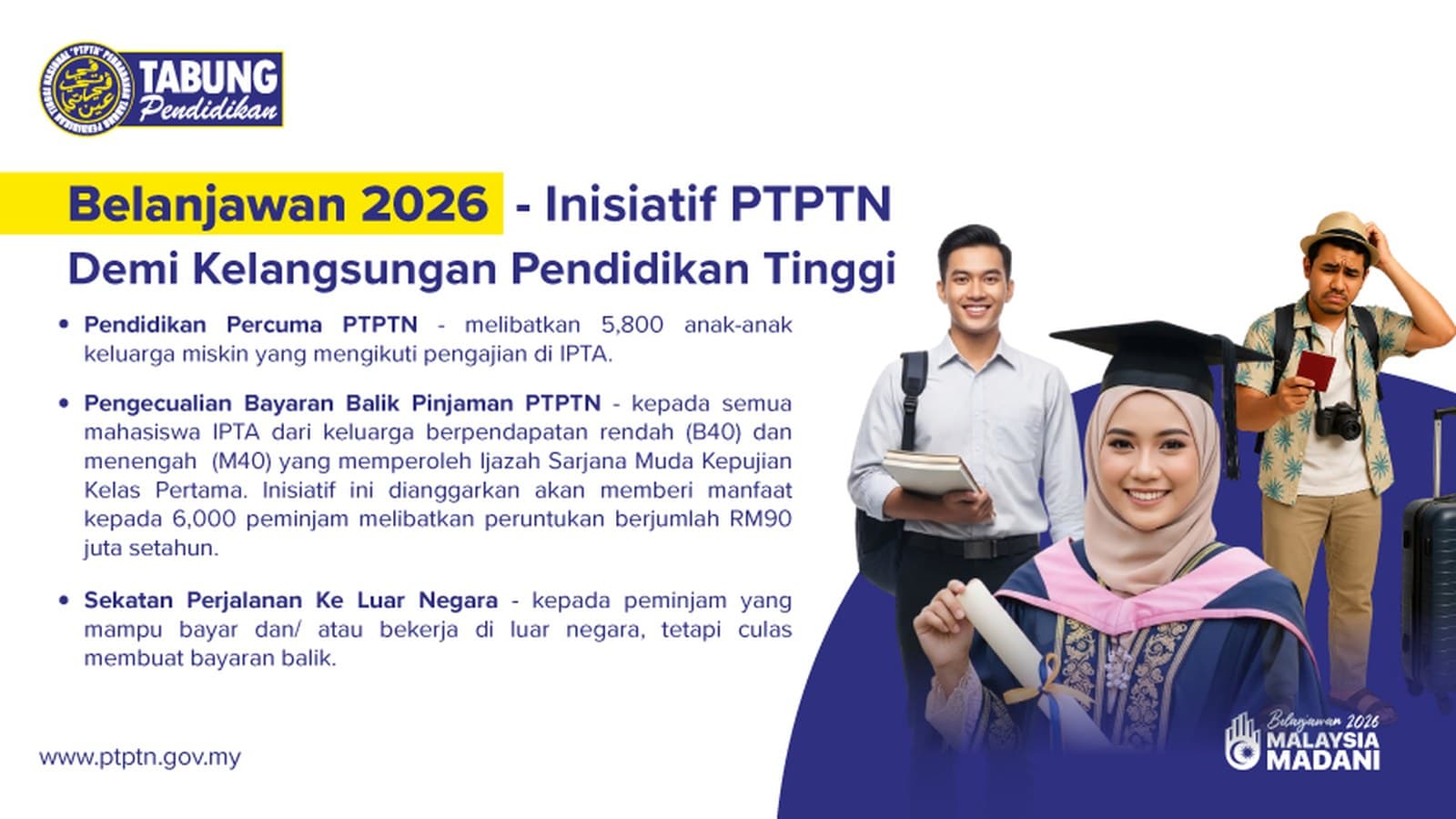
PTPTN in 2026: The First-Class Exemption Is No Longer Automatic, and Debt Agents Now Add 15% to What You Owe
Three things changed at PTPTN on 1 January 2026, and a fourth arrived on 7 July that almost nobody reported. The write-off for a first-class degree, long treated as an automatic reward for graduating with honours, is now restricted to B40 and M40 borrowers from public universities, must be claimed through the myPTPTN app within twelve months of convocation, and is refused if it is late. A new scheme turns the loan into a scholarship outright for students listed under eKasih, but only if they are under 25 and already hold an active Simpan SSPN account. The overseas travel bar is now targeted at three specific groups. And PTPTN has appointed seven external debt agencies to chase its oldest arrears, charging borrowers 15 per cent of everything they collect. Budget 2027 then added a 2027 deferment for borrowers earning up to RM2,500 a month, an RM50 minimum for RM2,501–RM3,000 and a 10 per cent discount for regular payers. Below: what each change costs, the deferment most borrowers have never heard of, the repayment campaign still open, and why there is no PTPTN discount running right now. Everything here comes from PTPTN's own portal and terms documents, read on 4 September 2026 and re-checked on 14 October 2026.

Malaysia's New Energy Efficiency Plan: NEEAP 2.0 Will Not Cut Your Tariff, It Will Delete the Cheap Air-Conditioner
PETRA has published the National Energy Efficiency Policy and Action Plan 2026-2035, and the household half of it works in a way almost nobody has explained. NEEAP 2.0 does not lower the tariff and does not send anyone a rebate cheque. It hits its domestic target by raising the Minimum Energy Performance Standards on twelve categories of appliance, and it raises them by promotion: today's 3-star efficiency level becomes tomorrow's 2-star minimum, and in a second revision today's 4-star level becomes the 2-star minimum. The cheapest models on the shop floor simply stop being legal to sell. On air-conditioners, the document's own arithmetic puts the first revision at 336 kWh a year saved per unit and the second at 447 kWh. The plan targets an 11.6 per cent cut in national energy demand and RM85.241 billion in savings by 2035, but the domestic sector carries the smallest share of it at 8.7 per cent.