Bonus season in Malaysia runs from December to March, and the first payslip with a bonus on it is often a small shock. Two months' pay goes in, but a noticeably smaller amount comes out. Three separate things are happening on that payslip, and each follows a different rule. This guide sets them out, using LHDN's published tax table and reliefs (read on hasil.gov.my on 24 October 2026), the EPF Act 1991 and PERKESO's employer guidance.
No law makes a bonus compulsory. The Employment Act 1955 does not require one, so whether you get a bonus, and how much, depends on your contract or company policy. Once it is paid, though, the deductions below are not optional.
The year it is paid is the year it is taxed
Employment income in Malaysia is taxed when you receive it, and this has always been true of bonuses. Under section 25 of the Income Tax Act 1967, a bonus counts in the year it lands in your account, even if it rewards work done the year before. KPMG's 2015 note on the Finance Bill described the rule this way when the government extended the same receipt basis to all employment income from 2016.
This matters more than usual this year. Budget 2027, tabled on 9 October 2026, cuts the rate on chargeable income from RM70,001 to RM100,000 from 19% to 18%, adds a 24% band (was 25%) for RM100,001 to RM150,000, and raises the personal relief from RM9,000 to RM12,000. All of it starts from the year of assessment 2027. So a bonus paid on 31 December 2026 is taxed under the old rules, and the same bonus paid on 2 January 2027 under the new ones. The employer decides the pay date, not you, and the bonus does not escape tax either way.
EPF takes 11%
Section 2 of the EPF Act 1991 defines wages to include bonuses, so a bonus attracts the normal contribution. For most employees under 60 that is 11% from you and 13% from your employer if your monthly wages are RM5,000 or less, or 12% above that. Payroll providers quoting KWSP's rule note that an employee who normally earns RM5,000 or less keeps the 13% employer rate even when the bonus pushes that month above RM5,000.
The EPF money is still yours, and it also counts toward tax relief. But the relief for EPF is capped at RM4,000 a year (within a combined RM7,000 limit with life insurance), so most people earning above about RM3,000 a month have already used it up before the bonus arrives.
SOCSO and EIS take nothing
PERKESO's induction notes for new employers say a bonus is not included when wages are counted for contributions. So the SOCSO and EIS lines on your bonus payslip should not grow. If they do, ask your HR or payroll team.
Why the tax can feel steep
The bonus is added to your income for the year, so it is taxed at your top band, not your average rate. LHDN's table for residents runs 0% up to RM5,000, then 1%, 3%, 6%, 11% from RM50,001, 19% from RM70,001 and 25% from RM100,001. A bonus that pushes you across one of those lines is taxed at the higher rate on the part above it.
There is also a cliff at RM35,000. A resident whose chargeable income does not exceed RM35,000 gets a RM400 rebate off the tax bill. A bonus that lifts you above that line loses the whole rebate.
The table below works through two examples with only the personal relief and the RM4,000 EPF relief, and no other reliefs. Real bills will usually be lower, because most people claim more.
PCB in the bonus month is an estimate
Your employer must deduct monthly tax (PCB, or MTD) from the bonus. LHDN's formula treats it as "additional remuneration" and works out the extra tax on a full-year basis, and LHDN's online PCB calculator has a separate box for it. Zakat paid through payroll is a rebate, so it reduces the deduction.
Because PCB is an estimate, the real figure is settled when you file your BE form, due 30 April (15 May on e-Filing). If too much was deducted, LHDN refunds the difference; too little, and you pay the balance. Many people who change jobs, have side income or claim several reliefs end up with a refund.
Related reads
- Budget 2027 income tax changes
- New personal tax reliefs for 2026
- How zakat reduces your income tax
- EPF Akaun Fleksibel withdrawals
- Annual leave rules under the Employment Act
Sources: LHDN's resident tax-rate table, tax relief list and rebate page (hasil.gov.my, read 24 October 2026; tables labelled YA2025, and PwC's 2025/2026 Malaysian Tax Booklet shows the same bands for YA2026); the Finance Ministry's Budget 2027 tax measures; Income Tax Act 1967 section 25; EPF Act 1991 section 2; PERKESO's employer induction notes. This is a general explainer of published rules, not tax advice. Your own figure depends on your reliefs, so check it with LHDN's calculator or a tax agent.
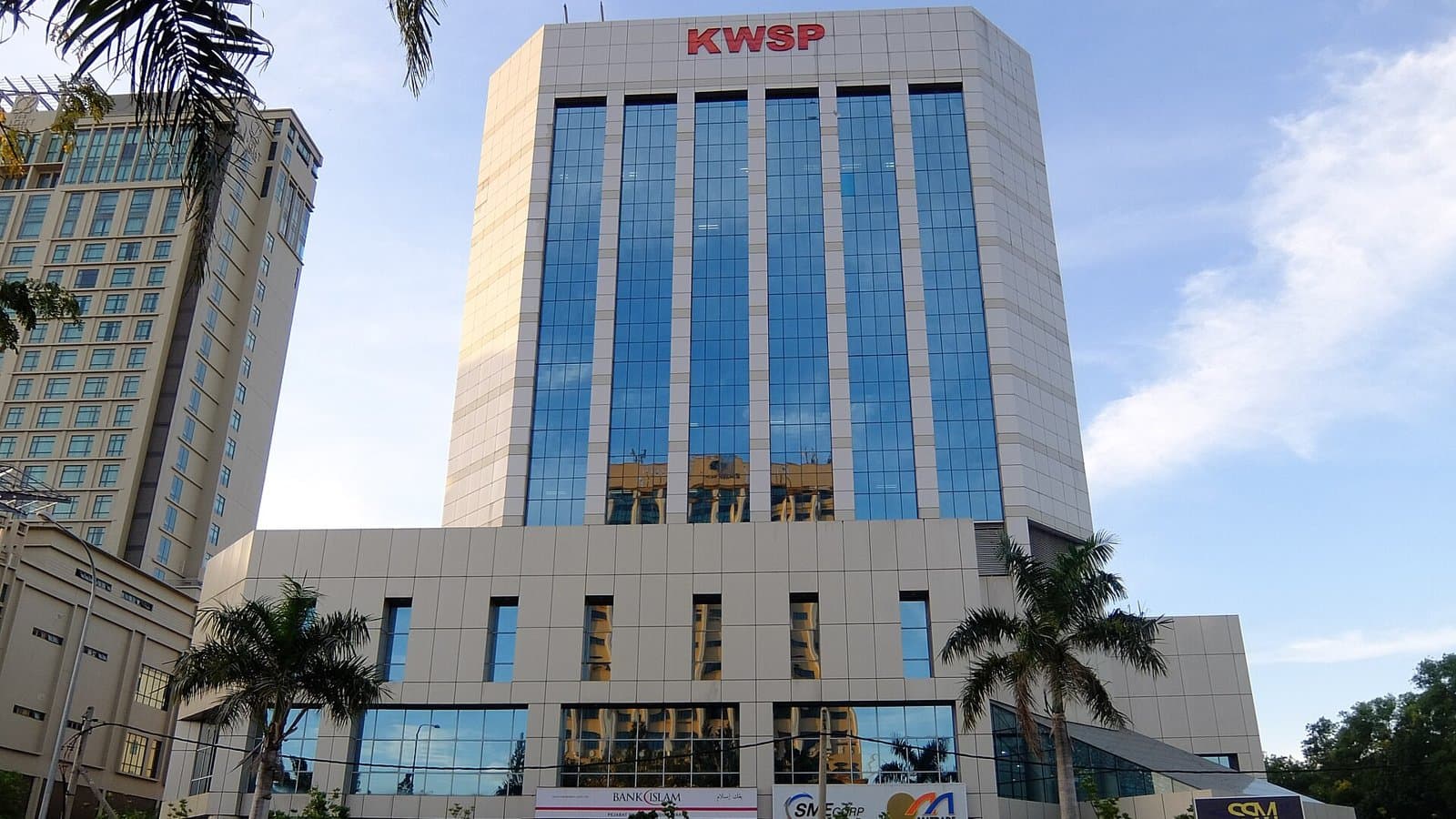
*Cover image: the KWSP (EPF) building in Seberang Jaya, Penang. Photo: Chongkian, CC BY-SA 4.0, via Wikimedia Commons.*