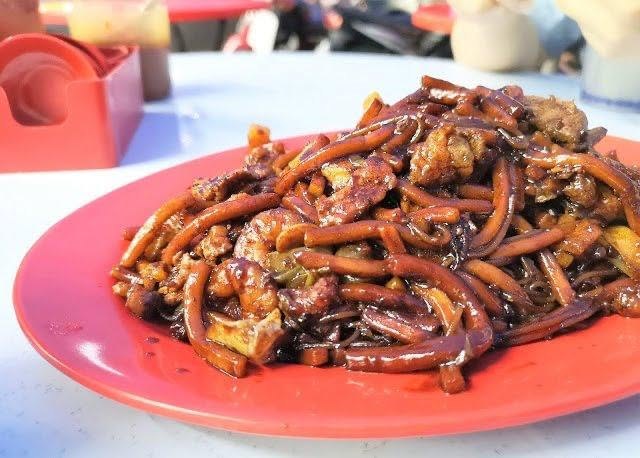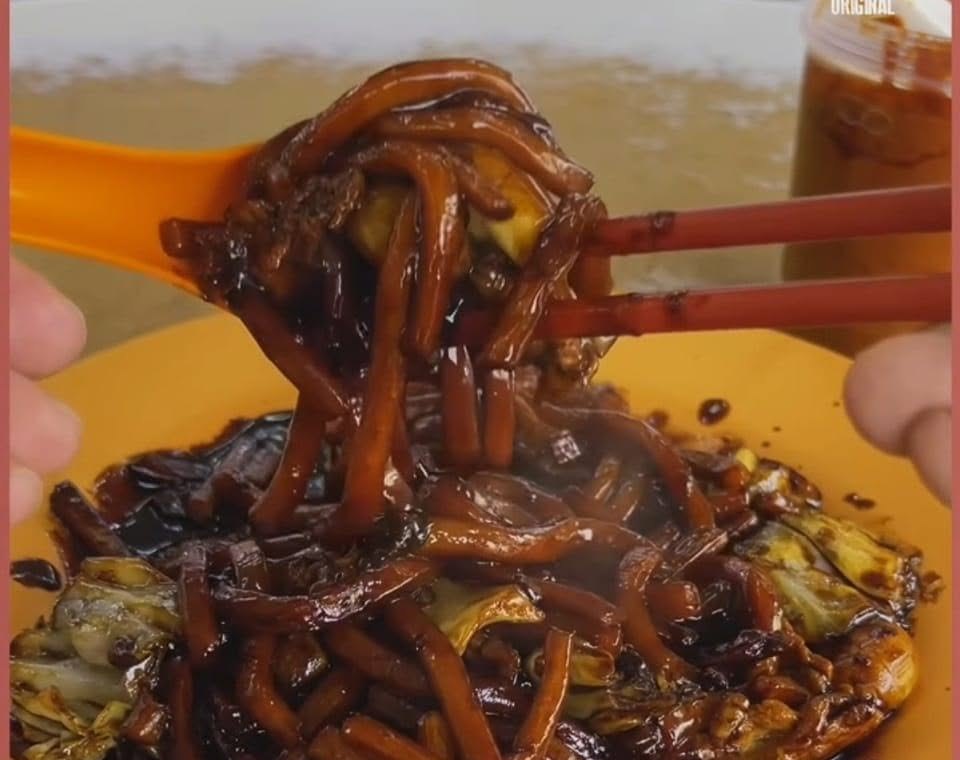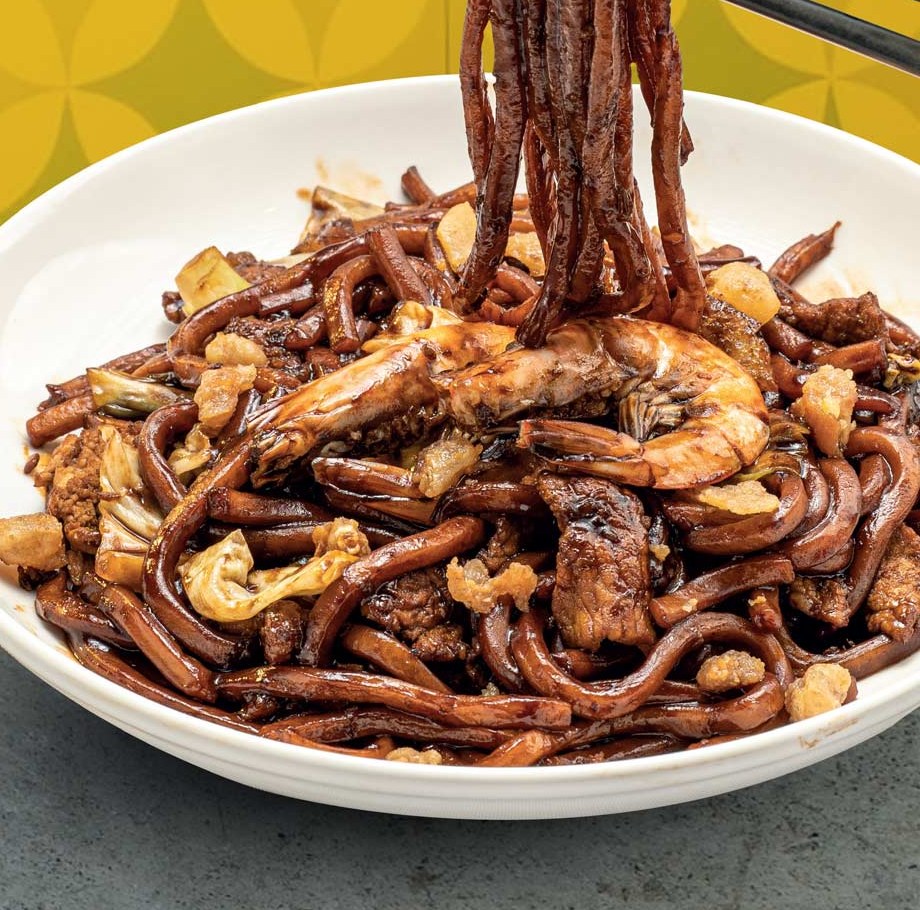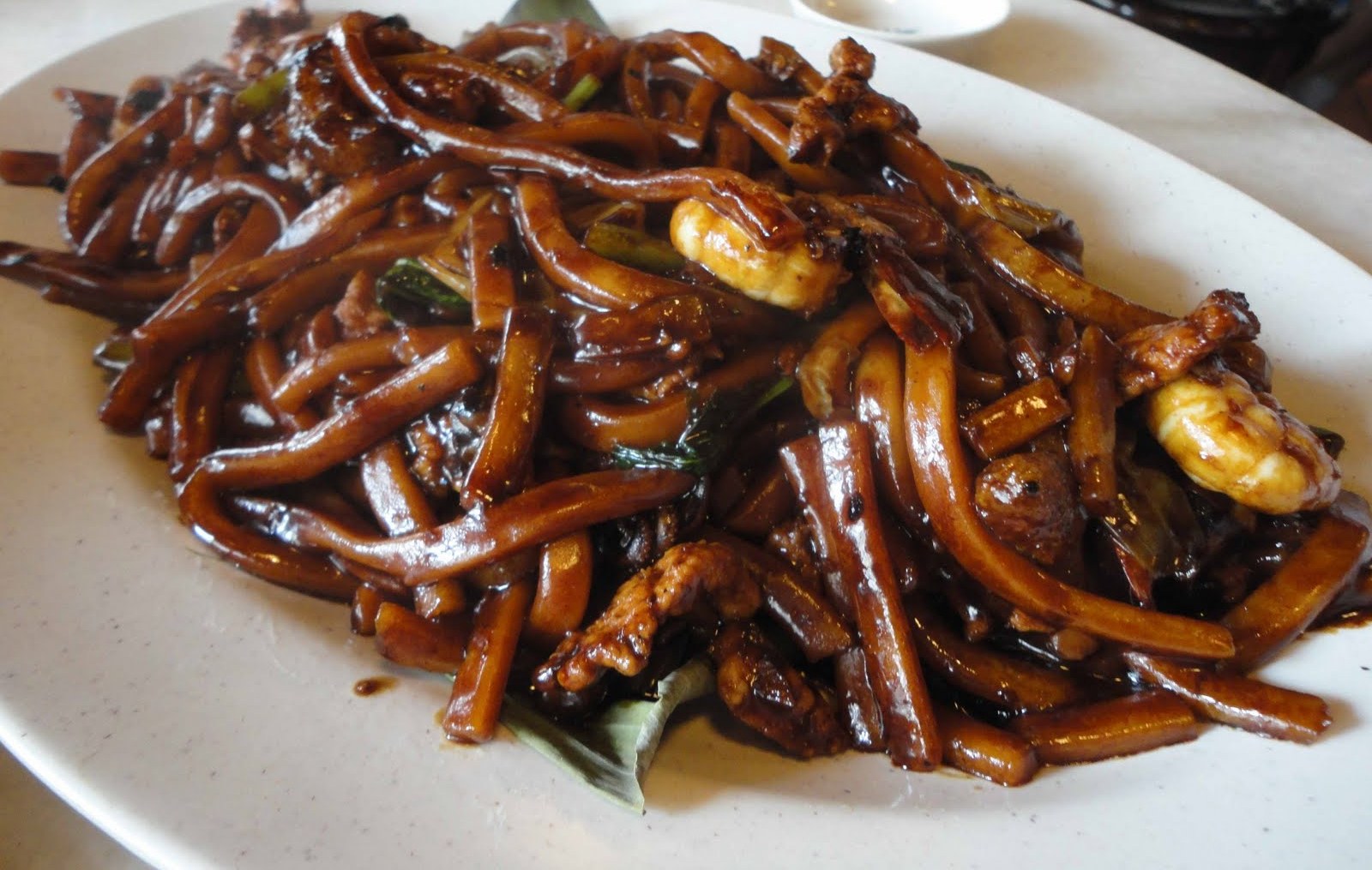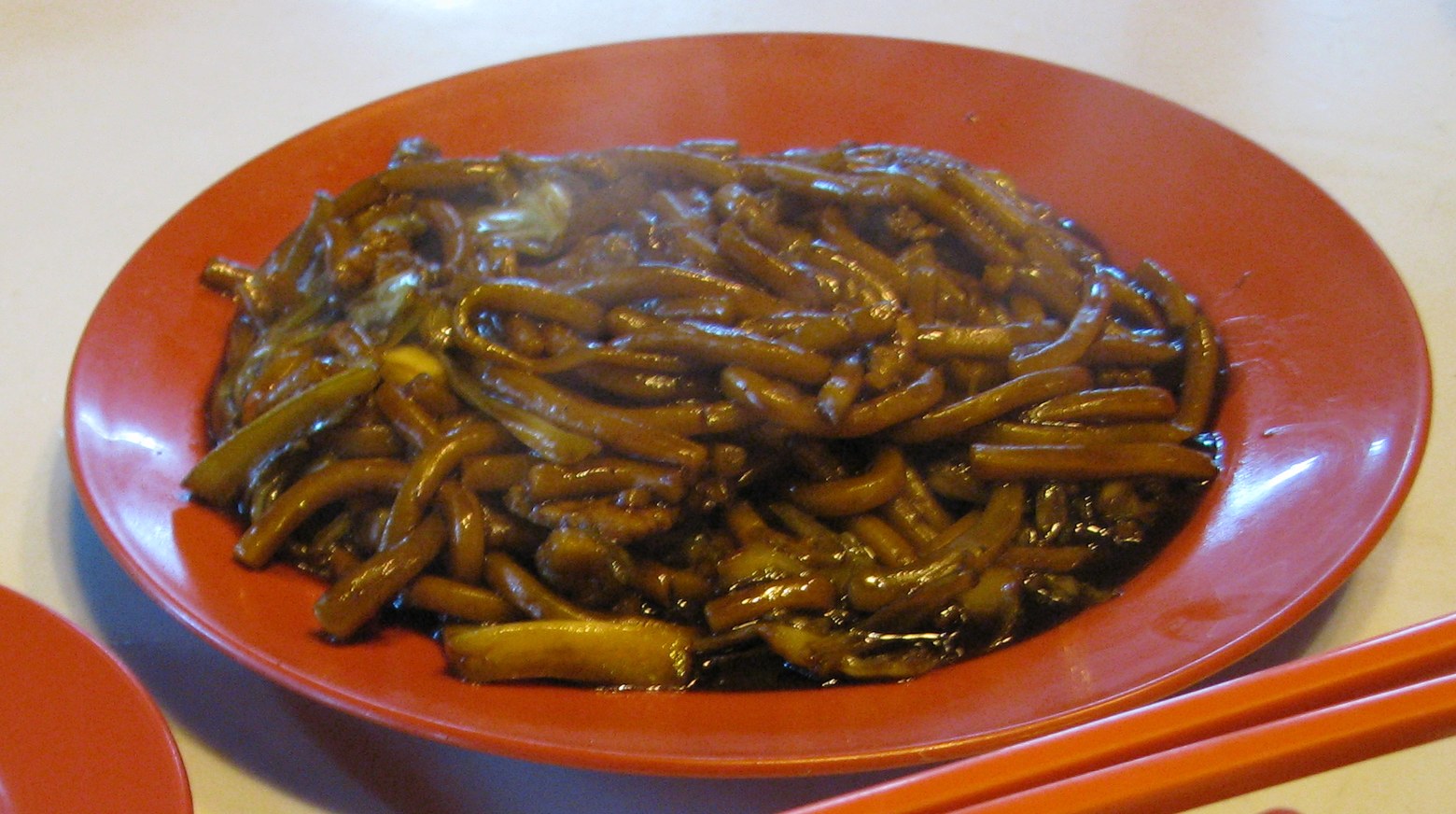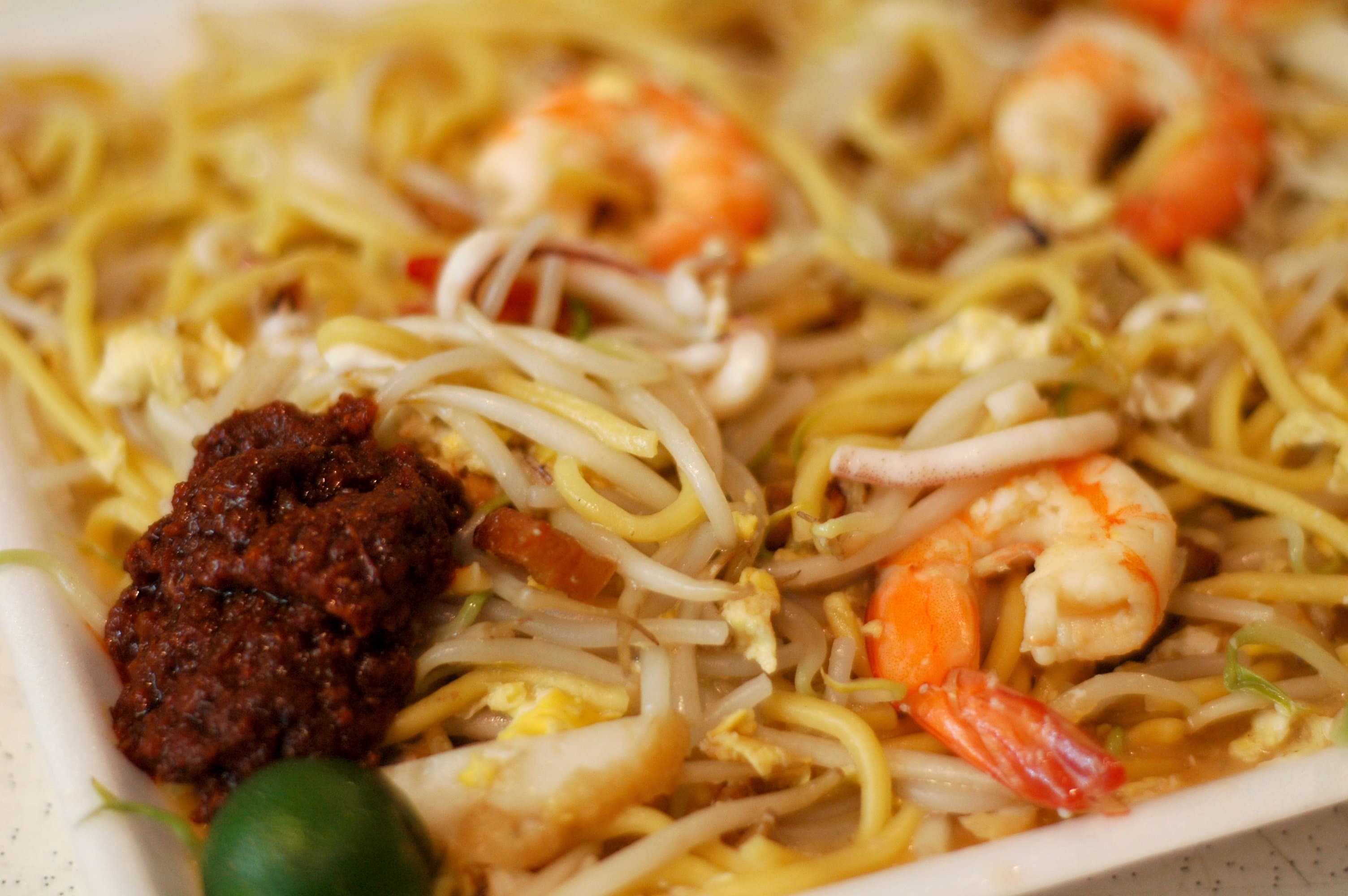
Don't let the name fool you: KL-style Hokkien mee has almost nothing in common with Penang's soupy Hokkien prawn mee. In the Klang Valley, "Hokkien mee" means thick yellow noodles wok-fried — traditionally over charcoal — in dark soy sauce until glossy and slightly charred, tossed with prawns, pork slices, squid and cabbage, and crowned with crispy pork lard, usually served with a wedge of lime and sambal on the side.
Most of the best versions are dinner-and-supper affairs, since building up a proper charcoal wok takes time, so expect long waits — and even longer queues after dark. Two of the eight below do open for lunch, which is worth knowing if you would rather not queue at 9pm.
What separates a great plate from an average one
Wok hei. The single biggest differentiator. A charcoal wok runs far hotter than a gas burner, and that heat is what gives the noodles their faint smoky bitterness at the edges. If a plate tastes only of soy sauce and sugar with no smoke behind it, the wok wasn't hot enough.
The lard. Proper KL Hokkien mee is finished with *chu yau char* — cubes of crisped pork fat scattered over the top. They should shatter, not chew. Stalls that render their own lard daily are the ones locals go back to.
The gravy-to-noodle ratio. The noodles should be coated and glossy with a small pool of dark, slightly sticky sauce at the bottom of the plate — not swimming in it, and not dry.
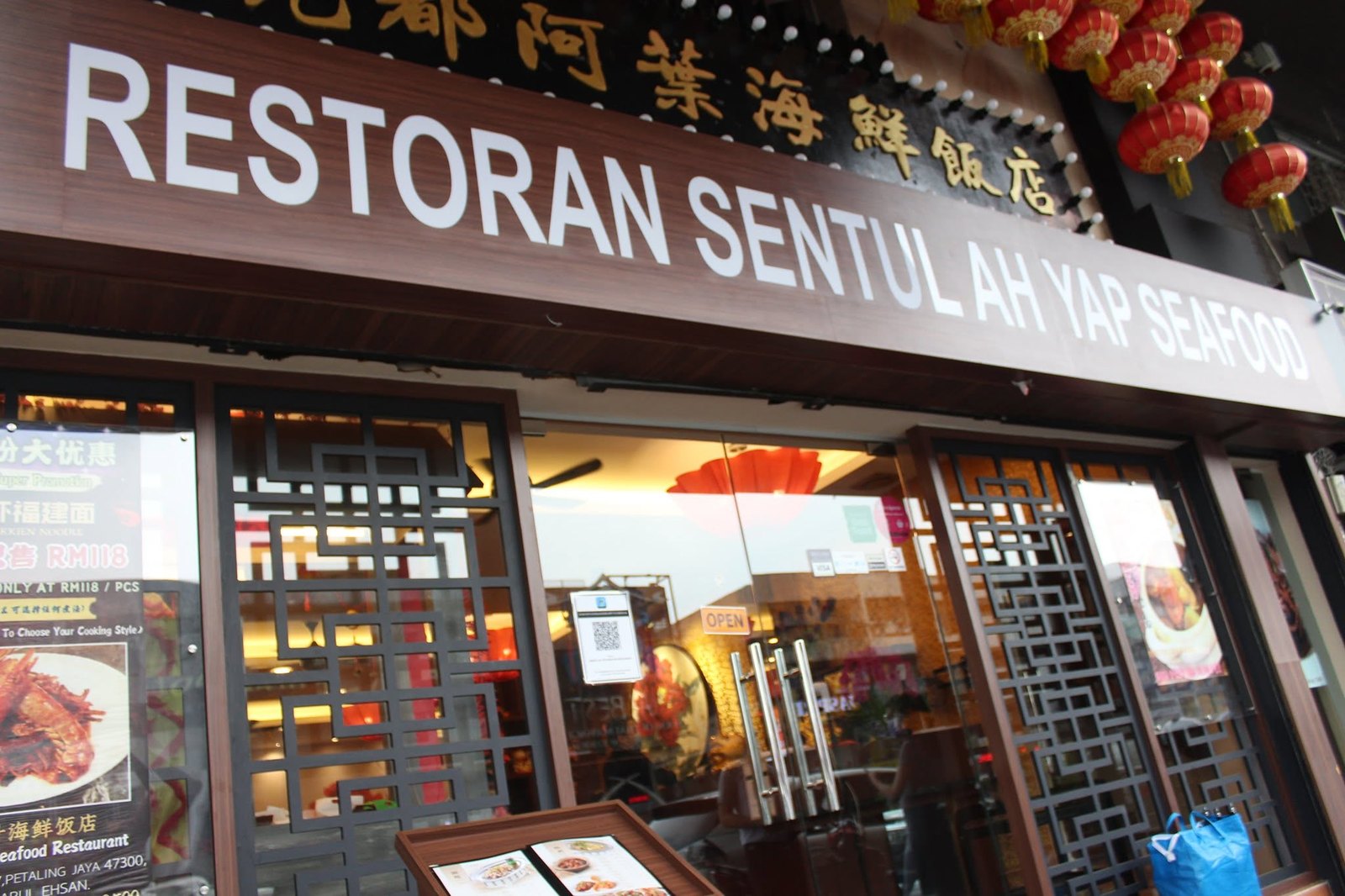
The sambal. Almost every serious stall makes its own, and it's meant to be used: a spoonful cuts through the richness of the lard. Sentul Ah Yap's punchy homemade version is one of the better-known ones.
The noodle itself. The thick yellow noodle should stay springy after a hard braise in the sauce. Several stalls will swap in mee hoon, kuey teow or a half-and-half "mee hoon mix" for the same price if you ask — Lao Ping and Damansara Uptown both do.
What a plate costs in 2026
At a hawker stall or kopitiam, expect roughly RM8–RM12 a plate. Sit-down restaurant versions run higher — around RM20 a head at a place like Mun Wah once you add a soup and a drink. Some verified reference points from this list:
- Kim Lian Kee, Petaling Street — from about RM10, with diners reporting an average spend near RM15 a head.
- Lian Bee, Setapak — RM11 a single portion, per Malay Mail in October 2024 (moonlight kuey teow RM11.80, five fried sui kow RM10).
- Lao Ping, Restoran Seapark — around RM13 a plate.
- Damansara Uptown — around RM15.90 for a one-pax plate with prawns, RM14.40 without.
Prices climb from there once you add extra prawns, squid or pork liver, so treat these as a floor and check the signboard.
When to go, and one thing to know before you do
Charcoal stalls need time to get the wok up to temperature, so most of this list opens late afternoon and runs into the night — Old Klang Road until around 3am, Sentul Ah Yap roughly 5pm to 1am, Mun Wah 4.30pm–11.30pm (closed Wednesdays), Lao Ping 5pm–10.30pm (closed Mondays).
Two are daytime exceptions. Kim Lian Kee opens 11am–10.30pm at 92 Jalan Hang Lekir, closed Wednesdays. Lian Bee in Setapak is the shortest window of all at 11am–8.30pm, closed Tuesdays — it shuts before most of the others have got going, so it is a lunch plate rather than a supper one.
One practical note: KL-style Hokkien mee is a pork dish by definition — pork slices, pork lard, and often lard oil in the wok. None of the stalls on this list is halal, and there is no meaningful halal version of this particular noodle.
How to pick your plate
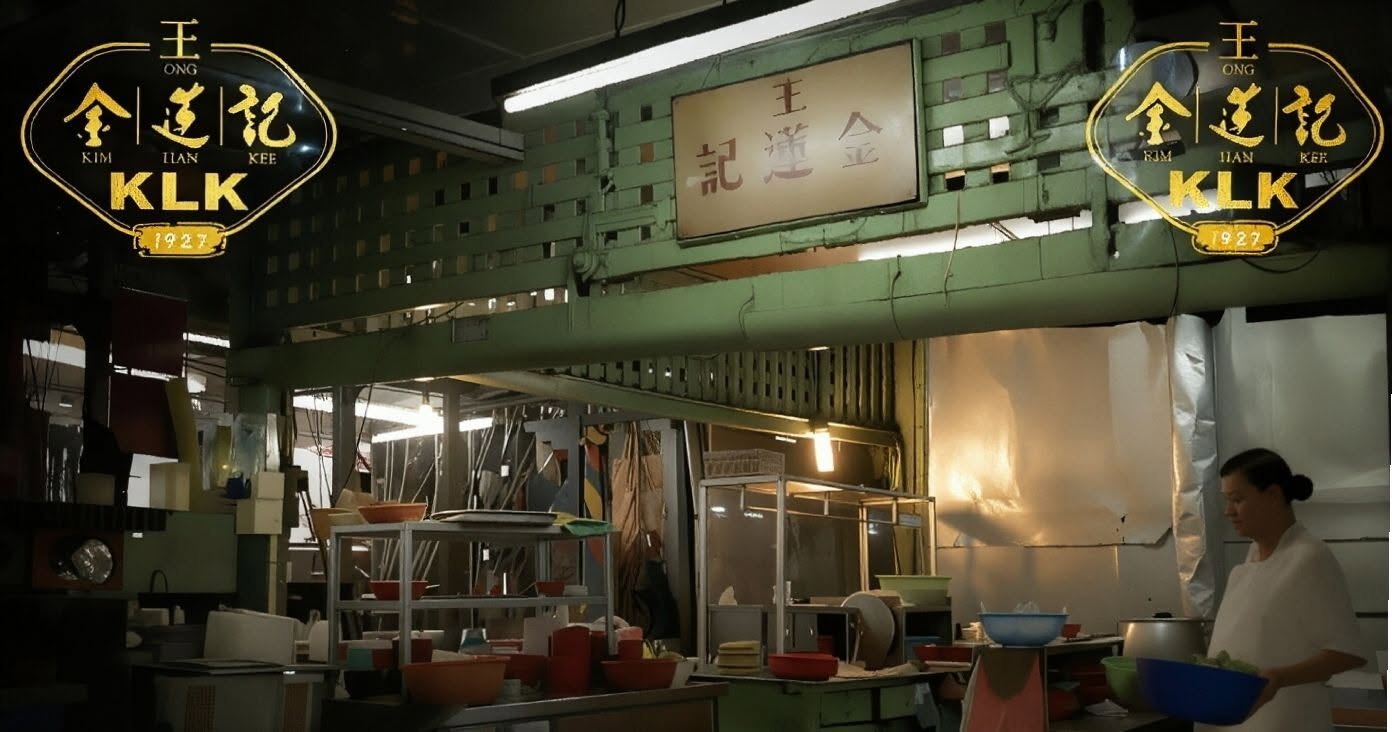
- The historic one: Kim Lian Kee — the 1927 original, still run by the founding family.
- The strongest charcoal char: Ah Wah in Taman Paramount, Sentul Ah Yap, or Lao Ping at Restoran Seapark.
- The fullest plate: Mun Wah, which piles on pork slices, squid and liver alongside the prawns.
- A late supper: Old Klang Road (till ~3am) or Damansara Uptown.
- Lunch: Lian Bee (11am–8.30pm, closed Tuesdays) or Kim Lian Kee (from 11am, closed Wednesdays) — the only two that open before late afternoon.
- No crowd: Lao Ping — the same charcoal treatment as the big names, a fraction of the queue.