> Built from the Freedom of Information Bill 2026 itself, downloaded from the Parliament of Malaysia's bills page and read clause by clause on 29 September 2026, with the town hall reporting from Malay Mail and The Star (28 September 2026) and the Centre for Law and Democracy's analysis (12 August 2026).
Malaysia has talked about a national freedom of information law for more than a decade, and on 13 July 2026 one finally reached the Dewan Rakyat. Law and Institutional Reform Minister Azalina Othman Said tabled the bill for first reading, and the next day the House sent it to a Parliamentary Special Select Committee instead of pushing it to a vote. On 28 September the committee held a national town hall in Parliament. Azalina told the room the bill "must genuinely provide access" and admitted the current draft has many weaknesses.
So the question most people are asking is simple: if this passes as written, what could you actually get? The answer is in 23 clauses, and it is narrower than the name suggests.
Who could make a request, and for what
Clause 5 limits requests to Malaysian citizens aged 18 and above. You can also ask on behalf of someone else only as their legal guardian, legal heir or estate administrator. The request must be in writing and give your name, IC number, home address and contact details, the information you want, and your purpose. It must come with a fee "as may be prescribed" by the Yang di-Pertuan Agong. No amount has been set.
Clause 6 is the part most people miss. A request "may be allowed" only for four purposes:
- verifying or correcting your own personal information (or that of someone you represent);
- non-commercial research or study by a student, trainee or researcher at a Malaysian institution;
- reporting by a media practitioner, as defined in the Malaysian Media Council Act 2025;
- any other lawful purpose, but only where you have a "proper and tangible interest" and have been prejudiced by the act of the public authority.
Clause 6(2) then adds that none of these purposes gives anyone, including the press, a right to the information.
Who would have to answer
Clause 3 defines a public authority as the Federal Government, the Parliamentary Service, federal statutory bodies, and the local authorities of the Federal Territories of Kuala Lumpur, Labuan and Putrajaya. The explanatory statement says plainly that it does not extend to state governments, state statutory bodies or other local councils.
In practice, DBKL would be covered and a Selangor council such as MBPJ would not. Selangor (2011) and Penang (2010) already have their own state freedom of information enactments, and the federal bill leaves them alone.
The deadlines
- 15 working days to decide (clause 8).
- 14 working days after a "yes" to hand the information over.
- 48 hours to decide if the request concerns the life and liberty of an individual.
- Up to 21 more working days if there are many documents or the records sit in another state, city or district.
- If refused, you get written reasons and 14 working days to appeal to the head of the authority (clause 11).
What you could be refused
Clause 9 allows refusal if the information is exempt, already public, does not exist, contains a third party's personal data, the request is "vexatious or unreasonable", or the same request was rejected in the past six months.
Clause 12 then lists 17 exempt categories. The first covers anything protected as an official secret or under any other written law. Others cover law enforcement and investigations, tax collection, trade secrets, the commercial or financial interests of the authority, ongoing research, confidential third-party information, legal and medical privilege, court and tribunal proceedings, personal information, unpublished government communications, and any opinion, advice or deliberation between officers and ministers.
The explanatory statement is blunt about the design: the bill is "purely procedural", it preserves the primacy of existing secrecy laws, and it creates no substantive right to disclosure. Clause 22 adds that nothing in it is to be read as a fundamental liberty under the Constitution.
Appeals and penalties
After the internal appeal, clause 13 sends you to the Ombudsman. But the bill cites the Ombudsman Act as "20…", with the number left blank, because that law has not been passed. The Ombudsman also cannot look at anything protected by the OSA or other laws. The last stop is judicial review in the High Court.
Clause 18 makes it an offence to use information contrary to the purpose you stated, to give false information in a request, or to destroy or alter records to block disclosure. Each carries up to RM100,000 in fines, five years in jail, or both.
Why critics want it rewritten
The Centre for Law and Democracy scored the bill 47 out of 150 on its RTI Rating, which it says would place Malaysia 137th of 142 countries with such laws. ARTICLE 19 and the Committee to Protect Journalists have both asked for it to be strengthened. Their main complaints match the text above: no public-interest override, a purpose test, federal-only scope, and an OSA that sits above everything.
What happens next
The select committee is expected to report before the October sitting, the same meeting that hears Budget 2027 on 9 October. A revised bill could then return for second reading. If it passes, the fee, the forms and the start date all come later, by order, regulation and gazette.
Until then, nothing changes: federal agencies have no legal duty to answer a request, and for state-level records the Selangor and Penang enactments remain the routes that already exist.
Related reads
- Budget 2027 on 9 October: what to know
- Malaysia's under-16 social media rule, three months in
- The Gig Workers Tribunal's first case
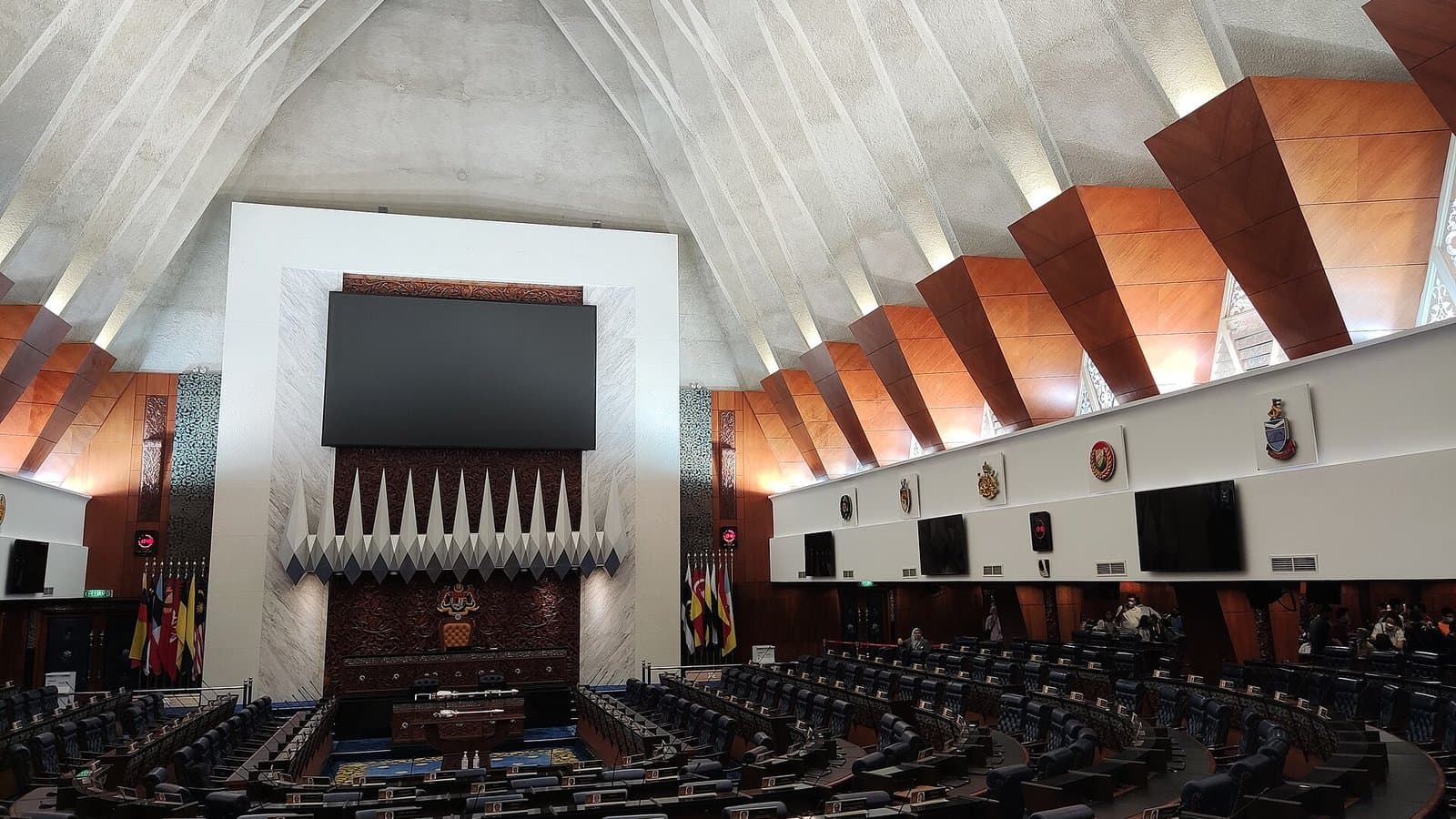
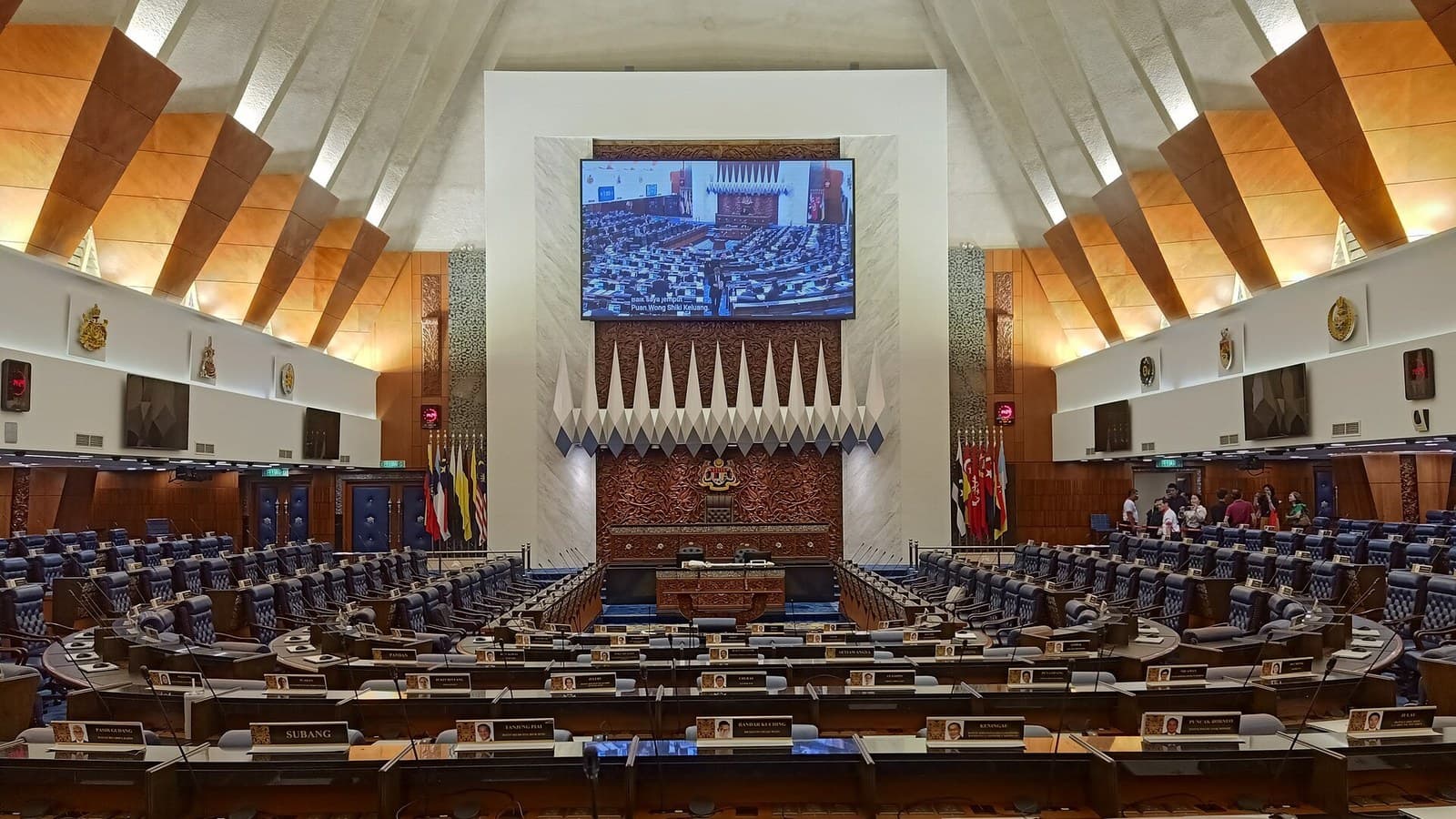
*Cover image: the Dewan Rakyat chamber, Parliament of Malaysia, 2026. Photo by Wolfiewhite, CC0, via Wikimedia Commons.*