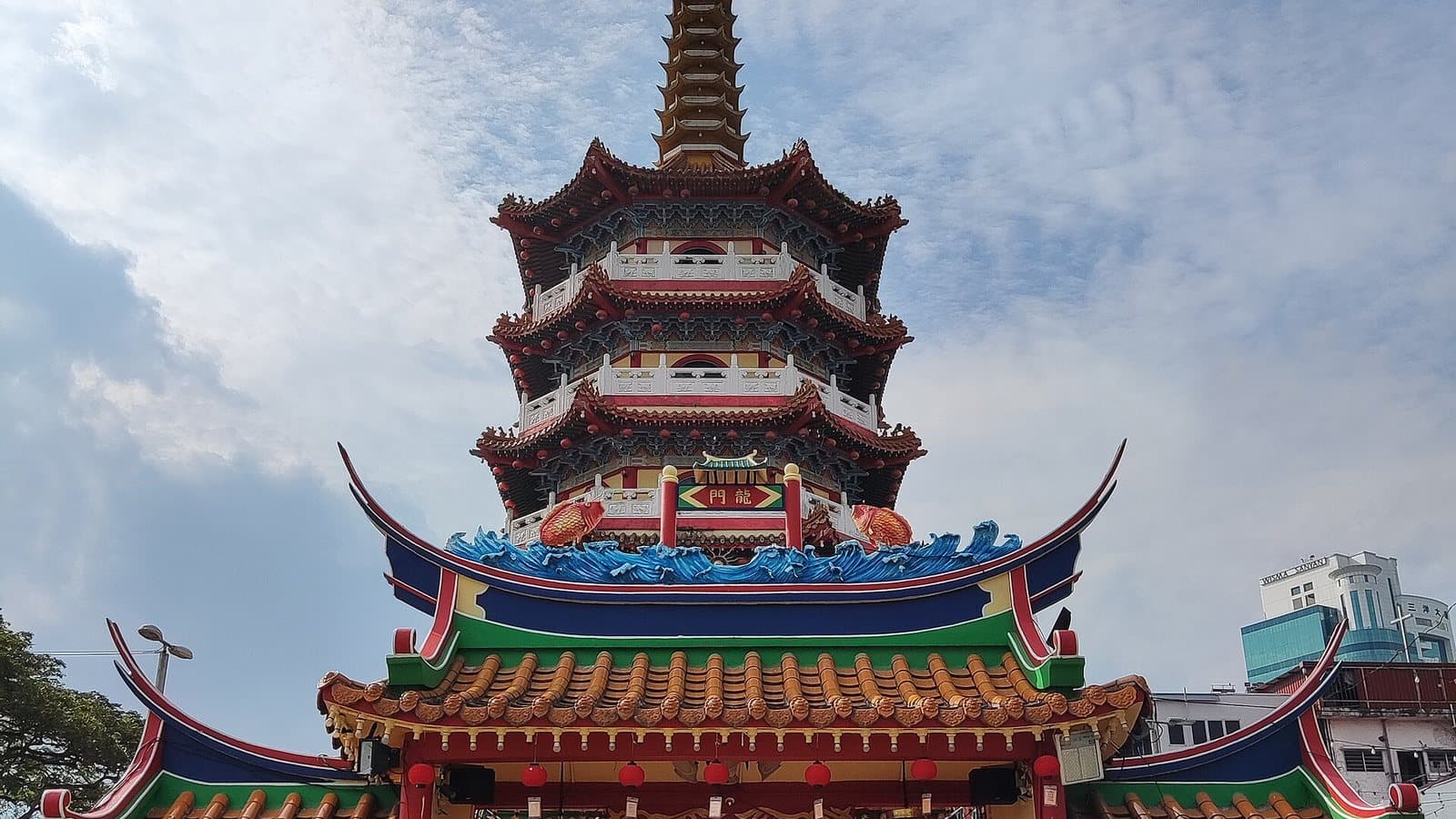
> Quick view: Sibu sits on the Rajang, Malaysia's longest river, in central Sarawak. Sibu Central Market on Jalan Channel is described by Sarawak Tourism as the largest indoor market in the country, with more than 1,100 stalls, open from 6am (Google lists a 6pm close; Sarawak Tourism says 11pm, and the wet stalls wind down from late afternoon). The Sibu Heritage Centre on Jalan Central opens 9am and is repeatedly reported as free. Tua Pek Kong Temple on Jalan Temple dates to the 1850s; its seven-tiered pagoda was built 1982–1987; open 5am–7pm daily. Bukit Lima Nature Reserve is open 8am–5pm daily. Both museums shut on Mondays. Wisma Sanyan is 28 storeys and about 126 metres, completed 2001, Sarawak's tallest until 2019. Bawang Assan longhouses are 40 minutes out and must be arranged in advance.
The town everybody drives through
Sarawak itineraries are written around three names — Kuching for the heritage, Miri for the caves, Mulu for the park — and Sibu appears in them, if it appears at all, as the place where the road passes and the river starts. That is a reasonable way to plan a first trip to the state, and it is also why the town is one of the better-value stops in Malaysian travel right now: it has genuine things to see, almost nobody writes about them properly, and most of them cost nothing.
Sibu is the port of central Sarawak, sitting on the Rajang, the longest river in the country, roughly halfway between Kuching and Bintulu and at the head of the express boat routes that run upriver to Kanowit, Song and Kapit. It calls itself Swan City. The eight stops below were checked on 22 August 2026 for address, trading status and posted hours.
What makes Sibu different from the rest of Sarawak
Two things, and they are related.
The first is the Foochow migration of 1901, a settlement scheme that brought a large group of families from Fuzhou up the Rajang to farm. It worked, and it left a town whose Chinese community is overwhelmingly Foochow rather than the Hokkien and Teochew mix common elsewhere in Malaysia — with a distinct dialect, a distinct business culture, and a distinct set of dishes you will struggle to find properly made anywhere else in the country. Kampua mee, kompia and dian bian hu are Sibu food in the way that char kway teow is Penang food.
The second is that Sibu is still a working river port. The waterfront has not been converted into a promenade with cafés; it is a terminal, with express boats loading and timber barges moving through. That gives the town a quality that is increasingly rare in Malaysian tourism: it is not performing for anyone.
The order that works
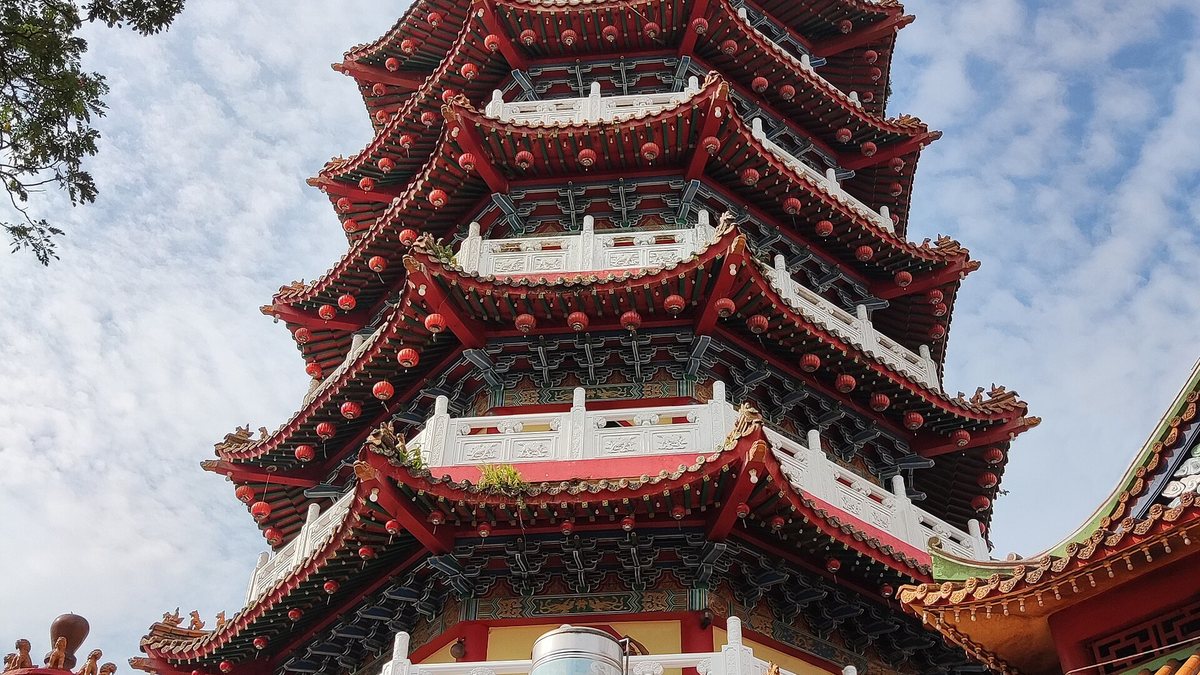
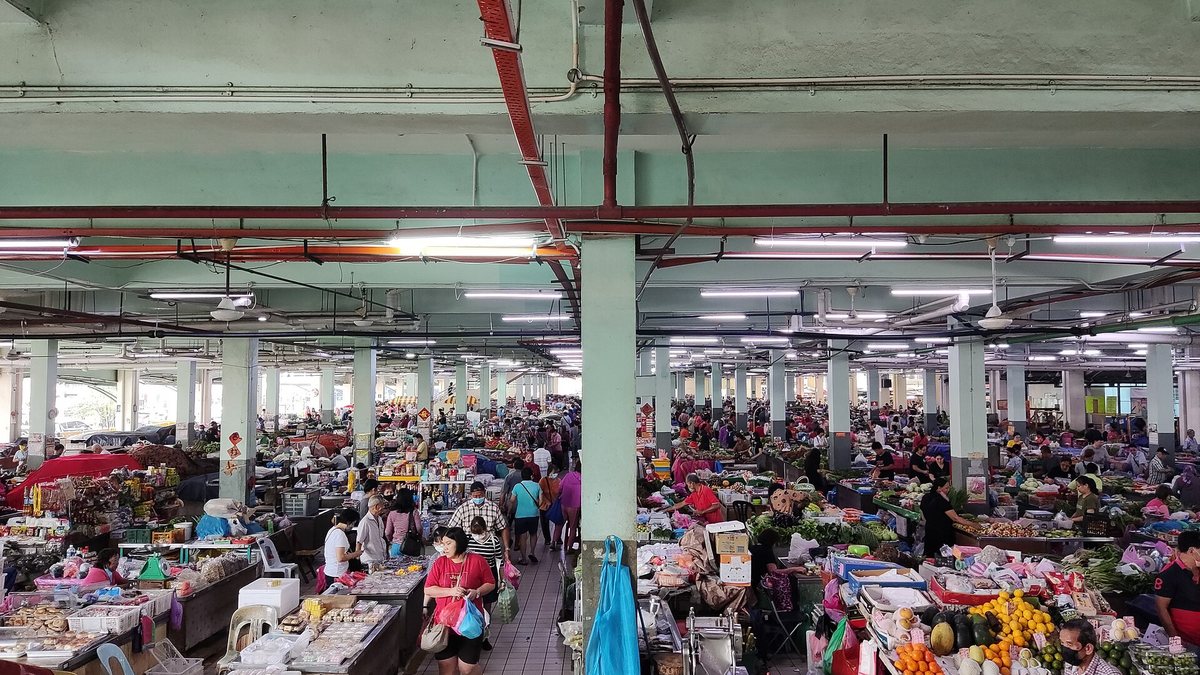
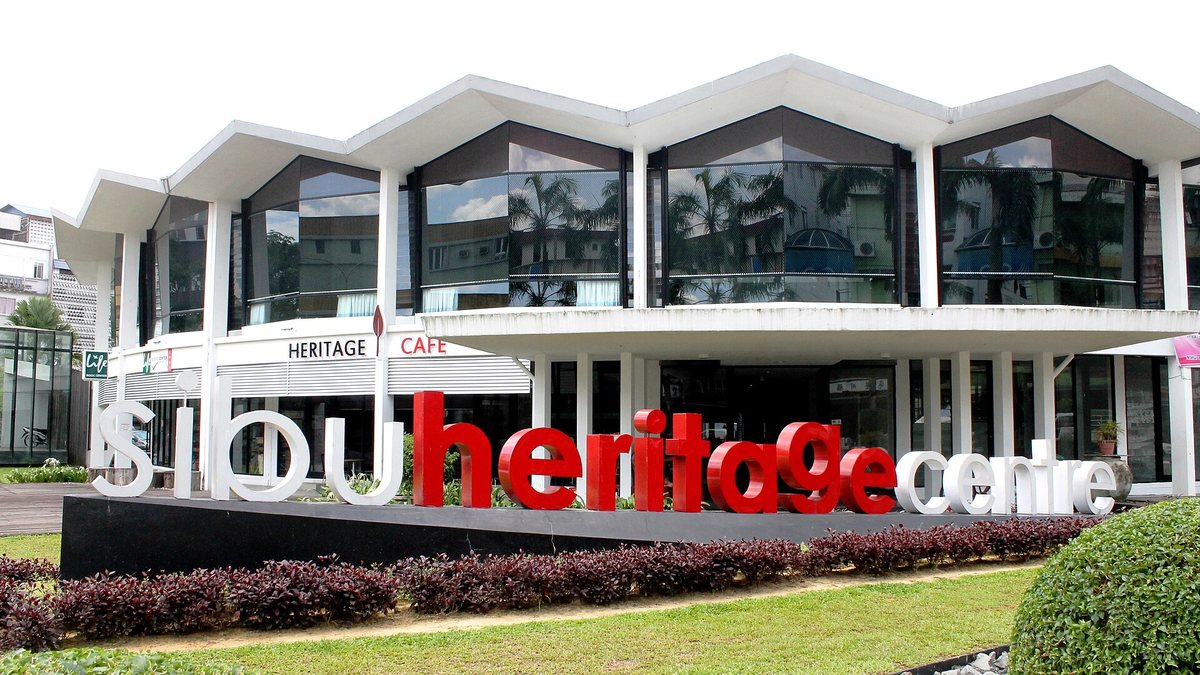
Morning: Tua Pek Kong Temple first, for the light on the pagoda, then the Heritage Centre when it opens at 9am — not on a Monday, when it is shut — then Sibu Central Market while the jungle produce is still out. All three are within walking distance of one another in the town centre.
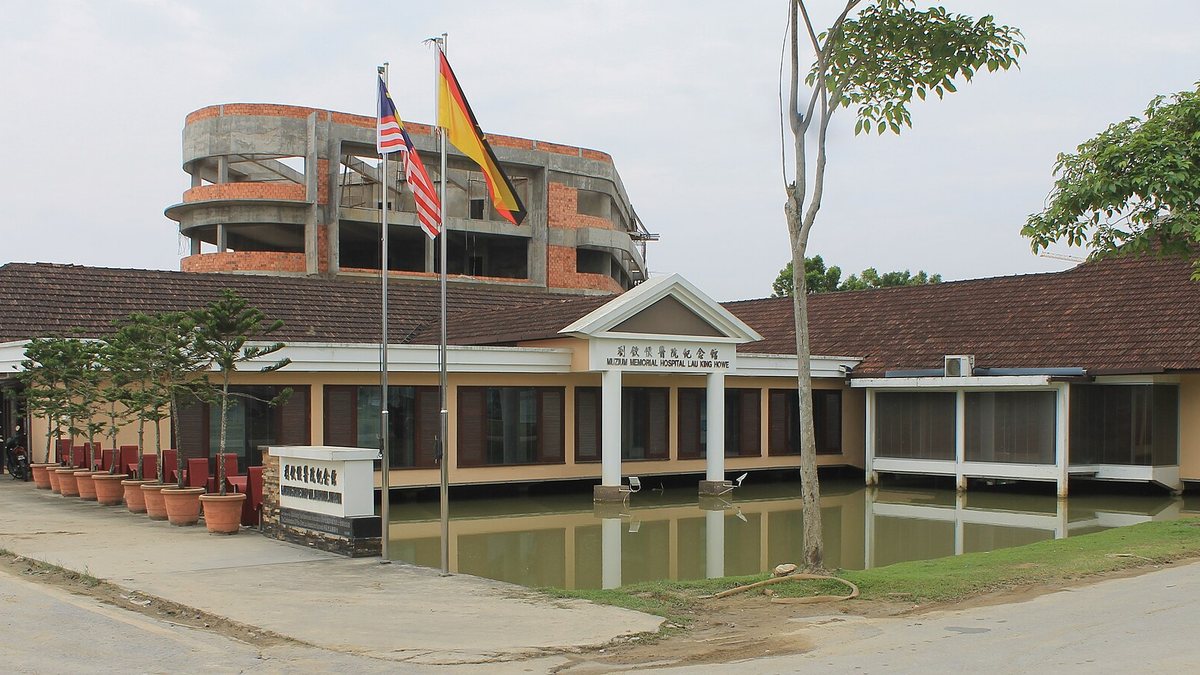
Midday: eat at or near the market — the upstairs food stalls do kampua mee, kuih and Sarawak laksa. Then Wisma Sanyan if it is raining, or the Lau King Howe Hospital Memorial Museum if it is not (also closed Mondays).
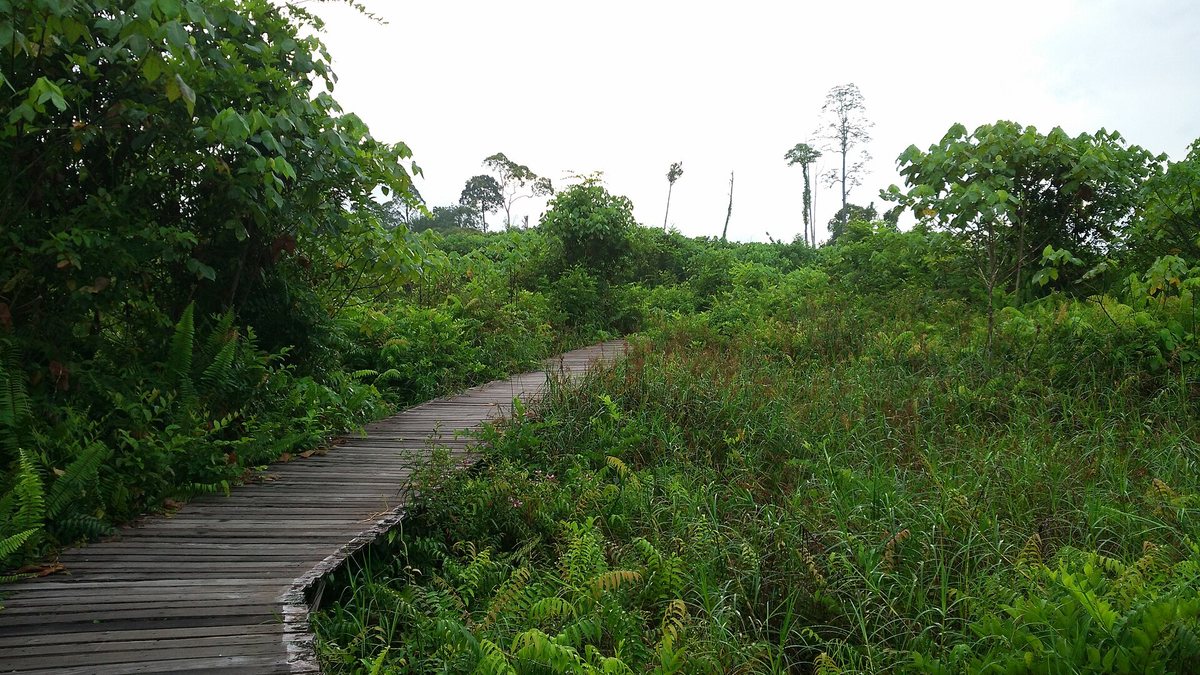
Late afternoon: Bukit Lima Nature Reserve, arriving by about 4pm so you are on the boardwalk before the 5pm close and out while it is still light.
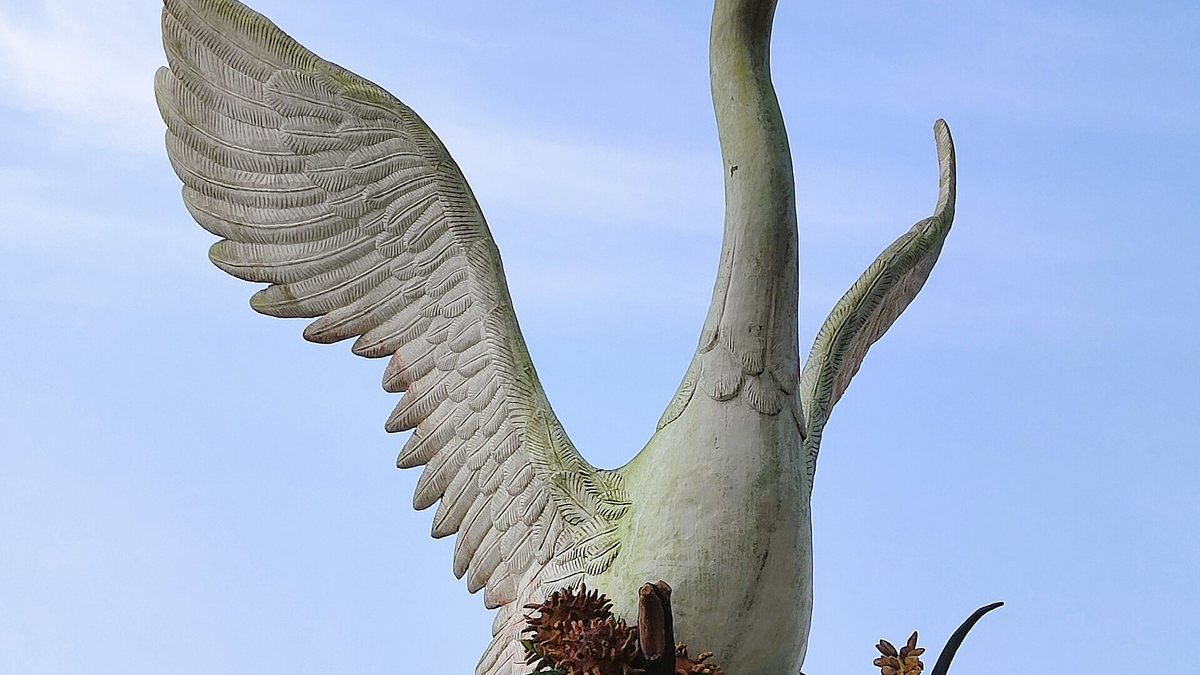
Dusk: the Swan Monument and the Rejang Esplanade, which is where the town itself goes.
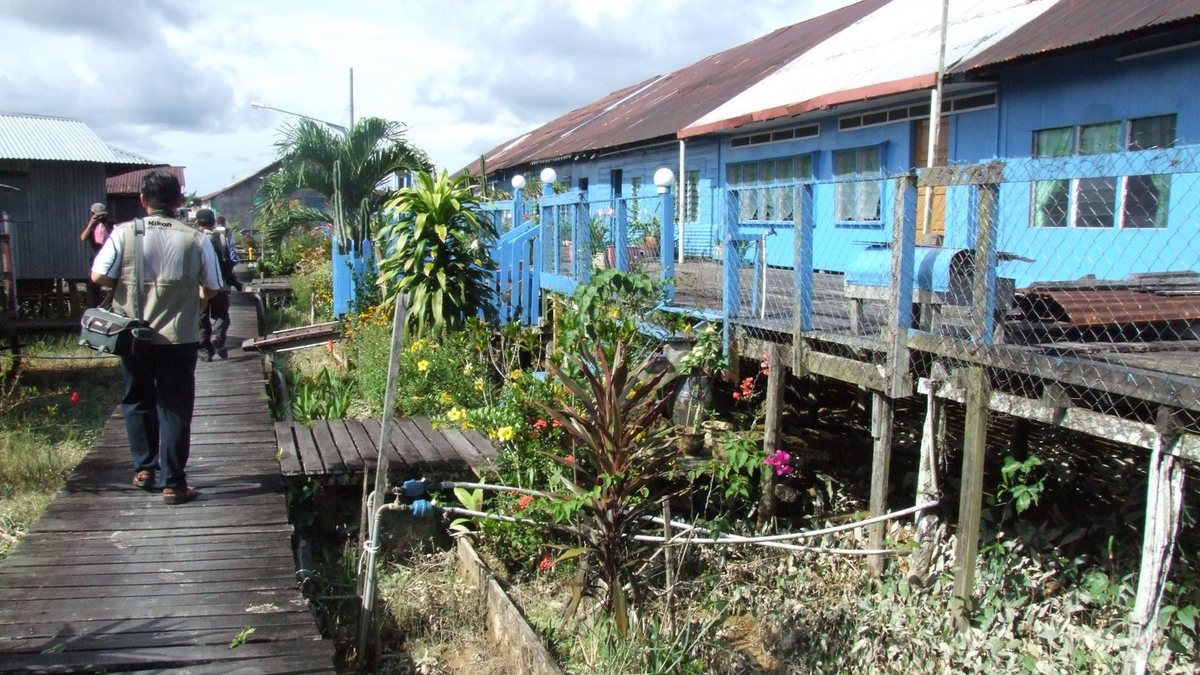
A second day, if you have one: Bawang Assan, arranged in advance.
Do not plan Sibu around a Monday
The single most useful line on this page: both of Sibu's museums are closed on Mondays. The Sibu Heritage Centre shuts on Mondays and on Chinese New Year, Hari Raya, Gawai Dayak and Christmas. The Lau King Howe Hospital Memorial Museum shuts on Mondays and on gazetted public holidays, opening Tuesday to Sunday, 9am to 5pm — that is what its own site says, and it is worth trusting over the Department of Museums Malaysia listing, which still describes it as open every day.
A Monday in Sibu is not a write-off: the market, the temple, Bukit Lima, the esplanade, the mall and the Jade Dragon Temple are all open. But you lose both of the stops that explain the town, which is most of the reason to be here in the first place.
Three free stops that never make the eight-item lists
Yu Lung San Tien En Si, the Jade Dragon Temple. At KM26 of the Sibu–Bintulu road, this is the largest Chinese temple complex in Malaysia and is believed to be the largest in Southeast Asia. Construction began in October 2004 and finished in 2009 at a cost of RM60 million, and it holds Buddhism, Taoism and Confucianism under one roof, with two bell-and-drum towers, a theatre, a hall for sacred texts, gardens, a lodging house and a restaurant. Entry is free, and it is listed as open 8am to 5pm. The only reason it is not item nine is that it needs a car and half a morning rather than a walk from the waterfront.
Dataran Tun Tuanku Bujang, the Sibu town square. The Sarawak Tourism Board describes this as the biggest town square in Malaysia. It sits in the middle of town within walking distance of most of the hotels, and it is where concerts and cultural events land — useful to know if you arrive during a festival, and free either way.
Bukit Aup Jubilee Park. A 24-acre cluster of low hills that won the 1998 National Landscaping Competition for public parks, with a lookout tower on the highest point giving views over plantations, longhouses and the Igan River, a suspension bridge over a small lake, picnic huts, a canteen and jogging trails. The tower is also where local Ibans leave offerings to Naga Bari, a benevolent spirit believed to help people in need.
When to go
Sibu is a year-round town with one caveat. The Sarawak Tourism Board puts temperatures between 23°C and 31°C all year, humidity consistently high, and annual rainfall at roughly 3,500mm, heaviest from November to February. That window matters more here than in most Malaysian towns, because two of the best things on this list are outdoors and unroofed: the 5.7km of plank walk at Bukit Lima, and the esplanade at dusk. Travelling in the monsoon, keep the mall and the two museums as the wet-weather plan — and remember which day they close.
Two corrections worth carrying
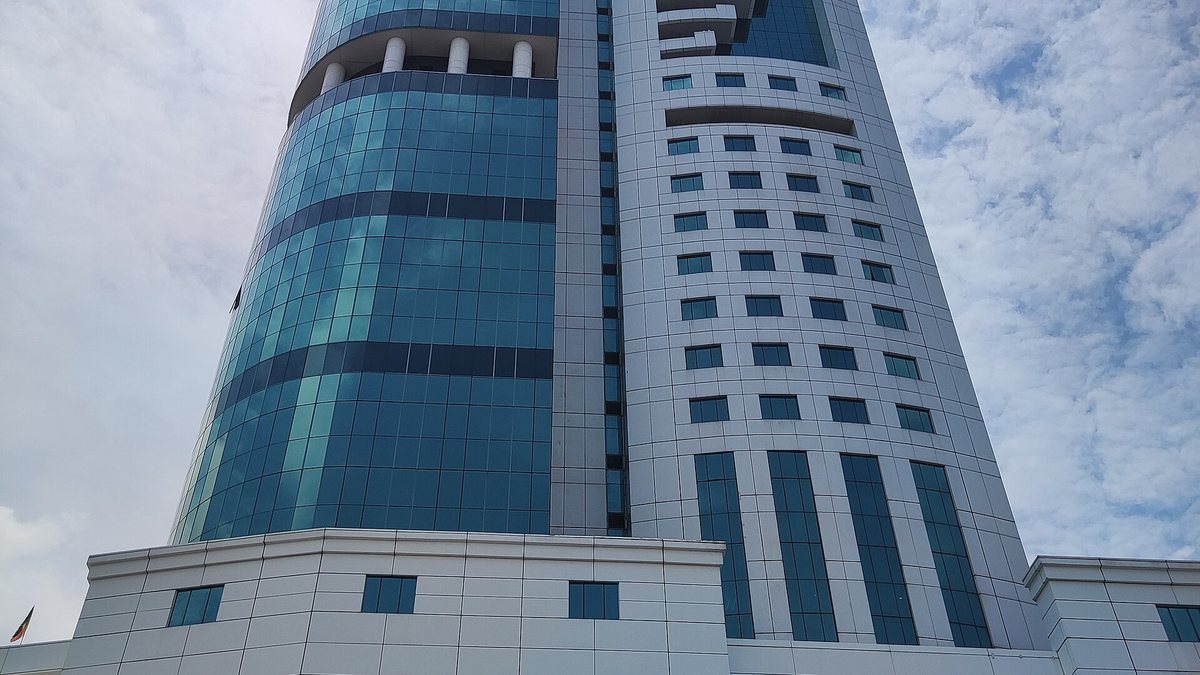
You will read in a great deal of tourism copy that Wisma Sanyan is the tallest building in Sarawak. It was, from its completion in 2001 until 2019, and it is still comfortably the tallest thing in Sibu at 28 storeys and around 126 metres. But the state record moved on in 2019, when the 34-storey Naim The Peak Condominium in Bintulu overtook it, and the copy has not.
The second correction is about the temple, and it applies to this page as much as anyone else's. Tua Pek Kong Temple genuinely dates to the 1850s — it appears in the *Sarawak Gazette* in 1871 and was rebuilt in 1897 — but the seven-tiered pagoda that every photograph of it frames is not from the 1800s at all. Work on the pagoda, dedicated to the Goddess of Mercy, began in 1982 and finished in 1987. Calling the whole compound "late 1800s" is the sort of shorthand that survives because nobody checks the part of the building they are actually pointing the camera at.
While we are at it: an earlier version of this page put Bukit Lima ten minutes from town. Sarawak Forestry Corporation's own page says about 20 minutes by road, and SFC is the body that manages the reserve, so 20 minutes it is. All three are small things, and together they are a good indicator of how much of what is published about Sibu was written a long time ago and never revisited — which is the honest reason a list like this is worth maintaining.
Where the information came from
Addresses, trading status, contact numbers and review counts were read from each place's own Google Business listing on 22 August 2026, then re-verified against the operators themselves on 24 August 2026. On 27 September 2026 we re-pulled every Google listing (which added the temple's 5am opening and Bukit Lima's 8am gate) and re-read lkhhmm.org, which confirmed the Tuesday-to-Sunday hours and the Monday and public-holiday closure.
Sibu Central Market's 1996 build date, its 6am–11pm hours, the 1,100-stall and largest-indoor-market claims, the town square, Sibu Gateway, the Rejang Esplanade's extent and Bukit Aup Jubilee Park all come from the Sarawak Tourism Board's own Sibu pages, as does the climate data. Bukit Lima's area, extension, boardwalk length, species counts, One Stop Centre and 20-minute drive time come from Sarawak Forestry Corporation; the RM1/RM5 nature-reserve fee band comes from the Forest Department Sarawak gazetted schedule. The Lau King Howe museum's free entry, hours and Monday closure come from its own site, lkhhmm.org. Bawang Assan's nine longhouses and 18th-century dating come from visitsibu.com. Wisma Sanyan's height, storey count, completion year and 2019 succession, the Jade Dragon Temple's construction dates and cost, and Tua Pek Kong's 1850s origin and 1982–1987 pagoda come from published reference sources. Hours at small museums and reserves change with public holidays, so confirm before a long drive.
Related reads
- Best Things to Do in Miri, Sarawak 2026: 8 Verified Stops from a UNESCO Cave to a Vanished Rock Arch — the other Sarawak town that gets skipped, and the one with the UNESCO site.
- 8 Family-Friendly Things to Do in Kuching, Sarawak — what to do at the other end of the trunk road, with children in tow.
- 6 Kolo Mee & Sarawak Laksa Spots You Must Try in Kuching (2026) — the Kuching noodles to compare Sibu's kampua mee against.
*Cover image: Wee Hong, CC BY-SA 4.0, via Wikimedia Commons*