Malaysia now has a dedicated legal channel for school bullying, and it has been open since 16 June 2026. It is not a court, it does not send children to prison, and it is not where you go if a child has been criminally assaulted. It is a tribunal, it hears the complaint in private, and it can put a number on the harm.
Most of the coverage since June has fixed on one figure, the RM250,000 compensation ceiling. That number is real but it is the last step, not the first. What follows is the route a parent actually walks, taken from the text of the Act as passed by Parliament and from the regulations that brought the Tribunal into operation.
What the law is, and when each part started
The Anti-Bully Act 2026 is Act 876. The Bill (D.R.41/2025) was tabled in the Dewan Rakyat on 1 December 2025 by Datuk Seri Azalina Othman Said, Minister in the Prime Minister's Department for Law and Institutional Reform, passed the lower house on 3 December and the Dewan Negara on 16 December, received royal assent on 13 January 2026 and was gazetted on 23 January 2026.
It started in two stages. Part I and Part II, sections 25 to 29 and section 31 came into operation on 1 March 2026 under P.U. (B) 75/2026. The remainder came into operation on 16 June 2026 under P.U. (B) 209/2026, the same day the Anti-Bully (Tribunal for Anti-Bully) Regulations 2026, P.U. (A) 223, came into force.
The Tribunal itself sits at the Asian International Arbitration Centre in Kuala Lumpur, and its operations are divided into six zones: northern, southern, east coast, central, Sabah and Sarawak. Proceedings can be held physically or by electronic means, and can be held outside the AIAC building, including at schools and legal aid offices.
What counts as bullying under the Act
Section 3 defines bully as any wilful act directed at a victim by any means, whether committed repeatedly or in a single severe incident, which causes physical, psychological or social harm. The section then lists five kinds of act it may include:
- physical harm to a victim or the victim's belongings
- language that abuses, threatens or demeans the victim and harms their psychological wellbeing
- acts intended to isolate the victim socially, damage their reputation, or create a hostile environment
- acts that humiliate or discriminate against a victim on the basis of sex, race, religion or disability
- any of the three above committed through electronic or digital communication
The phrase that does the most work is "a single severe incident". One incident is enough. Nothing in the definition requires a pattern.
Who can be a victim
Section 2 is narrower than the public conversation suggests. A victim is a child under 18, a student of any age for whom education or training is provided at an educational institution, or a child placed in a place of safety, place of refuge or correctional institution under the Child Act 2001.
The First Schedule lists the institutions the Act binds: government educational institutions, government-aided educational institutions, private educational institutions, Maktab Rendah Sains MARA and the Royal Military College.
Adults bullied at work are outside the Act. Azalina told the Dewan Rakyat during the December 2025 debate that the Government may widen the scope later to cover people aged 18 and above, and the same intention was recorded when the Tribunal opened, but as the law stands today it is a children and students statute.
The step almost everyone misses
If the bullying happened under the supervision or monitoring of an educational institution, section 29(2)(a) requires you to go to the school's anti-bully committee first. Every school covered by the Act must have one: section 7(1) makes the person responsible for the administration and management of the institution establish and maintain a committee, implement the policies and procedures, provide an accessible and child-sensitive reporting channel that keeps information confidential, provide counselling and psychosocial support, and provide training. Sections 12, 17 and 23 place the same duty on MRSM, the Royal Military College and Child Act institutions.
The Tribunal takes the case only once one of two things is true. Either you complained to the committee and allege that it took no action or did not deal with the complaint accordingly, or the committee itself referred the complaint to the Tribunal after obtaining your informed consent.
There are two exceptions where you may lodge directly under section 32(2)(b). The first is where the victim is a student but the incident happened outside the school's supervision or monitoring, which is how most cyberbullying between classmates will arrive. The second is where the child victim is not under the supervision of any educational institution or institution at all.
One more limit that will disappoint some families: section 29(3) says the complaint must refer to bullying that occurred after the Act came into operation. Incidents before that date are outside it.
How a complaint is heard
A complainant lodges in the prescribed form. Where the victim is a child, the parent or guardian is the one who files. Complaints are subject to the Limitation Act 1953, or the Limitation Ordinances of Sabah and Sarawak, so this is not an indefinite right.
Once lodged, the Secretary to the Tribunal serves written notice of the day, time and place of the hearing on both the complainant and the respondent, and where a party is a child, on that child's parent or guardian as well.
Each sitting is a panel of three, chaired by the President, the Deputy President or another qualifying member, with two further members. Section 35(2) requires that every panel include at least one woman. The Tribunal decides on the balance of probabilities and by majority.
Mediation comes first. Section 39 requires the Tribunal to give priority to resolving the complaint by mediating an agreed resolution, provided both parties give informed consent and the Tribunal considers mediation appropriate, having regard to the safety and wellbeing of the child parties. A mediated resolution is recorded and takes effect as if it were an award.
Hearings are closed to the public. Under section 36(2) no party may be represented by a lawyer unless the Tribunal considers the matter involves complex issues of law, and if one side is allowed counsel the other side is entitled to it too. A child party has the right to be accompanied and assisted by a parent or guardian, and an unrepresented child may be referred to the Director General of Legal Aid.
The Act also builds in child-friendly procedure: evidence by live link, the use of screens, and the appointment of an intermediary, psychologist or disability specialist to help the Tribunal communicate with a child party.
What the Tribunal can actually order
Section 43(1) gives seven kinds of order, and the Tribunal may make more than one:
- an apology to the victim, in the terms the order specifies
- where the respondent is an adult, a published apology
- removal of any bullying content from any social media platform, electronic device or digital storage medium
- reimbursement of reasonable expenses incurred because of the bullying, payable by the respondent or, where the respondent is a child, by the parent or guardian
- compensation or damages of up to RM250,000 for loss or damage, separate from those expenses, again payable by the parent or guardian where the respondent is a child
- attendance at any programme the Tribunal thinks necessary
- an order that the respondent's parent or guardian attend counselling or parenting support sessions together with the child
This is where the shared-responsibility idea lives. A tribunal cannot fine a twelve-year-old into paying RM250,000; it can order the parent or guardian to pay it, and it can order that parent into a counselling room.
The Tribunal can also refer its findings to the Malaysian Communications and Multimedia Commission for action under the Communications and Multimedia Act 1998 or the Online Safety Act 2025, and notify the school of what it found. It may dismiss a complaint it considers frivolous or vexatious.
An award should be made within 60 days of the first day of the hearing, with written reasons.
What happens if the award is ignored
Section 44 is the enforcement teeth, and it is harsher than most people expect. Failing to comply with an award within 30 days of the date it was made is an offence. Where compensation or damages were ordered, the fine on conviction is twice the total amount ordered, or imprisonment of up to two years, or both. Where no money was ordered, it is a fine of up to RM10,000, up to two years, or both. For a continuing offence, add up to RM1,000 for each day it continues after conviction.
An award is final and binding, is deemed to be an order of a court, and the Secretary sends a copy to the court with jurisdiction so it can be recorded and enforced. The only way to challenge it is an application to the High Court on the ground of serious irregularity, which section 46 defines narrowly: a failure to deal with all the relevant issues put to it, or uncertainty or ambiguity as to the effect of the award.
Two things parents should not get wrong
You are not giving up your right to report a crime. Section 54 states plainly that a complaint to the Tribunal does not preclude lodging a police report for any offence relating to bullying under any written law. Section 30 works the other way: once a complaint is lodged with the Tribunal, the same issues cannot be litigated between the same parties in court, unless court proceedings began first, the conduct is a crime, or the Tribunal complaint is withdrawn or struck out.
You must not name the child. Section 50 makes it an offence to publish, in any newspaper or magazine or through any electronic medium, information that may lead to the identification of any child involved in proceedings under the Act. The penalty is a fine of up to RM50,000, up to two years' jail, or both. That applies to a parent posting about the case on Facebook as much as it applies to a newspaper.
Where oversight sits
Section 48 gives the Human Rights Commission of Malaysia, SUHAKAM, the job of recommending legislative and administrative measures on bullying prevention, raising awareness, running education and workshops, and distributing research. Section 7(3) sends the findings of any Ministry of Education audit of a school's compliance to SUHAKAM. Under section 49, SUHAKAM reports annually to Parliament on what it has done.
That is the part worth watching. A tribunal that hears complaints one by one is a remedy. The audit trail into SUHAKAM and back into Parliament is the part designed to change how schools behave before a complaint is ever filed.
Related reads
- Malaysia's Under-16 Social Media Rule
- Tribunal for Consumer Claims Malaysia 2026
- School Holidays Malaysia 2026
*Sources: the Anti-Bully Bill 2025 (D.R.41/2025) text as passed, which became Act 876; the commencement notifications P.U. (B) 75/2026 and P.U. (B) 209/2026; and the Anti-Bully (Tribunal for Anti-Bully) Regulations 2026, P.U. (A) 223. Section numbers follow the Bill as passed. This is general information, not legal advice; check the gazetted Act or take advice before acting.*
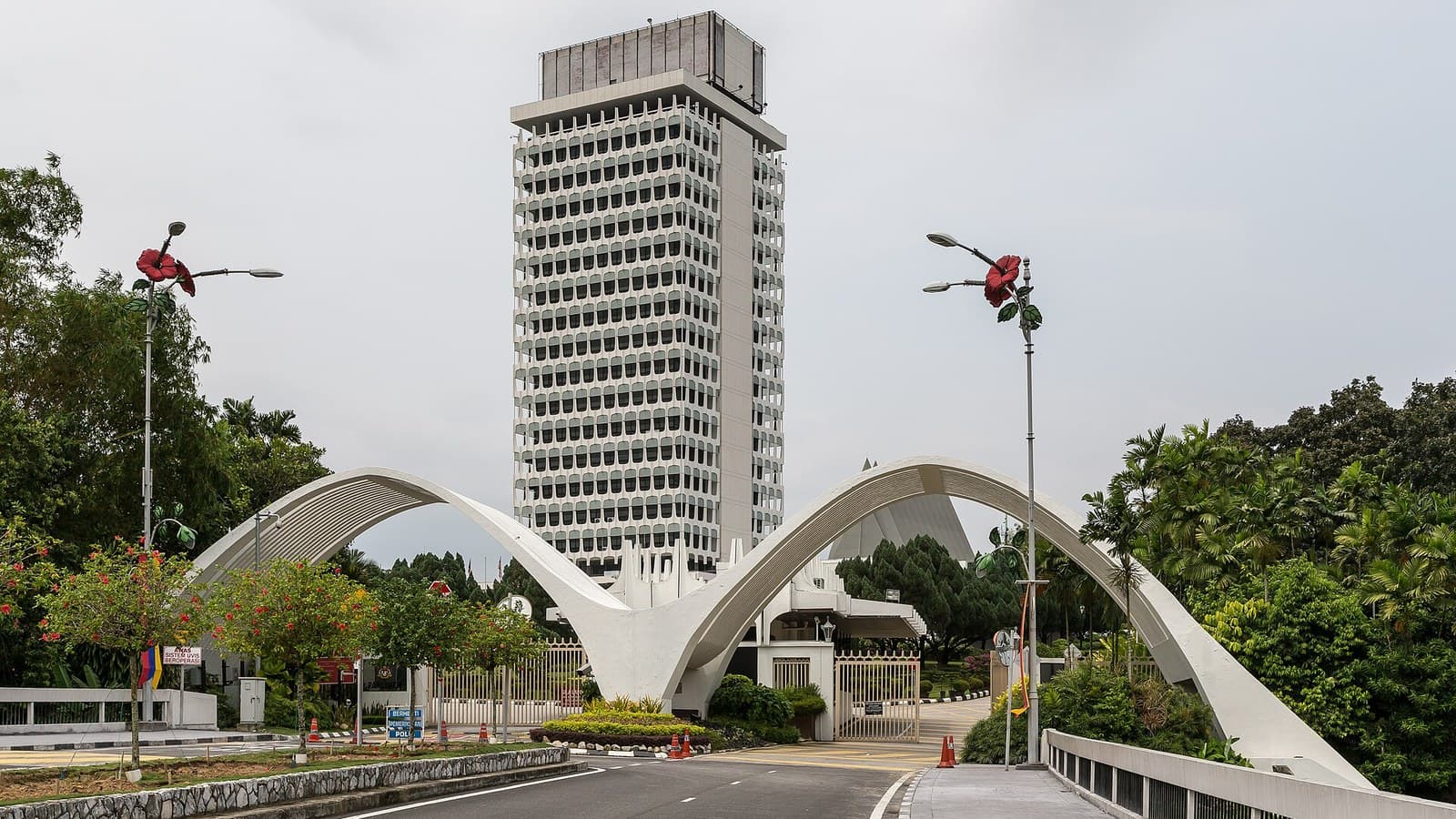
*Cover image: the Malaysian Houses of Parliament, where the Anti-Bully Bill 2025 was passed in December 2025. Photo by CEphoto, Uwe Aranas, CC BY-SA 3.0 via Wikimedia Commons.*