What it is, and why RM5 is the whole point
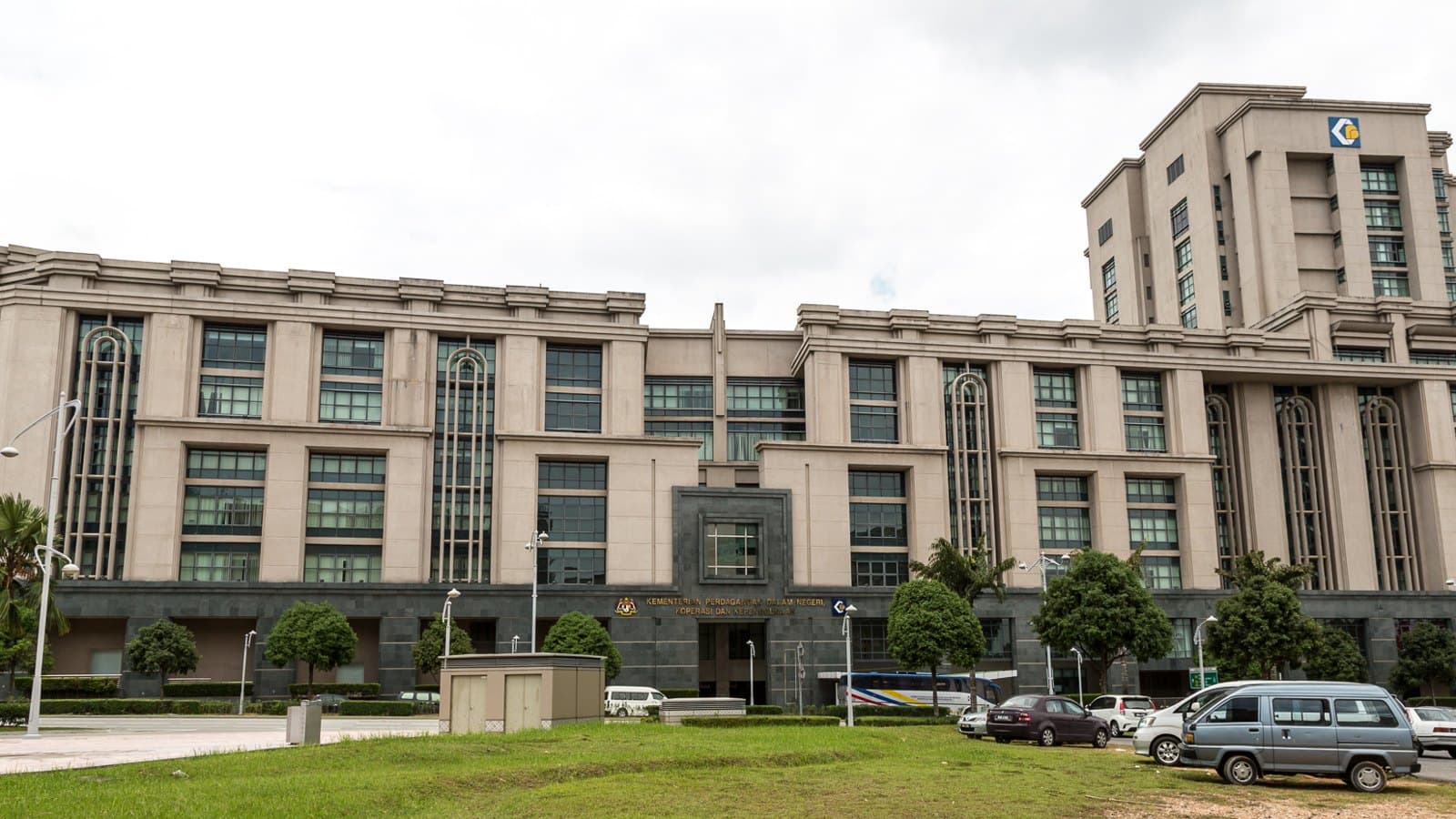
The Tribunal for Consumer Claims Malaysia, known in Malay as Tribunal Tuntutan Pengguna Malaysia and abbreviated TTPM, was established on 15 November 1999 under section 85, Part XII of the Consumer Protection Act 1999 (Act 599). It sits under the Ministry of Domestic Trade and Cost of Living (KPDN), with its headquarters at Level 5, Podium 2, No. 13 Persiaran Perdana, Presint 2, 62623 Putrajaya, and a toll-free line on 1-800-88-9811.
Its stated function is to provide an alternative forum to the civil courts for consumers to claim redress on the purchase of goods or services, in the Tribunal's own words, easily, cheaply and quickly. That is not marketing. The filing fee is RM5, the claim form is free, and lawyers are barred from representing either side at the hearing, which removes the single largest cost of taking a small dispute anywhere else. And you do not have to travel to Putrajaya to do it: there are sixteen registry offices, one in every state and in all three federal territories.
The three limits that decide whether you can file
The Tribunal's jurisdiction is defined by three tests, and a claim has to pass all of them.
The amount. The claim must not exceed RM50,000 (section 98). That covers most consumer disputes: renovation deposits, furniture that never arrived, a used car sold with a fault, gym memberships, tuition packages, phone repairs, package tours. A claim may also include loss or damage of a consequential nature, so the knock-on cost counts, not just the sticker price.
The time. The claim must be based on a cause of action that accrued within 3 years (section 99(2)). A deposit lost in 2021 is out of time in 2026, and there is no extension for having tried to negotiate first.
The buyer. You must be a consumer as Act 599 defines it: an individual who acquires, uses or buys goods or services normally for personal, domestic or household use. If you bought it for your business, or the invoice is in your company's name, you are not a consumer and the Tribunal cannot hear you.
Two ways past the RM50,000 ceiling, and one that gets you struck out
This is the part almost no guide mentions, and it is written into the Act.
Both sides can agree to go higher. Under section 100, if the parties enter into an agreement in writing that the Tribunal shall hear the claim, the Tribunal has jurisdiction even where the amount exceeds RM50,000. The agreement can be made before the claim is lodged, or at any time afterwards up to the moment the Tribunal records a settlement or makes its award. In practice a trader rarely signs, but it costs nothing to ask, and it is the only route that lets you recover the whole sum here.
You can abandon the excess. Under section 101, a claimant may abandon so much of the claim as exceeds RM50,000 in order to bring it within jurisdiction. Read the second half of that section before you do: once the Tribunal records the settlement or makes the award, the trader is discharged from liability for the abandoned amount. You do not get to chase the balance in court afterwards. Abandoning RM8,000 to file a RM58,000 dispute here is a decision to write off RM8,000.
You cannot split the claim. Section 102 says claims may not be split, nor more than one claim brought, in respect of the same matter against the same party for the purpose of bringing it within jurisdiction. Filing two RM29,000 claims over one RM58,000 renovation is the obvious workaround and it is expressly blocked.
The things it cannot hear
This is where most people are turned away, and the list is worth knowing before you spend the RM5.
Section 99 removes jurisdiction over claims arising from personal injury or death; claims to recover land or any estate or interest in land; disputes where title to land or any franchise is in question; disputes over rights under a will, settlement or intestacy; disputes over goodwill, a chose in action, or any trade secret or other intellectual property; claims relating to aviation service; and any matter where another tribunal has been established by written law to decide it.
Separately, section 2(2) says Act 599 does not apply at all to services provided by professionals regulated by written law, to healthcare services provided by healthcare professionals or facilities, or to securities and futures contracts. The practical effect is the same — the Tribunal is the wrong door — but the reason is different: those are outside the whole Act, not just outside the Tribunal.
Two exclusions catch people out constantly. If your dispute is with an airline about a delay, a cancellation or a lost bag, air travel is excluded by name, and consumer protection in aviation is handled by the Civil Aviation Authority of Malaysia through its FlySmart portal. And if your complaint is about a doctor, a dentist or a hospital, healthcare is outside the Act entirely.
What the Tribunal can actually order
Knowing the remedy list changes what you write on Form 1. Under section 112(2), an award may require one or more of the following:
- that a party pay money to another party;
- that goods be supplied or resupplied in accordance with the Act or the contract;
- that goods be replaced or repaired;
- that the price or other consideration be refunded;
- that a party comply with the guarantee;
- that money be awarded to compensate for loss or damage suffered;
- that the contract be varied or set aside, wholly or in part;
- that costs be paid to or against any party;
- that interest be paid on any sum, at a rate not exceeding 8% per annum, unless the parties agreed otherwise;
- or that the claim is dismissed.
Two things follow. First, ask for what you actually want. If you would rather be released from a two-year gym contract than get RM800 back, the setting-aside power is the one to plead, and the interest and costs limbs are routinely left off claim forms by people who did not know they existed.
Second, and this is the limit that disappoints most claimants: section 112(3) bars the Tribunal from awarding damages for non-pecuniary loss. There is no compensation for stress, inconvenience, wasted weekends or hurt feelings. Every ringgit you claim has to be a ringgit you can document.
How a claim actually runs
File. Fill in the Statement of Claim, Form 1, which is free from any Tribunal registry office and downloadable from the e-Tribunal portal, or file it online through the e-Tribunal system at ttpm.kpdn.gov.my. Pay the RM5. Note that under section 104 you cannot run the same claim here and in the civil courts at the same time.
Serve. The registry sets the date, place and time of hearing. The claimant must serve Form 1 on the respondent, and both sides are required to attend.
The respondent's move. After receiving Form 1, the respondent can simply contact the claimant and settle. If there is no settlement, they file a Statement of Defence and Counterclaim, Form 2, at the registry, and serve a copy on the claimant. A defence to a counterclaim is Form 3.
Understand the counterclaim risk. Section 98 lets a respondent raise a debt or liquidated demand as a defence or a counterclaim, and subsection (3) is blunt about the consequence: the Tribunal will hear and determine that counterclaim even if your original claim is withdrawn, abandoned or struck out. If the trader says you still owe them money, filing does not just risk losing; it can leave you with an award against you. Read the contract before you file.
Settle early if you can. If the parties settle before the hearing date, the claimant files a Notice of Discontinuance at the registry or through e-Tribunal, and nobody has to turn up.
At the hearing. Bring printed copies of Form 1, Form 2 and Form 3 where applicable, every document that supports the claim, defence or counterclaim, and any witnesses. No lawyers on either side — section 108(2) is absolute. But section 108(3) matters if the other side is a business: a corporation may be represented by its full-time paid employee, and a minor or a person under a disability may be represented by a next friend or guardian ad litem. So expect a company to send a manager, not an empty chair. Note also that under section 109 the hearing is open to the public, though photography and video or audio recording are not allowed.
The award. The President hearing the claim decides on the facts and the law and issues an Award, a written order, with reasons. Section 112(1) requires the award without delay and, where practicable, within sixty days from the first day of the hearing; under the client charter it is delivered on the hearing day itself.
Where to file: you do not have to go to Putrajaya
The Tribunal runs sixteen registry offices. Filing is done at the office for the state where the claim arose, and the hearing is held there too, so for most people this is a local trip and a local phone call rather than a drive to Putrajaya.
Perlis, Kangar (04-979 5000). Kedah, Kota Setar (04-700 1737). Pulau Pinang, Seberang Perai Tengah (04-384 0122). Perak, UTC Perak, Ipoh (05-241 2315). Selangor, Menara Bank Rakyat, Petaling (03-5514 4717). Kuala Lumpur, Sunway Putra Tower (03-4042 4181). Putrajaya, Presint 2 (03-8882 5822). Negeri Sembilan, Seremban 2 (06-601 6852). Melaka, Melaka Tengah (06-234 5822). Johor, Menara Ansar, Johor Bahru (07-227 1755). Pahang, Kuantan (09-571 7777). Terengganu, Kuala Terengganu (09-620 4700). Kelantan, Kota Bharu (09-741 6068). Sabah, Kota Kinabalu (088-484564). Labuan (087-423152). Sarawak, Kuching (082-537710).
If you are not sure which office applies, the toll-free line is 1-800-88-9811.
What happens if they ignore the award
This is the part that gives the RM5 its weight.
Every award made by the Tribunal is final and binding on all parties, and is deemed to be an order of the Magistrates' Court, enforceable in the Magistrates' Court with jurisdiction in the place where the award was obtained.
If a party fails for 14 days to comply with an award, that is an offence. On conviction, the fine is up to RM10,000, or up to two years' imprisonment, or both. If the offence continues after conviction, the offender can be fined a further not less than RM100 and not more than RM5,000 for every day or part of a day it continues. Complaints of non-compliance go to the KPDN Enforcement Division.
Two escape routes exist, and they are narrow. A party who failed to attend the hearing and had an award made against them may apply to set it aside using Form 12, within 30 days of receiving the award. A party who is simply unhappy with the award has no appeal: awards under subsections 112(2) and 107(3) are final and binding under section 116, and the only route left is an application for judicial review in the High Court.
Coming next: the lemon law amendment to Act 599
Everything above is the law as it stands on 13 October 2026, and one change is in the pipeline. In the Budget 2026 speech on 10 October 2025, the Prime Minister said the government would amend the Consumer Protection Act 1999 to include elements of a lemon law, after the Consumer Credit Act was enacted. At the ministry's 2026 New Year address in January, KPDN minister Datuk Armizan Mohd Ali listed strengthening lemon law provisions under Act 599, particularly for vehicle purchases, among five law-reform clusters the ministry aims to table in Parliament this year, alongside e-commerce rules, Competition Act amendments, Direct Sales Act amendments and a movable-property security interests law.
What that means for you today: no amendment has been reported as passed and gazetted, so the RM50,000 ceiling, the RM5 fee and the exclusion list still apply. A defective car bought for personal use can already be taken to the Tribunal under the existing guarantee provisions, within the RM50,000 limit. Proposals floated in Parliament, including an MP's call to raise the ceiling for vehicle claims to RM150,000, are not law. Check the Tribunal portal before filing if the amendment has gone through.
Before you file
Four practical points. First, check the three-year clock before anything else, because it is the one limit nothing can fix. Second, get the respondent's correct legal name and address, since the award has to be served and later enforced against a real registered entity, not a shopfront name. Third, decide which of the section 112 remedies you are asking for, and put costs and interest on the form. Fourth, bring the paper: receipts, the contract, the chat log, the photographs, and a written chronology. The hearing is designed to be quick, and the side that can hand the President a clean bundle is the side that gets through it.
Who should skip it. If your only real loss is stress and wasted time, section 112(3) means there is nothing to award. If the trader has a plausible counterclaim for money you still owe, you may be filing yourself into a judgment. If the amount is over RM50,000 and the trader will not sign a section 100 agreement, going to the civil courts keeps the whole sum alive; abandoning the excess does not. And if the dispute is under RM5,000 and you are not a consumer under Act 599 — you bought for a business — the Magistrates' Court small claims procedure is the equivalent door, with the same no-lawyers rule; ask the court registry for the current filing fee.
Related reads
- Delayed, Bumped or Missing a Bag: What Malaysian Air Passenger Rules Actually Give You in 2026 — the forum for the one dispute the Tribunal is barred from hearing.
- Tenancy Agreement Stamp Duty Malaysia 2026: The RM2,400 Free Band Is Gone, and Long Leases Now Cost 7x — the other consumer contract most Malaysians sign without reading.
- Unclaimed Money in Malaysia 2026: How to Check Yours Free on eGUMIS, and the Agents, Emails and Apps to Ignore — money already sitting in your name, no tribunal required.
Sources: the Tribunal for Consumer Claims Malaysia e-Tribunal portal (ttpm.kpdn.gov.my), its published jurisdiction page, client charter and branch directory, all read on 3 September 2026; the Consumer Protection Act 1999 (Act 599), current reprint published by KPDN; the Financial Markets Ombudsman Service (fmos.org.my); and the Ministry of Housing and Local Government on the Tribunal for Homebuyer Claims.
*Cover image: CEphoto, Uwe Aranas, CC BY-SA 3.0, via Wikimedia Commons. The Ministry of Domestic Trade building in Putrajaya, where the Tribunal sits.*