> Quick take: your 98 days of maternity leave and your partner's 7 days of paternity leave are settled law, paid by the employer, and they apply whatever you earn. The Post-Maternity Leave Allowance that made headlines on Labour Day is a different thing. It is PERKESO money, not employer money, it would top up leave you take after the 98 days, and as of 22 September 2026 it still needs an Act of Parliament before anyone can claim it.
Two things get mixed up in almost every conversation about maternity leave in Malaysia this year. One is the entitlement in the Employment Act 1955, which has not changed since January 2023. The other is the Elaun Pasca Cuti Bersalin, or EPCB, which Prime Minister Datuk Seri Anwar Ibrahim announced at the national Labour Day celebration on 1 May 2026. This guide takes them one at a time, using the Attorney General's Chambers' updated text of the Act (as at 1 January 2023), PERKESO's own media statement of 2 May 2026, and what the Deputy Human Resources Minister told the Dewan Rakyat on 6 July 2026.
The 98 days: what section 37 actually gives you
Section 37 entitles every female employee to maternity leave for an "eligible period" in respect of each confinement, and defines that period as "not less than ninety-eight consecutive days". The figure was sixty until the Employment (Amendment) Act 2022 (Act A1651) raised it from 1 January 2023.
Two points are worth knowing because employers sometimes get them wrong. First, the leave applies to every employee under the Act regardless of salary. Since the 2022 amendment the Act covers anyone with a contract of service, and the First Schedule only switches off a handful of overtime and rest-day provisions for people earning above RM4,000 a month. Maternity leave is not one of them. Second, the leave and the pay are separate entitlements. You can qualify for the 98 days without qualifying for the money.
The pay, which the Act calls the maternity allowance, is due for each day of the eligible period at your ordinary rate of pay, if both of these are true:
- you have worked for the employer for at least 90 days, in one stretch or added together, during the nine months immediately before the birth; and
- you were employed by that employer at some point in the four months immediately before the birth.
If you are paid monthly and your salary simply continues through the 98 days, the law treats that as the allowance being paid. There is one more cut-off: under section 37(1)(c), no allowance is payable if you already have five or more surviving children at the time of the birth, counting all natural children of any age. The leave itself still applies.
When it starts, and the notice you must give
The leave cannot start earlier than 30 days before the birth or later than the day after it. If a doctor appointed by the employer certifies that you cannot do your job because of an advanced pregnancy, the employer can require you to start at any point in the 14 days before the birth. With your employer's consent and a doctor's certificate that you are fit, you can also go back to work early.
Section 40 sets two notice rules. Within the 60 days before your expected due date, tell your employer about it and the date you intend to start leave. If you start without doing so, the employer may suspend the allowance until you do, but it is not forfeited. The harsher rule is for people resigning: if you leave a job knowing you are likely to give birth within four months, you must tell that employer about the pregnancy before you go, or you lose the allowance from them. Notice can be given in writing or verbally, including to your supervisor.
The protections most people do not know about
Terminating a woman while she is on maternity leave is an offence under section 37(4), unless the business is closing. Section 41A goes further: while an employee is pregnant, or ill because of the pregnancy, her employer commits an offence by dismissing her or giving notice, except for wilful breach of contract, misconduct, or closure of the business. If she is dismissed anyway, the burden of proving the reason was not the pregnancy sits with the employer.
Section 42 covers the weeks after. If a doctor certifies that an illness arising from the pregnancy and birth keeps you off work after the 98 days end, your employer cannot dismiss you until 90 days after the eligible period expires. Where no specific penalty is set, section 99A allows a fine of up to RM50,000.
Paternity leave: seven days, five times
Section 60FA gives a married male employee 7 consecutive days of paid paternity leave for each confinement, at his ordinary rate of pay. It is limited to five confinements "irrespective of the number of spouses". To qualify he must have worked for the same employer for at least 12 months immediately before the leave starts, and must have notified the employer of his spouse's pregnancy at least 30 days before the expected birth, or as early as possible after it.
The 12-month condition is the one that catches people. A father who changed jobs in the past year has no statutory paternity leave, though many employers give it anyway under the contract.
Sabah and Sarawak
Sabah and Sarawak are not governed by the Employment Act but by their own Labour Ordinances. Amendments to both took effect on 1 May 2025, raising maternity leave from 60 to 98 days and introducing up to 7 days of paternity leave. The Deputy Human Resources Minister confirmed those dates in the Dewan Rakyat on 6 July 2026. Civil servants anywhere follow the Public Service Department's own leave rules rather than either law.
EPCB: what was announced, and what is still missing
Here is what is on the record. PERKESO's media statement of 2 May 2026 says the allowance will be implemented through an amendment to the Employment Insurance System Act 2017 (Act 800, which PERKESO now brands LINDUNG KERJAYA). It describes a "liability-sharing" approach that carries part of a mother's living costs during extra leave without a direct cost to employers. The announcement put the benefit at 80% of the insured woman's assumed monthly wage, paid once as a lump sum, for additional leave of up to 30 days after the 98 days end, and estimated that more than 132,000 women would benefit.
On 6 July 2026, answering Gopeng MP Tan Kar Hing, Deputy Human Resources Minister Datuk Khairul Firdaus Akbar Khan said the ministry "is reviewing a proposal" to introduce EPCB through PERKESO, paid from the Employment Insurance System Fund. He said it would cover women who need more recovery time after the 98 days, including when they take unpaid leave or medical leave.
Three things follow from that. EPCB is not an extra 30 days of leave your employer must give; it is money towards leave you would arrange separately, so the leave itself still depends on your employer or on a doctor's certificate. It would come from PERKESO, so it would apply only to women insured under the Employment Insurance System, not to civil servants. And it is not yet law. The separate Employment Insurance System (Amendment) Bill that cleared the Dewan Rakyat on 30 June 2026 dealt with penalties for employers who fail to report job vacancies; Bernama's reports of its passage do not mention EPCB. PERKESO's media statement list, checked on 22 September 2026, has nothing on EPCB after 2 May.
How much it could be worth
For a sense of scale, the minister quoted the Statistics Department's figure for women's average monthly salary in 2024, RM3,499. At 80%, that is RM2,799.20 paid once. PERKESO contributions are calculated on wages up to RM6,000 a month (the ceiling since 1 October 2024), so if EPCB uses the same assumed monthly wage, the most anyone could receive would be RM4,800. That ceiling is our arithmetic from the existing contribution rules, not a published EPCB cap, and the final amendment may define it differently.
If your employer does not pay
Maternity allowance and paternity leave disputes go to the Labour Department (Jabatan Tenaga Kerja). You can file a claim at your nearest JTK office, where it is heard by the Director General under section 69 of the Act. Bring your payslips, your employment contract and a copy of the notice you gave. The ministry told Parliament there were 41 complaints about maternity leave or allowance in 2025, down from 67 in 2024.
This is a plain summary of published rules, not legal advice.
Related reads
- LINDUNG KASIH for housewives: the PERKESO scheme for mothers who are not in paid work.
- Confinement centres and nanny agencies in KL: what the first month after the birth costs.
- Working on Malaysia Day: the other Employment Act entitlement people are rarely told about.
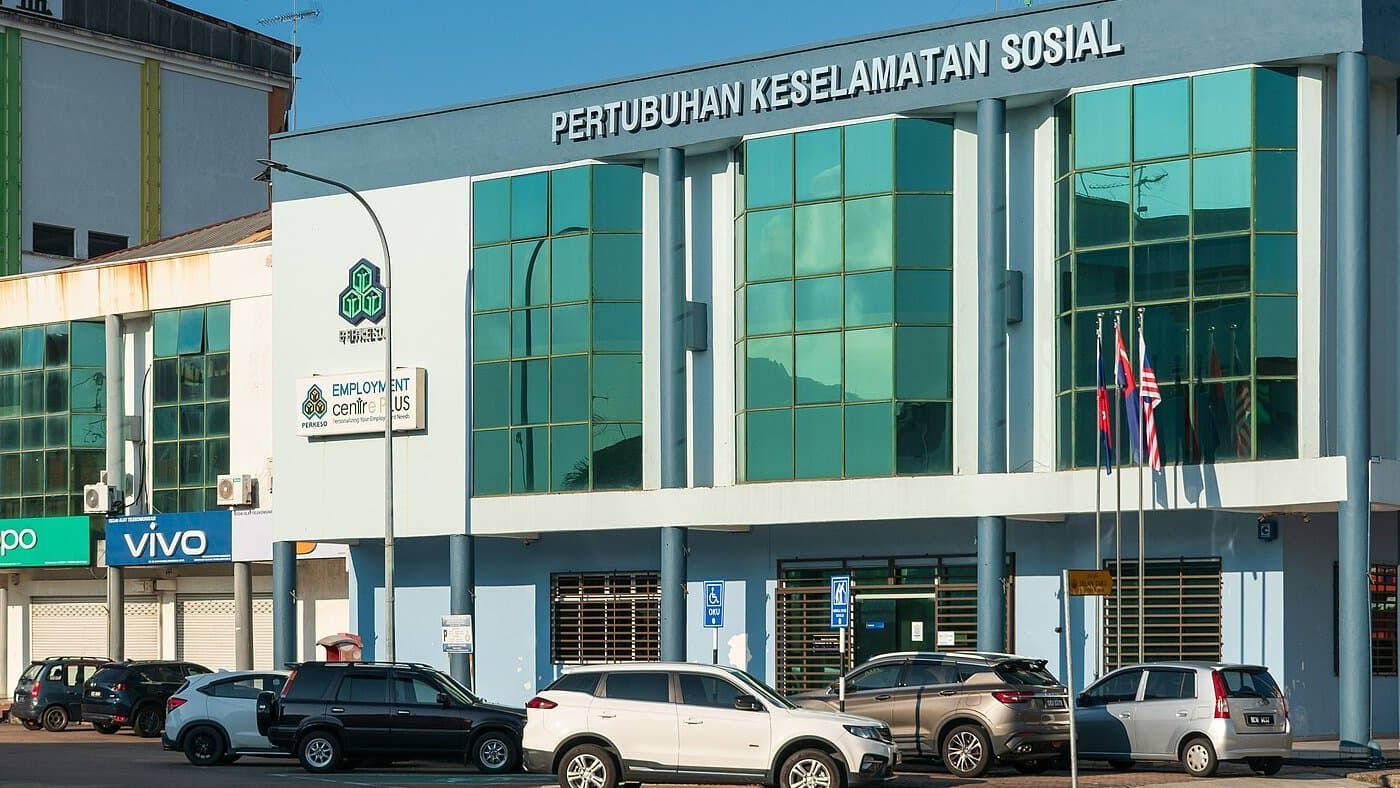
*Cover image: PERKESO office in Kluang, Johor, Wikimedia Commons, Dominic Nelson (BigDom), CC BY-SA 4.0*
*Sources: Employment Act 1955 (Act 265), Attorney General's Chambers' updated text as at 1 January 2023, sections 37 to 42, 60FA, 99A and the First Schedule; PERKESO media statement "Elaun Pasca Cuti Bersalin: Membela Kebajikan Ibu Bekerja", 2 May 2026; PERKESO media statement list, checked 22 September 2026; Dewan Rakyat reply by Deputy Human Resources Minister Datuk Khairul Firdaus Akbar Khan, 6 July 2026, as reported by Media Selangor; RTM and Sarawak Tribune reports of the Labour Day announcement, 1 May 2026; Bernama reports on the Employment Insurance System (Amendment) Bill, 30 June 2026; reports on the Sabah and Sarawak Labour Ordinance amendments taking effect on 1 May 2025.*