> Every price, licence number and address below was read off the operator's own website on 31 August 2026. Where a company publishes nothing, this piece says so instead of guessing. The licensing rules are quoted from the Pesticides Board's own guideline to the Pesticides (Pest Control Operator) Rules 2004, published by the Department of Agriculture.
The thing you should ask for, and almost nobody does
Most people choose a pest control company the way they choose a plumber: whoever answers, whoever sounds confident, whoever quotes lowest. The trade is not regulated like a plumber, though. It is regulated like a pharmacy.
Since 19 February 2004, anyone carrying out general household pest control, termite and other wood-destroying organism control, general public weed control or public health pest control on another person's property for a fee must hold a licence issued by the Pesticides Board, and may use only pesticides the Board has registered. There is no exemption for a contractor or developer treating its own construction site. There is an exemption only for a business whose main activity is not pest control and which does not hold itself out as a pest control operator, and for a person treating their own non-commercial property.
Three licence categories exist and they are not interchangeable. The pest control operator licence belongs to the company: applied for on Form B with a RM400 fee, valid two years, non-transferable, and it may not be issued unless the applicant or an applicator working under them is a licensed pesticide applicator. The pesticide applicator licence belongs to the person who carries out or supervises the work: Form D, RM150, also two years. The assistant pesticide applicator licence covers the staff working under supervision. Both applicator exams sit at least once a year: the applicator paper needs Form Five or three years as a licensed assistant, and costs RM150; the assistant paper needs a Year Six pass or two years' experience, and costs RM100.
Two of the licence conditions are checkable by an ordinary customer. The operator licence "shall be displayed at all times at the premises stated in the licence", and the business may not be run from any other address. The applicator licence must be worn by the holder while the work is being done. If a crew arrives at your gate and nobody is wearing one, that is a fair question to ask before the sprayer comes off the truck.
The report you are legally owed
This is the part of the Rules that almost no Malaysian household knows about.
On completing pest control work on a person's property, the licensed applicator or licensed assistant applicator must immediately hand that person a written report of the work in Form H. The operator must keep a record of that report for two years from the date the work was completed, and produce it to the Board on request. An accident or incident involving pesticides during the job must be reported to the Board in Form I within seven days.
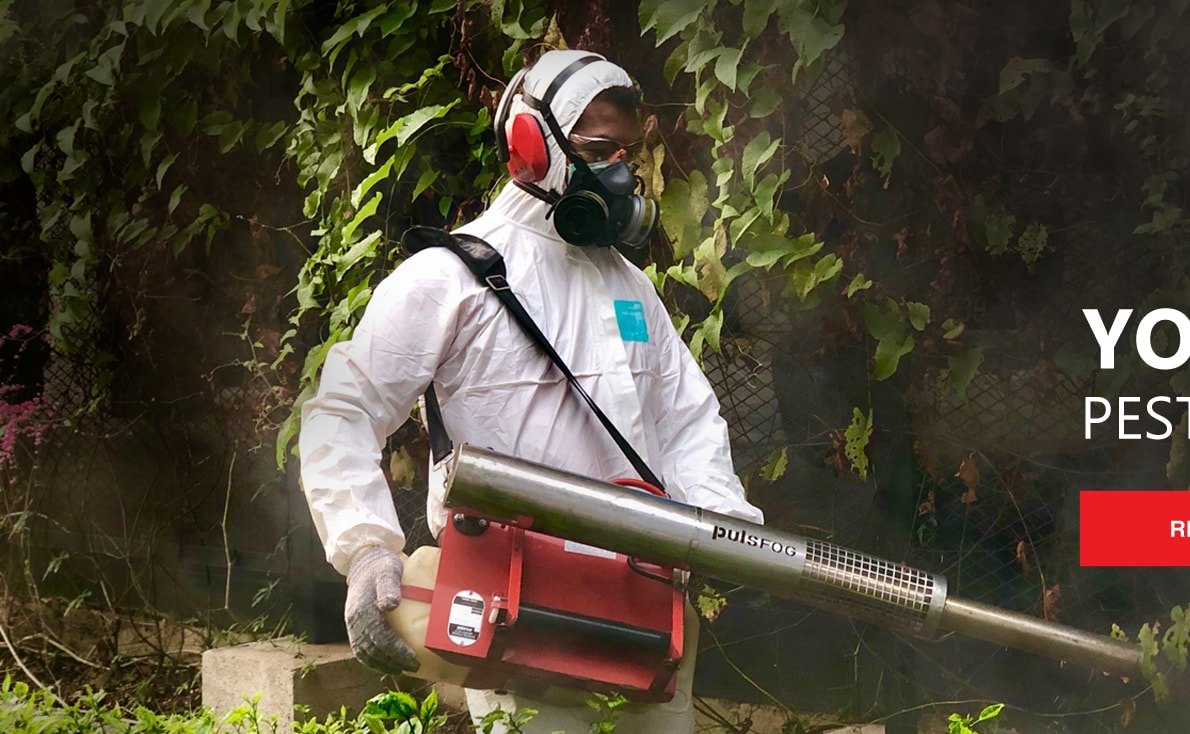
Two more duties sit on the operator rather than on you, but they tell you what a properly run company looks like. It must provide and ensure the use of suitable personal protective clothing and equipment on every job, and it must provide all pest control staff with a medical examination at least once a year, keeping those records for five years for inspection.
The Board can warn, suspend or cancel a licence for a list of things that reads like a catalogue of the industry's worst habits: making false or fraudulent claims through any media about what a pesticide does, using an unregistered pesticide or using a registered one contrary to its label, carrying out work carelessly, issuing false or fraudulent invoices or reports, letting an assistant applicator work unsupervised, or lending the licence to somebody else. Breaching any licence condition or any provision of the Rules is an offence: six months or RM1,000 on first conviction, one year or RM2,000 or both on a second.
Two firms publish a price, and they mean two different things by it
Six of the eight operators below publish no number at all. The two that do are worth reading side by side, because they are selling different things.
Ridpest sells finished packages at a fixed price, in a cart. Its online shop lists a 1-Year Innovative Termite Baiting Package at RM2,592, marked down from RM3,200 in a 10.10 "10%+10%" offer (in September it was RM2,288 from RM3,800 under a 40th anniversary offer, so this price moves with each campaign), sized specifically for a link house measuring 20ft by 70ft, with ready-to-install bait stations. Its general pest packages are priced by visit frequency: quarterly RM653 to RM1,089, bimonthly RM792 to RM1,386, monthly RM1,287 to RM2,475, all now showing a 10% discount (they showed 20% off in September), and a bed bug, flea and tick package at RM900 to RM1,000. It also sells DIY products outright: a RidBug spray set at RM41.90 from RM69.90 with a buy 2 get 1 free bundle and free Klang Valley delivery, and an anti-bed-bug mattress protector at RM239.40 to RM279. None of those discounts carries a published end date, so treat the discounted figure as today's price rather than a permanent one.
Uni Smart publishes a starting rate card instead, which is a different promise. Its price guide lists basic general pest treatment from RM160 for an apartment, condo or terrace, RM199 for a double-storey terrace, RM250 for a shoplot or office and RM500 for a restaurant; a "smart" general pest tier from RM199 for an apartment and RM250 for a bungalow; termite control from RM1,500 for a residential property or restaurant and RM2,500 for a three-storey or bungalow; and bed bugs or fleas from RM550 for an apartment and RM699 for a double-storey terrace. The page states plainly that these are starting rates that vary with infestation pattern, treatment method and property condition.
The same page now goes further than a single starting figure. Its detailed table prices a one-off basic versus smart general pest visit by property: RM160 / RM199 for an apartment under 900 sq ft, RM199 / RM250 for a 1,400 to 1,800 sq ft terrace or link house, RM250 / RM320 for a double-storey terrace, RM350 / RM450 for a bungalow and from RM800 / RM1,200 for a warehouse (the "smart" tier adds gel bait, perimeter sealing and a follow-up check at two to four weeks). Termite baiting is listed as a three-to-six-month programme from RM1,800, post-construction soil treatment from RM1,500, pre-construction soil treatment at RM0.80 per sq ft and an annual foundation inspection at RM250. It also publishes annual contract prices: quarterly general pest from RM600 a year for an apartment and RM750 for a terrace house, bi-monthly for a restaurant from RM2,400, and it says contract visits work out 20 to 30 percent cheaper per visit than one-off rates, with a written report after every visit.
Read together, they answer the question most guides dodge. A year of termite protection on a standard link house sits around RM2,592 fixed at one end and from RM1,500 at the other, and the gap is not slack in the market: one is a priced annual programme with monitoring built in, the other is a starting point before a site inspection.
A worked example for a terrace house. For routine ants and cockroaches on a link house, a year of quarterly visits starts at RM750 on Uni Smart's contract table and at RM653 on Ridpest's cart (the bottom of its RM653 to RM1,089 range, before you pick a house size). For termites, the comparison is RM2,592 for Ridpest's 12-month baiting package against RM1,800 for Uni Smart's three-to-six-month baiting programme, which then needs its RM250 annual inspection if you want someone to look again. Those are not like-for-like products, so ask each firm what the second year costs before you compare totals.
Baiting or soil treatment, and why the answer changes the bill
Termite work in Malaysia is sold as two products that are not interchangeable, and the quote you get depends on which one the company thinks your house needs.
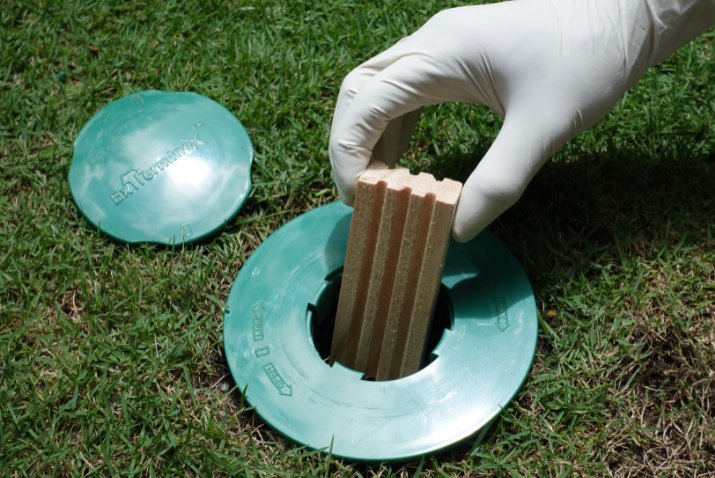
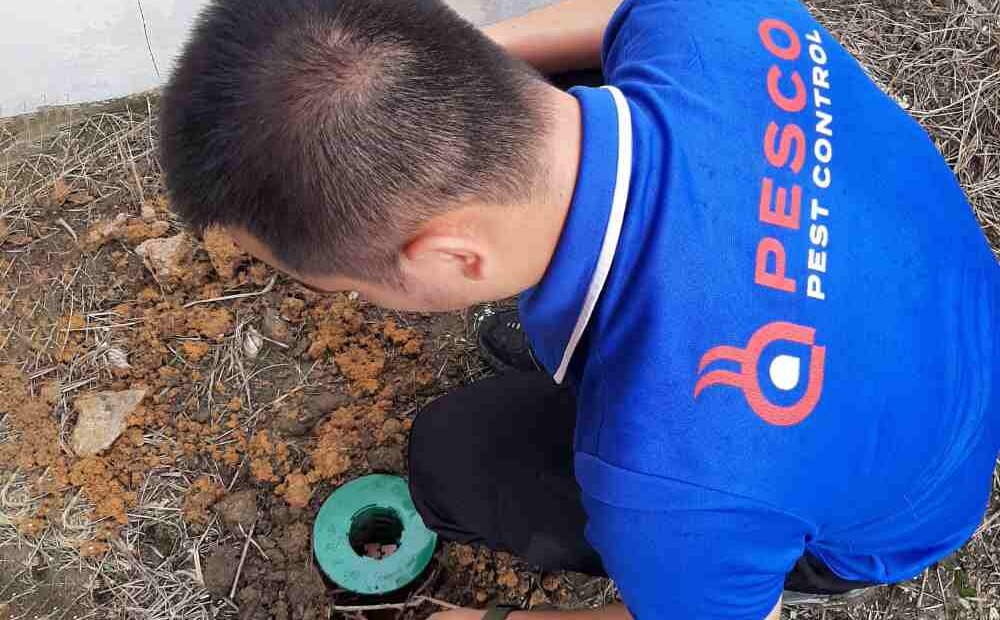
In-ground baiting places monitored stations along termite routes, waits for confirmed feeding, then introduces the treatment bait so it is carried back into the colony. It is less intrusive than drilling, and it doubles as an early-warning system that keeps working after the active infestation is gone. Uni Smart's own service page states the trade-off directly: baiting systems typically have a lower initial installation cost but involve ongoing monitoring and station replenishment fees.
Soil treatment creates a chemical barrier around the structure, applied by trenching or drilling to a specified depth and dosage. It carries the higher upfront cost, works as either a corrective or a preventive measure, and its durability depends almost entirely on whether the application was done properly, which is precisely why the applicator licence exists.
If you are being quoted for a house that already has mud tubes on the wall, ask which product the price covers, what happens in year two, and whether station replenishment is inside the number or outside it.
The credentials that are not licences
Several operators here publish impressive-looking credentials that are not the licence the law requires, and it is worth knowing the difference.
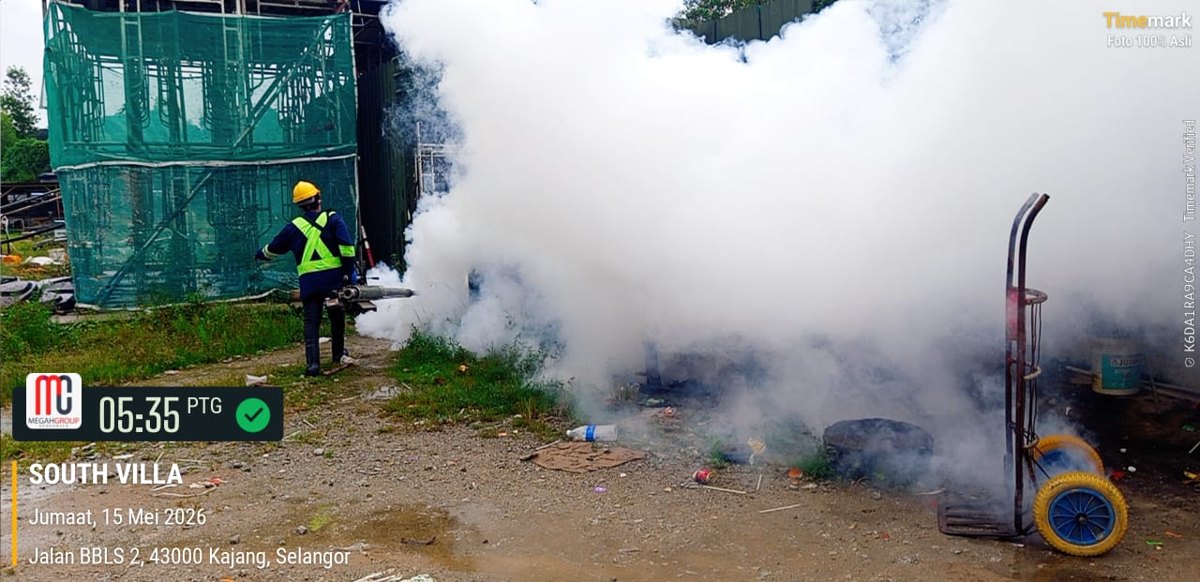
Nexus Master Sdn Bhd publishes ISO 9001:2015, ISO 22000, GMP and HACCP alongside OHSAS 18001:2007, the occupational health and safety standard that ISO 45001 replaced, and it is an authorised accredited applicator for Bayer's Agenda termite colony management and Exterminex baiting systems. Those are quality-management and product-training credentials. Megah Group Resources publishes CIDB registration, DOSH compliance, SST registration and an MBPJ licence next to "PCO Licensed". Uni Smart's credentials table lists PAL, APAL, PCAM membership and "NEA-certified practices"; NEA is Singapore's National Environment Agency, not a Malaysian regulator, so that last line describes an alignment rather than a Malaysian licence.
None of that is dishonest. It just is not the same as printing the licence number, which is why NPC's page stands out on this list.
One licence, one address, and the operators with several
The 2004 Rules are unusually blunt about geography. The operator licence must be displayed at all times at the premises stated in the licence, and no pest control business may be carried on at any address other than the one stated in it. That is one address, in the singular.
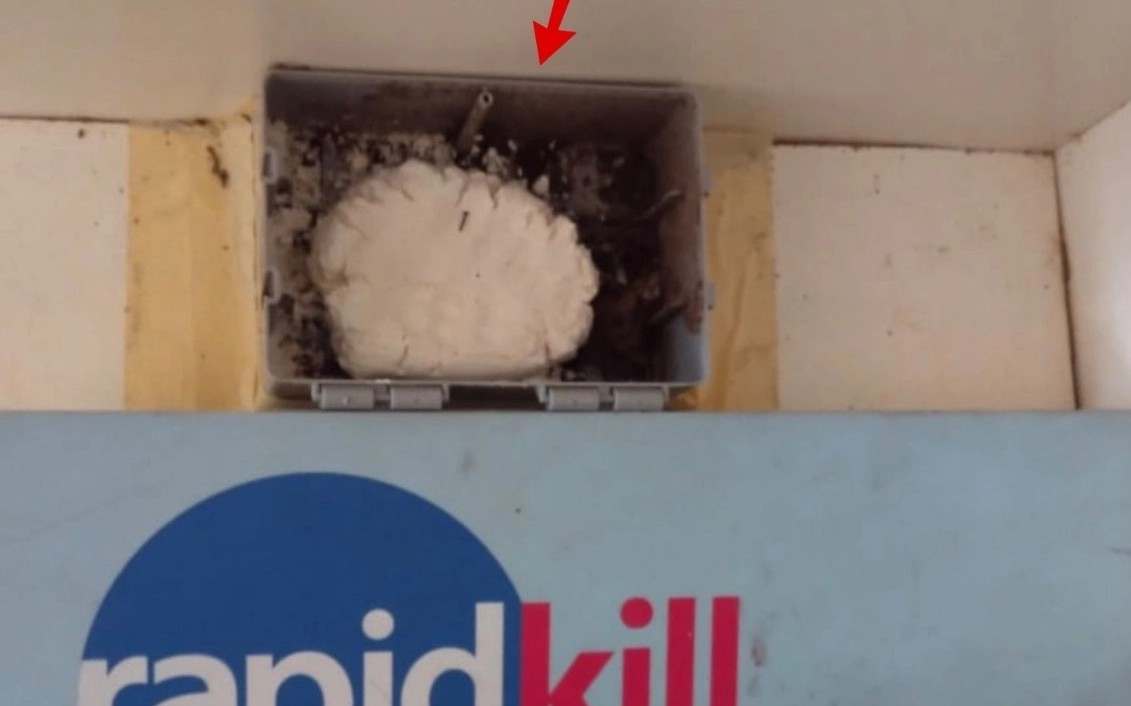
Read the eight websites against that and the picture is less tidy than the rule. Uni Smart's footer lists four premises: 93 Jalan BP 6/3 in Bandar Bukit Puchong, Level 28 of The Gardens South Tower in Mid Valley City, No. 6B Nadi 15 Jalan Diplomatik in Precinct 15 Putrajaya, and 32-3 Jalan Puteri 2/5 in Bandar Puteri Puchong, while the header on the same site now offers KL, Selangor and Sabah. Rapidkill publishes three: the Kajang HQ, an Ipoh branch at 52A Persiaran Bercham Selatan 1 in Desa Kencana, and a Johor branch at No 51-02 Jalan Perdana 4 in Taman Sri Pulai Perdana 2, Skudai. Pesco runs Klang Valley service pages from a Johor Bahru headquarters.
None of that is evidence of an offence. A group can hold more than one licence, and branches can be separately licensed. But it is the one question on this page you can settle in a single phone call: ask which of those addresses is the premises named on the licence, and whether the branch that will actually turn up at your house is covered by it.
How to pick one
- Ask for the operator licence number and the applicator's licence. One is meant to be displayed at the company's registered premises, the other is meant to be worn on your driveway. A company that cannot produce either is not a company you should let mix chemicals in your kitchen.
- Ask for Form H before you pay. The written report is not a favour, it is a duty under the Rules, and a company that has never heard of it is telling you something.
- Get the licensed name and registration number, not the brand. RIDPEST Sdn. Bhd. is 146805-H, NPC Pest Control Services Sdn Bhd is 200601025381, Rapidkill Pest Control (KL) Sdn Bhd is 201401002104, Uni Smart is 202001020657, Nexus Master is 200401018006, Pesco is 1341050-D. Megah Group Resources is registered as SA0567500-W, which is an enterprise registration rather than a private limited company, despite the word "Group" in the name.
- Decide whether you are buying a job or a year. A one-off spray and a twelve-month contract with scheduled visits are different products, and comparing the headline numbers straight across will always make the contract look expensive.
- On termites, ask which method and what year two costs. Baiting front-loads less and bills monitoring; soil treatment front-loads more. Neither is a scam, but a quote that does not say which one it is cannot be compared with anything.
- Check where they actually are. Pesco is headquartered in Johor Bahru and runs Klang Valley service pages; Megah is a commercial and construction specialist rather than a residential one; Rapidkill runs two domains from the same Kajang unit and the same mobile number. None of that is a problem, as long as you know it before you book.
Related reads
- Aircond Servicing in KL & Klang Valley 2026: What One Unit Really Costs, and the Four Websites Sharing Two Phone Numbers — the same exercise on the other home-service trade where the price is hidden and the company behind the website is not who you think
- 8 Best Home & Office Cleaning Services in KL & Klang Valley (2026) — the trade most likely to be booked in the same phone call, and one where rates are published far more openly
- Tenancy Agreement Stamp Duty Malaysia 2026: The RM2,400 Free Band Is Gone — worth reading first if you rent, because the agreement usually decides whether pest treatment is your bill or the landlord's
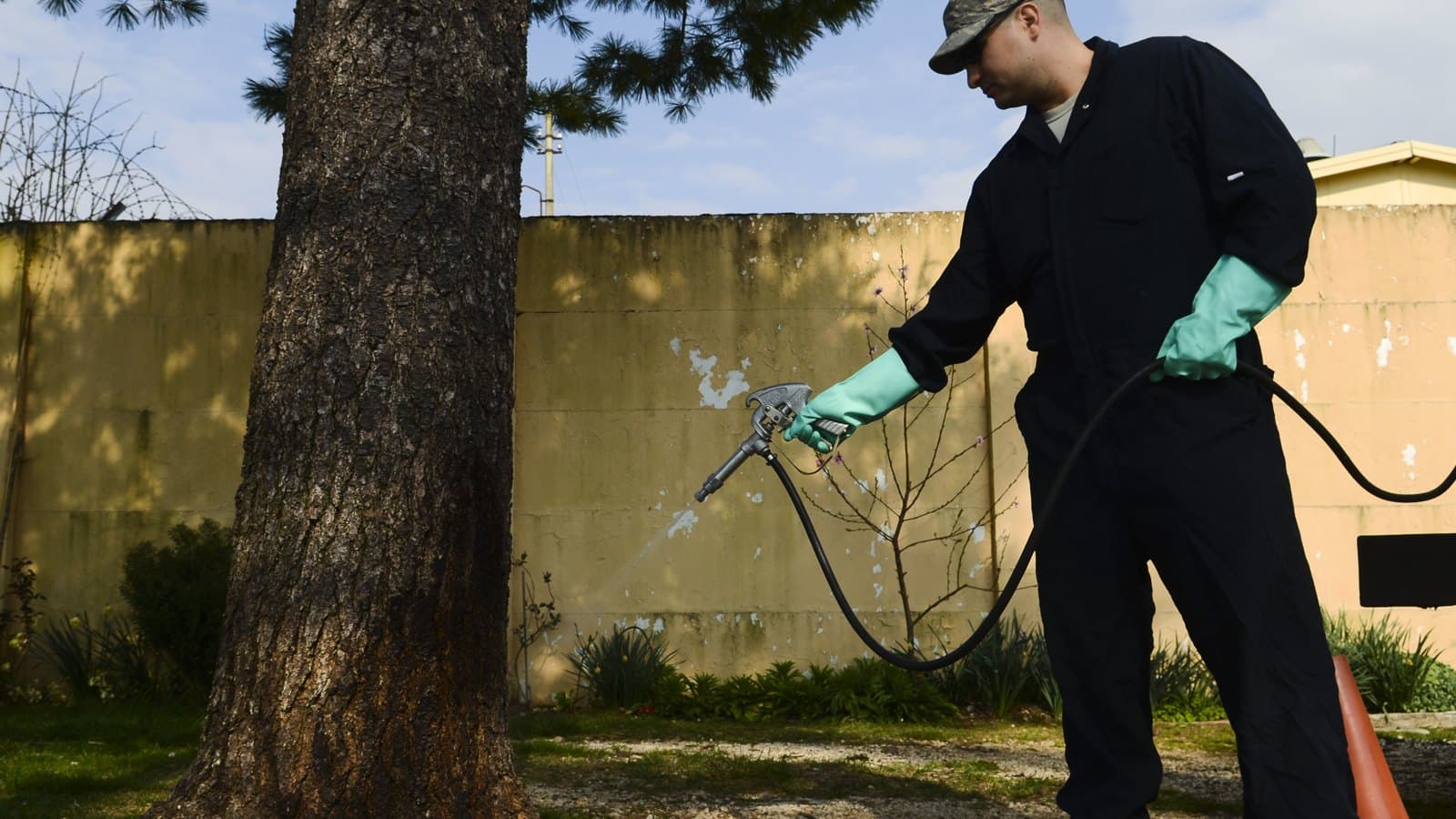
*Cover image: Senior Airman Austin Harvill, U.S. Air Force, public domain, via Wikimedia Commons*