Six measures, one speech, one start date. On 30 August 2026, in the 69th National Day address at the Putrajaya International Convention Centre, the Prime Minister announced six immediate cost-of-living measures, all effective from 1 September.
Two of them are the ones worth knowing precisely, because they replace figures that were already in circulation. The rest are allocations rather than rules, which matters when you are working out whether anything changes for you this month.
A week on, three of the six carry detail the announcement did not. The AI programme has opened and published its own rules, LHDN has reissued its e-Invoice FAQ with criteria stricter than the headline, and the Ministry of Finance's BUDI MADANI reference document has not been updated at all. This page was re-checked on 7 September 2026 and again on 30 September 2026, and says which is which.
1. Fuel: the 300-litre quota is back
The basic BUDI MADANI entitlement for RON95 returns to 300 litres a month, up from the 200 litres that has applied since 1 April 2026. The subsidised price is unchanged at RM1.99 a litre, and the government put the coverage at more than 16 million users.
The word to hold on to is restored. The 300-litre figure is not new. It was the original level, cut to 200 on 1 April as what was described at the time as a temporary measure in response to higher global crude prices and supply chain disruption linked to the West Asia conflict. Five months later the cut has been reversed.
BUDI Diesel moves too, from 300 litres to 400 litres a month, for more than 500,000 eligible owners of diesel pickup trucks and four-wheel-drive vehicles. The subsidised diesel price is unchanged at RM2.10.
Nothing else about the mechanism changes. It is still a quota tied to your MyKad rather than a price at the pump for everyone, it still requires a valid driving licence for BUDI95, and the balance still lapses at the end of the month instead of carrying forward, with a fresh allocation loaded on the 1st. Our earlier explainer on what the BUDI95 quota is worth and what happens at litre 301 sets out that mechanism in detail, and describes the 200-litre period this announcement ends.
What the extra litres are actually worth
For the week of 3 to 9 September 2026, the pump prices in the Ministry of Finance series are RM3.77 for unsubsidised RON95 and RM4.67 for unsubsidised diesel in Peninsular Malaysia.
That puts the RON95 subsidy at RM1.78 a litre, so the extra 100 litres of headroom is worth up to RM178 a month to a household that was actually hitting the 200-litre ceiling. To a household that was not, it is worth nothing at all, which is the honest half of this measure: it helps high-mileage drivers most.
The diesel side is the one nobody quotes, and it is the larger number. At RM4.67 against RM2.10, the BUDI Diesel subsidy is RM2.57 a litre, so the extra 100 litres is worth up to RM257 a month. That is about 44 per cent more than the petrol equivalent, for a group roughly thirty times smaller.
With one geographic exception. Retail diesel in Sabah, Sarawak and Labuan is a controlled RM2.15 a litre for everybody, subsidised or not. Set against the BUDI Diesel price of RM2.10, the same extra 100 litres is worth about RM5 a month there. In cash terms the 300-to-400-litre rise is a Peninsular story.
The extra diesel litres are not automatic
This is the part the announcement did not say, and the part most likely to cost someone money. Under the Ministry of Finance's own BUDI Rakyat FAQ, the additional 100 litres for owners of eligible privately registered diesel jeeps and pickups is not granted automatically — an application has to be submitted at budimadani.gov.my. Basic BUDI95 needs no application at all, because eligibility is cross-checked against Road Transport Department records. The diesel top-up does.
The exception is BUDI Individu recipients who received their final cash payment on 8 June 2026 and own an eligible jeep or pickup. They are approved automatically and file nothing separately.
If you drive e-hailing
There is a separate tiered top-up that the six-measure announcement did not mention, activated in the middle of each month against the distance your e-hailing operator recorded for you the month before. Under 1,500 km in the previous month gets the basic entitlement only. From 1,500 km to under 5,000 km adds 400 litres. From 5,000 km up adds a further 200 litres. Airport taxi drivers sit on the same ladder, and a driver receiving this top-up is not also eligible for the jeep or pickup diesel top-up.
Read the totals carefully. The Finance Ministry document that sets out this ladder states the combined figures as 600 and 800 litres, but those were calculated against the old 200-litre base and the document has not been reissued since 1 September. Treat the +400 and +200 steps as the reliable part, and check your own approved balance in the BUDI MADANI portal rather than assuming a total.
Transferring BUDI Diesel to a family member
*Update, 7 October 2026: since 16 September 2026 the transfer is no longer limited to family, and an owner can name up to three recipients. The section below describes the earlier rule. See the new BUDI Diesel transfer rules.*
An approved BUDI Diesel holder can transfer the eligibility to an immediate family member, who then buys subsidised diesel on their own MyKad against the original owner's entitlement, including the additional 100 litres if the original owner applied for it and qualified.
Three conditions make this worth thinking through before filing. The transfer is allowed once per eligible individual. Once approved it is final, one-way and irreversible: it cannot be cancelled, returned to the original owner or passed to anyone else. And the original owner then loses the ability to buy subsidised diesel at all, along with the 100 litres transferred. The recipient cannot apply for a top-up of their own either — the extra litres only travel with the transfer.
The official reference still shows the old number
As at 30 September 2026, a month after the change, the Ministry of Finance's BUDI Rakyat FAQ — the reference document linked from budimadani.gov.my — is dated 30 June 2026 and still states the basic monthly entitlement as 200 litres. That is the page a reader searching for the rules is most likely to land on, and it has not caught up with the measure. Check the approved litre balance in the portal itself rather than in the FAQ.
2. Schools: RM1.5 billion for maintenance
The maintenance allocation rises 50 per cent, from RM1 billion to RM1.5 billion, covering all school types. The reported implementation target is January 2027, so this is an allocation announced now for spending later, not a change a parent will see this term.
3. AI: the programme has opened, and it is first-come, first-served
100,000 Malaysians aged 18 to 30 who complete the prescribed modules receive free subscriptions to AI applications for three months. The applications named in the announcement are IlmuChat, Gemini Enterprise, Wonderclip and MuleRun.
A week after the speech, this is the measure that has moved furthest. It runs as the AI untuk Rakyat Programme on the Ministry of Digital's Rakyat Digital platform at rakyatdigital.gov.my, and redemption opened on 31 August 2026 — the day before the 1 September date attached to the other five.
To be eligible you must be a Malaysian citizen aged 18 to 30, hold a valid MyDigital ID, and be registered on Rakyat Digital. There is no registration fee.
How many courses depends on which page of the platform you read, and the stricter one is the one that governs redemption. The programme FAQ lists five: CyberSAFE untuk Rakyat, Generative AI, AI Safety, Agentic AI for All, and Cloud untuk Rakyat. The platform's redemption guide (Panduan Penebusan), checked on 30 September 2026, says you must finish all six before the redemption tab unlocks, adding Negara AI 2030: Pendekatan MADANI to those five. Plan on six. Each course carries a quiz or assessment.
The caution in the original announcement turns out to be right, for a reason the announcement never gave. There is no deadline to finish the five courses. But the three months of free access goes to the first 100,000 eligible participants on a first-come, first-served basis, so speed is the only thing rationing it. Finishing early is the whole strategy.
Three terms are worth knowing before you start. The subscription is non-transferable, and each person may claim the benefit once. It does not renew automatically: when the three months end you either subscribe at your own expense or stop. And Malaysians over 30 can still register and take the courses, they simply cannot redeem a tool.
The four tools, and how each one activates
The programme FAQ still says the tool list "will be announced", but the redemption guide now names all four, each with its provider. Each eligible user may redeem one (1) AI application for the whole programme, so choose before you click.
- Gemini Enterprise (Google). You receive a new email address and a temporary password, and sign in at gemini.rakyatdigital.gov.my using "Use another account". It is a separate account, not an upgrade to your personal Google login.
- ILMUchat (YTL Labs). You are redirected to ILMUchat and register there with your MyDigital ID, then confirm your email. The remaining validity shows under Profile > Settings > Usage & Limits.
- WonderClip (Alibaba Cloud). A sub-account with its own login; the guide says you receive 1,500 credits a month for three months, topped up on the same date each month from activation.
- MuleRun (Alibaba Cloud). You sign up for a free MuleRun account, choose Upgrade from the credit balance, and enter the gift-card code from the confirmation email.
Two practical rules from the same guide. Codes must be activated within the window stated in the confirmation email, and an expired code cannot be reissued. If neither the Rakyat Digital email nor the provider's email arrives within 48 hours, raise a ticket through the Support menu on the portal. Malaysians studying overseas are eligible, though the platform notes that access to a given tool may depend on its availability in the country where they live.
4. Health: RM1 billion from MCMC
The Malaysian Communications and Multimedia Commission is allocating RM1 billion to strengthen digital efficiency in public healthcare, covering Electronic Medical Records systems and connectivity for 150 hospitals and more than 2,000 public health clinics.
This is infrastructure spending, and the patient-facing effect is a records system rather than a fee change. Nothing in the announcement alters what a klinik kesihatan charges.
5. e-Invoice: the threshold triples to RM3 million
This is the measure with the largest number of people behind it. The e-Invoice exemption threshold rises from RM1 million to RM3 million in annual income or sales, so micro, small and medium enterprises below RM3 million are not required to implement e-Invoicing.
LHDN put the scale of it at more than 1.1 million businesses now falling outside mandatory implementation. For a business that was quietly dreading a deadline, that is the single most consequential line in the whole announcement.
Below RM3 million is not automatically exempt
LHDN reissued its e-Invoice FAQ on 4 September 2026, and the criteria are narrower than the headline. Turnover below RM3 million is the starting point, not the whole test. Under section 1.6.10 of the e-Invoice Guideline, the exemption does not apply if any one of the following is true:
- the taxpayer has a non-individual shareholder with annual turnover or revenue of at least RM3 million;
- the taxpayer is a subsidiary of a holding company with annual turnover or revenue of at least RM3 million;
- the taxpayer has a related company or joint venture with annual turnover or revenue of at least RM3 million.
"Related company" takes its meaning from section 2 of the Promotion of Investments Act 1986. In practice a corporate shareholder holding at least 20 per cent of the issued share capital makes the companies related, and even below 20 per cent they are related if that shareholder controls the operations. LHDN's own worked example has a parent holding 51 per cent of one company and 25 per cent of another: when only one of the three crosses RM3 million, all three lose the exemption and all three implement from 1 July 2026.
A common individual shareholder does not have that effect. One person owning 100 per cent of two Sdn Bhds does not make them related for e-Invoice purposes, and the smaller one keeps its exemption.
Sole proprietors add all their businesses together
If you are a sole proprietor with more than one registered business, the RM3 million test applies to the combined turnover of every business registered in your name. LHDN's example runs a cosmetics enterprise at RM750,000, a tailoring business at RM820,000 and a café at RM1.54 million. Individually all three are comfortably exempt. Together they come to RM3.11 million, and the owner must implement e-Invoice from 1 January 2028.
That date follows the general rule for crossing the line: once annual turnover or revenue reaches RM3 million in a year of assessment, implementation starts on 1 January in the second year following that year of assessment. Businesses that had already crossed RM3 million in YA2023, YA2024 or YA2025 sit on the concessionary date of 1 July 2026, which has already passed. Turnover is read from audited financial statements where they exist, and from the revenue reported in the tax return where they do not.
Two cautions that have not changed
Exempt is not the same as barred: a business under the threshold can still use MyInvois voluntarily, and many will because their customers ask for it. And exemption from issuing does not remove the ordinary record-keeping obligations that already applied. If you were mid-implementation, LHDN's e-Invoice helpdesk is 03-8682 8000 and MyInvois Live Chat is on its portal.
Our existing explainers on who must issue an e-Invoice and on the grace period were written when the line sat at RM1 million; the grace-period piece has since been updated for the RM3 million line and the 31 December 2027 relaxation. Read them for the mechanics and read this page for the threshold.
6. Small business credit: RM1 billion more, plus a RM200 million grant
Microfinancing facilities rise by RM1 billion, taking total 2026 funding from RM5 billion to RM6 billion. Alongside it comes a RM200 million Geran Sejahtera MADANI aimed at hawkers, small traders, night market traders and mothers running businesses from home.
The grant is the part to watch, because a grant and a loan are not the same offer. As at 7 September 2026, a week after the announcement, neither the per-recipient amount nor the application channel had been published.
By mid-month some detail had come out, though from a state-level briefing rather than a national guideline. RTM reported on 15 September 2026 that the grant is worth up to RM5,000 per recipient, is open to B40 households registered in eKasih and to recipients of other government assistance, including people who want to start a business, and that each approved application is monitored by officers of the Implementation Coordination Unit of the Prime Minister's Department (ICU JPM) through premise visits, sales reports and progress photos.
As at 30 September 2026 there is still no national application portal or published guideline, and we found no second report confirming the RM5,000 ceiling. If you are a hawker or home-based trader, the useful step now is to make sure your household's eKasih record is current, since that is the list the grant is reported to draw on, and to treat any site asking for a fee to "register" you for it as a scam.
What none of this changes
The subsidised RON95 price is still RM1.99 a litre and subsidised diesel is still RM2.10. BUDI95 is still a MyKad-verified monthly quota rather than a universal price, so an expired driving licence still blocks it at the pump. No tax rate changed, no SST rate changed, and nothing in these six measures touches electricity tariffs.
Four of the six are allocations, meaning money committed to be spent by an agency, and two are rules that change what you are entitled to or obliged to do. The fuel quota and the e-Invoice threshold are the two rules. They are the two to act on — and within them, the two things that actually need a decision from you are applying for the diesel top-up and checking whether a shareholder, parent company or second business quietly disqualifies you from the e-Invoice exemption.
Related reads
- BUDI95 is back to 300 litres: what the cap is worth this week, and exactly what happens at litre 301 — the mechanism behind the quota, written during the 200-litre stretch this measure ends.
- Renewing your road tax and driving licence online in 2026 — BUDI95 needs an active licence, so this is the one piece of admin that can switch the subsidy off without warning.
- Six new tax reliefs started counting on 1 January 2026 — the other set of six, on the money you get back rather than the money you spend.
Sources
This page was written from the reported text of the 30 August 2026 National Day address as carried by Bernama, The Edge Malaysia and Free Malaysia Today, and from LHDN's statement on the e-Invoice threshold of 30 August 2026. It was re-checked on 7 September 2026 against primary sources: pump prices from the Ministry of Finance fuel price series published on data.gov.my for the week of 3 to 9 September 2026; the BUDI MADANI mechanics from the Ministry of Finance's BUDI Rakyat FAQ dated 30 June 2026 and linked from budimadani.gov.my; the AI programme rules from the AI untuk Rakyat section of the Rakyat Digital FAQ at rakyatdigital.gov.my; and the e-Invoice exemption criteria from LHDN's e-Invoice general FAQ updated 4 September 2026. On 30 September 2026 it was checked again: the BUDI Rakyat FAQ PDF on budimadani.gov.my is unchanged (still the 30 June version); the four AI tools and the six-course requirement come from the Panduan Penebusan section of the Rakyat Digital FAQ; and the Geran Sejahtera MADANI detail comes from RTM's report of 15 September 2026, the only report we found giving a per-recipient figure. Figures reported only in news coverage were cross-checked across at least two reports and any that did not agree were left out. Where a measure still has no published implementation guideline, this page says so instead of guessing at one.
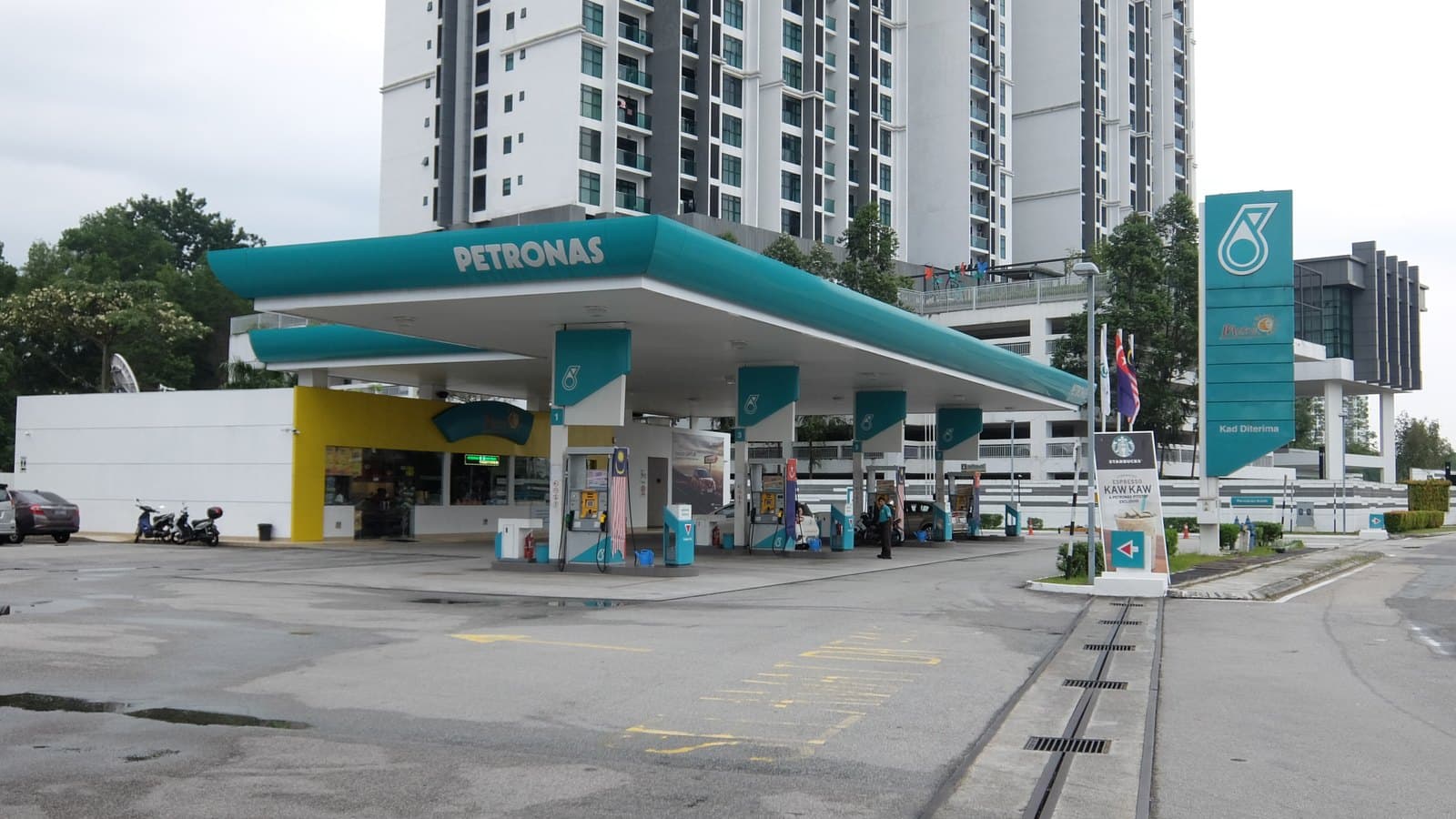
*Cover image: a Petronas station forecourt in Malaysia (Chongkian, CC BY-SA 4.0, via Wikimedia Commons)*