> Quick view: if your business is in the final e-Invoice phase, the no-prosecution relaxation period now runs to 31 December 2027, not 31 December 2026. If your turnover is under RM3 million, you may no longer be in scope at all since 1 September 2026. This is a factual explainer based on LHDN's own guidelines and media releases, re-checked against the current documents on 1 October 2026. It is not tax advice.
What changed since this article was first published
When this page went up in August 2026, two numbers in it were correct: the relaxation for the final phase ended on 31 December 2026, and the exemption line was RM1 million. Both have since moved.
- The relaxation now ends on 31 December 2027. Table 16.1 of LHDN's e-Invoice Specific Guideline, in the current Version 4.9 published on 7 September 2026, gives the fourth phase an interim relaxation period "until 31 December 2027". The extension first appeared in the April 2026 revision of the same guideline.
- The exemption line is now RM3 million. The Prime Minister announced it in the National Day address on 30 August 2026, effective 1 September. LHDN's e-Invoice Guideline Version 4.8, published 30 August 2026, now exempts taxpayers with annual turnover or revenue of less than RM3,000,000. LHDN put the effect at more than 1.1 million businesses outside mandatory implementation.
The rest of the regime, including the RM10,000 rule, the voluntary disclosure programme and the help channels, is unchanged.
Where the rollout stands now
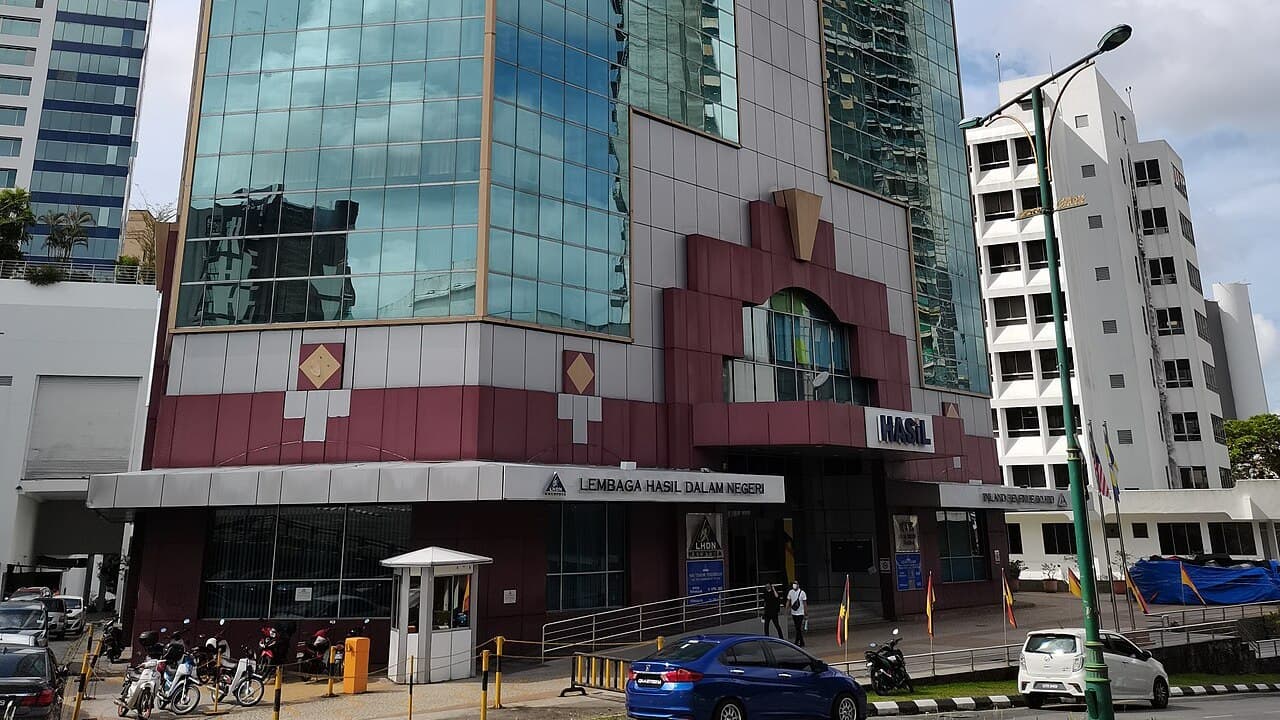
Malaysia's e-Invoice programme is run by the Inland Revenue Board of Malaysia (LHDN / HASiL), and it was phased in by turnover band. Table 1.1 of Guideline Version 4.8 still lists four implementation dates:
- Annual turnover or revenue of more than RM100 million: 1 August 2024
- More than RM25 million and up to RM100 million: 1 January 2025
- More than RM5 million and up to RM25 million: 1 July 2025
- Up to RM5 million: 1 January 2026
Two rules sit around that table. Your phase was fixed by your financial year 2022 turnover, and later changes in turnover do not move it. And new businesses that started between 2023 and 2025 with turnover of at least RM3 million were given an implementation date of 1 July 2026, which is why the relaxation table now names two dates for the final phase.
The RM3 million exemption has conditions
Section 1.6.1(e) of the Guideline exempts taxpayers below RM3,000,000. Section 1.6.10 says this applies to individuals, partnerships, companies and co-operatives alike, but not to a taxpayer that:
- has a non-individual shareholder with turnover or revenue of at least RM3 million;
- is a subsidiary of a holding company with turnover or revenue of at least RM3 million; or
- has a related company or joint venture with turnover or revenue of at least RM3 million.
If you are a sole proprietor, the turnover of every business registered in your name is added together. Our threshold explainer works through LHDN's examples.
If you started on 1 January 2026 and turn over between RM1 million and RM3 million, section 1.6.1(e) on its face now takes you out of scope, unless one of the section 1.6.10 conditions catches you. The Guideline also lets exempt persons keep issuing e-Invoices voluntarily, and many will, because their customers' systems already expect them. Confirm your own position with LHDN before you switch off a system your buyers rely on.
The relaxation to 31 December 2027, and what it permits
LHDN's 5 January 2026 media release first extended the final phase's relaxation from six months to 12. The Specific Guideline later extended it again. Section 16.2 of Version 4.9 sets out what taxpayers in the relaxation period may do:
- Issue consolidated e-Invoices for all activities and transactions, including the industries and activities listed in Section 3.7 of the Specific Guideline
- Issue consolidated self-billed e-Invoices for all the self-billing situations in Section 8.3
- Enter any details in the "Description of Product or Service" field, rather than the receipt or bill reference numbers normally required
- Not issue an individual e-Invoice, even when a buyer asks for one, provided they comply with the consolidation rules above
Section 16.3 adds that LHDN will not prosecute under section 120 of the Income Tax Act 1967 during the relaxation period for non-compliance, provided the taxpayer meets the first two conditions. That is the nuance worth holding on to. The relaxation is permission to use simplified formats. It does not let you issue nothing.
For comparison, the earlier phases each got six months, and all three have ended: 31 January 2025, 30 June 2025 and 31 December 2025.
The same January release gave the construction-materials wholesale and retail sector its own concession from 1 January 2026. Those businesses may consolidate, and they need to issue an individual e-Invoice only where a transaction exceeds RM10,000 or the buyer asks for one.
The RM10,000 rule
This is the requirement that catches out businesses who assume the relaxation covers everything. Section 3.7 of the Specific Guideline lists "any single transaction with a value exceeding RM10,000", across all industries, as effective from 1 January 2026. LHDN's 20 June 2026 media release said the same, and added that buyers need to give their identification number or Tax Identification Number (TIN) so the e-Invoice can be issued correctly.
The clearest statement of how LHDN reads it is in its own worked example. Example 24 of the Specific Guideline describes a company that missed its February 2026 e-Invoices: ten sales under RM10,000 and one of RM12,000. The ten may go on a consolidated e-Invoice. The RM12,000 sale needs its own. February 2026 sits inside the relaxation period, so treat RM10,000 as a line that applies now.
The 20 June release also named the four non-compliance patterns LHDN sees most often:
- issuing e-Invoices inconsistently, for some transactions but not later ones;
- issuing e-Invoices that do not follow the Guidelines;
- submitting consolidated e-Invoices after the permitted window; and
- not issuing e-Invoices for transactions above RM10,000.
MyInvois e-POS: the free option
For micro and small businesses without accounting software, LHDN built its own tool. MyInvois e-POS is a free point-of-sale platform that handles sales recording, inventory management, financial reporting and e-Invoices. LHDN's 9 January 2026 media release extended it to taxpayers with annual income or sales of up to RM5 million, which covers the whole final phase.
Why LHDN is not softening
LHDN is making the enforcement case with numbers. Since implementation began on 1 August 2024, it reports that more than 230,000 taxpayers have submitted 1.505 billion e-Invoices. It has built analytics models to flag anomalies. The release specifically cites purchases above RM100,000, vehicle and asset purchases, and active online selling with no matching income reported.
Its 2026 releases show the escalation. It detected RM1.4 billion of unreported income in February and RM3.5 billion by April. By 20 June, 52,540 taxpayers had filed back-year returns declaring RM4.07 billion of income, with RM1.009 billion in tax payable.
The voluntary disclosure window
The e-Invoice Special Voluntary Disclosure Programme (SVDP, or Program Khas Pengakuan Sukarela, PKPS) runs from 7 July 2026 to 31 December 2027. It followed an announcement by the Prime Minister and Finance Minister in the Dewan Rakyat. Section 17 of the Specific Guideline opens it to taxpayers who:
- did not submit, or missed, e-Invoices for any period from their mandatory implementation date;
- submitted e-Invoices containing errors or information that does not meet the specifications;
- did not submit any e-Invoices for any period or transaction from that date; or
- are under, or have been notified of, an e-Invoice compliance review.
LHDN will not carry out compliance reviews or enforcement, including penalties and prosecution, on e-Invoices disclosed under the programme. That protection does not cover fraud, wilful default or negligence, or disclosures that do not meet the specifications. Three filing mechanics matter:
- Use the right version. Disclosures must use the e-Invoice versions "SVDP 1.2" (without digital signature) or "SVDP 1.3" (with digital signature), and only for this purpose.
- Consolidate by month. Missed consolidated e-Invoices go in one per month of transaction, never as a single lump covering several months. LHDN's Example 23 turns January to April 2026 into four submissions.
- The RM10,000 line still applies to the catch-up. Missed sales above RM10,000 need their own transactional e-Invoice, as in Example 24.
Alongside the programme, the government brought forward a tax incentive: a full capital allowance claim within one year for ICT equipment and for developing or customising software for e-Invoice.
What to do before 31 December 2027
The relaxation and the disclosure programme now end on the same day, which makes 2027 the year to close gaps rather than open new ones. Before the end of 2027, work through these questions:
- Are you still in scope? If you turn over below RM3 million, check the section 1.6.10 conditions before you decide.
- Is every sale above RM10,000 getting its own e-Invoice, with the buyer's TIN?
- Are your consolidated e-Invoices going in on time, month by month?
- Are there earlier months you missed? If so, file them under the SVDP while it is open.
LHDN runs dedicated e-Invoice channels: the 24-hour e-Invoice help desk on 03-8682 8000, MyInvois Live Chat, myinvois@hasil.gov.my for general enquiries, and a feedback form at feedback.myinvois.hasil.gov.my.
Sources: LHDN e-Invoice Guideline Version 4.8 (30 August 2026), Table 1.1 and Section 1.6; LHDN e-Invoice Specific Guideline Version 4.9 (7 September 2026), Section 3.7, Table 16.1, Sections 16–17 and Examples 23–24, both read from hasil.gov.my on 1 October 2026; LHDN media releases dated 5 January 2026 (additional transition period for Phase 4 and consolidated e-Invoice relaxation for building-materials businesses), 9 January 2026 (MyInvois e-POS), 20 June 2026 (e-Invoice strengthens tax compliance) and 7 July 2026 (PKPS e-Invois); Prime Minister's National Day address, 30 August 2026.
*This article is a factual explainer of published government policy. It is not tax advice. For your own position, refer to LHDN directly or to a licensed tax agent.*
Related reads
- Malaysia's e-Invoice in Plain Terms: Who Must Issue One in 2026, Who Is Exempt, and the FY2022 Rule Nobody Mentions — the eligibility half: how FY2022 fixed your phase permanently, the full exempt-person list, and the 72-hour correction window
- The Six Measures That Started on 1 September 2026 — the RM3 million threshold in detail, with LHDN's shareholder and sole-proprietor examples
- 8 Company Incorporation & Corporate Secretary Services Worth Knowing in Malaysia (2026) — who files the accounts and returns this regime reads from
*Cover image: Inland Revenue Board (Lembaga Hasil Dalam Negeri) office, Kuching — Photo: Cerevisae, CC BY-SA 4.0, via Wikimedia Commons*