There is a good chance you have money sitting in Putrajaya. Not a lot, probably, but the point of the Unclaimed Moneys Act 1965 is that the amount does not matter. A closed-and-forgotten savings account from a first job, a final salary payment that bounced, an insurance claim approved to an address you moved out of, a dividend cheque that expired in a drawer: all of it eventually leaves the company that owed it and lands with the Registrar of Unclaimed Moneys, who holds it as a trustee until somebody asks.
The Accountant General's Department recorded more than RM13 billion of unclaimed money as at January 2026, a figure the Accountant General gave in remarks reported by Bernama on 7 March 2026 and carried on the department's own newspaper-cuttings page. It grows every year because the surrendering is compulsory and the claiming is not.
What actually becomes unclaimed money
The department publishes three categories, and they are narrower than most people assume.
The first is money that is legally payable to you but has stayed unpaid for not less than two years. Its own examples are salaries, wages, bonuses, commissions and other payments due to employees; dividends; profits declared for distribution; insurance claims already approved for payment; bank drafts, cashier's orders and similar documents whose validity has lapsed; fixed deposits without automatic renewal instructions that have matured; tender deposits whose purpose has been fulfilled; and sundry creditor or debtor balances in credit. Note the two-year figure. A number of guides and news write-ups still describe this first category as one year, and the department's own definition page, last updated 20 April 2026, says two.
The second is money in an account that has not been operated in any way by the owner for not less than seven years: savings accounts, current accounts, and fixed deposits with automatic renewal instructions. This is the category most personal unclaimed money falls into.
The third is money in a trade account dormant for not less than two years, which mostly affects businesses rather than individuals.
How to check, and what it costs
Go to egumis.anm.gov.my and use the unclaimed money search. You enter an identification number for an individual or a company registration number for a business, and the portal returns any records surrendered against it. Searching does not require an account.
The costs are worth stating plainly because so much bad information circulates around them. The Registrar imposes no charge on any application. There is no minimum amount that can be claimed. There is no time limit at all, and the department states the money can be claimed at any time by the rightful owner. What you will not receive is interest: under section 11(3), payment is based on the amount surrendered by the company or firm, without any interest, so a RM800 balance surrendered in 2009 is still RM800.
There is one cost that the "no charge" line does not cover, and it is worth knowing before you start. It applies to one specific category: an expired banker's cheque, bank draft or cashier's order where you cannot produce both the original instrument and the original purchase form bearing the bank's transaction print. In that situation the FAQ requires Form AM 80 together with the UMA-8 indemnity bond, signed in front of a Sessions Court Judge, a Magistrate or a Commissioner for Oaths, and stamped with a RM10 revenue stamp at LHDN for each unclaimed money record. The stamping has to be done within 30 days of the date the judge, applicant and witness signed. The Registrar still charges nothing; the RM10 is a stamp duty payable to LHDN, and it is per record rather than per application, so a claim covering three expired drafts carries RM30 of stamps. An ordinary savings-account or salary claim does not go near this form.
The line about agents, printed by the Registrar itself
Both the department's service page and the eGUMIS FAQ carry the same statement: the Registrar of Unclaimed Moneys does not appoint any individual or company as a middle person or agent in matters relating to claims, and the Registrar and the Ministry of Finance have never appointed an agent to manage unclaimed money.
There is a reason this needed saying. Under section 10A of the Act, surrendered records used to be gazetted through Percetakan Nasional Malaysia Berhad and lodged with the National Library, which made names and amounts a public document that anyone could buy. Some parties used exactly that data to approach owners and offer to recover money for a fee. The department says the gazetting process was abolished in 2024 as part of its digitisation, and the information now sits on eGUMIS instead. If someone contacts you with details of your unclaimed money and asks for a cut, the department's own guidance is that your personal contact details did not come from the Registrar.
The emails, and the apps, that are not from JANM either
The agent pitch is the oldest version of this, but it is no longer the only one, and eGUMIS now carries a standing notice for each.
On 17 December 2025 the department posted a warning about fake emails circulating in the name of the Accountant General's Department and the Unclaimed Moneys Management Division. The sentence that settles it is absolute: the division has never sent any notification email to the public, or to any firm, company or surrendering entity, about unclaimed money claims. So an email announcing that you have money waiting is fake by definition, however official the letterhead looks. The department's advice is not to click links in a suspicious email, not to disclose personal, banking or login details, and to verify the source before doing anything — the genuine and current information sits on egumis.anm.gov.my and nowhere else.
The second warning is about how you download the app. There is an official one: eGUMIS JANM, published by Jabatan Digital Negara, on Google Play, the App Store and Huawei AppGallery. It lets you register or sign in with the eGUMIS ID you already have, run an unclaimed money search, check the status of a claim you have submitted, and read the portal's announcements and FAQ. In a notice carried on 22 July 2026, the department told users to avoid APKPure, APKCombo, Aptoide or any other third-party source and to install only from the official platforms, warning that apps from unofficial sources risk carrying malware, leaking data and compromising the user's security. Since the app is a doorway to your identification number and your bank details, that is not boilerplate.
Claiming: who can, what you need, and how long it takes
Applications can be made by the owner; an estate administrator named in a Letter of Administration; a liquidator for a company being wound up; an individual or company named in a Court Order; or the Companies Commission of Malaysia or the Malaysian Department of Insolvency for a company that has been fully dissolved.
Two edges of that list catch people out. Money surrendered in a company's name cannot be paid out to a director or a shareholder personally: the FAQ invokes the separate legal entity doctrine and pays the company itself, which is a problem worth solving before the company is struck off rather than after. And a claimant who is not a Malaysian citizen works from a different document checklist than the ordinary personal one, so check that list rather than assuming the standard three documents will do.
For an ordinary personal claim, the documents are the UMA-7 form, a copy of your identity card front and back, and the front page of an active savings or current account book or statement showing your full name, account number and bank name, since payment is credited directly. The FAQ is specific about what will not work as a payout account: Tabung Haji, investment, loan and e-wallet accounts are not allowed, and handwriting on a bank document without a bank confirmation stamp is not permitted. If the record's details do not match your identity documents, you also need an original confirmation letter from the company or firm that surrendered the money, and that original must reach the counter or arrive by registered post within seven working days of the online submission.
After submission there are two rounds of document verification. If both are cleared, the department's notification says payment will be credited within 30 working days of that notification. The portal shows eight statuses, from DRAFT through the two verification and two query stages to NEW, DONE and APPLICATION INQUIRY, which is a rejection.
Three housekeeping rules catch people out. A draft application is deleted after seven days and has to be started again. An application sitting in document-query status is kept for three months. And an eGUMIS account itself expires: if you do not log in within 30 days of receiving your password the account is deactivated, and the active period is six months from your last login, after which you must sign up again.
A fourth rule joined them on 13 May 2026. Accounts registered more than 24 months ago that have no active or unfinished unclaimed money application are now deleted automatically by the system rather than merely deactivated, and the department's instruction is to simply register a new account if a fresh claim comes up. Worth remembering if you opened an eGUMIS login years ago, found nothing, and are coming back to look again.
One more thing the FAQ reserves: even when every document on the published checklist has been supplied, the Registrar keeps absolute discretion to request any additional document before paying out.
Portal status, and two things the search page does not tell you
The Secure Posture Assessment maintenance that suspended online claim submission from 22 August to 4 September 2026 has ended. Re-reading the eGUMIS homepage on 14 October 2026, the 20 August maintenance notice has been taken down and no new downtime notice has replaced it, so both searching and online claims are available.
Two details on the portal itself are worth knowing before you start. First, the public search page (egumis.anm.gov.my/wtd/search) asks only for an identification number and returns the number of unclaimed money records found, not the amounts or the companies that surrendered them. The page says plainly that you must register and log in to see the details or to claim. So a result of "1" tells you something is there; it does not tell you whether it is RM12 or RM12,000.
Second, a notice dated 13 May 2026 says eGUMIS accounts registered for more than 24 months with no active or unfinished unclaimed money application are deleted automatically by the system. If you registered years ago to check and never claimed, your old login may no longer exist, and the department's instruction is simply to register a new account. Accounts that were deactivated rather than deleted can be restored by emailing your user ID, email address and identification number to tuntutan.bwtd@anm.gov.my.
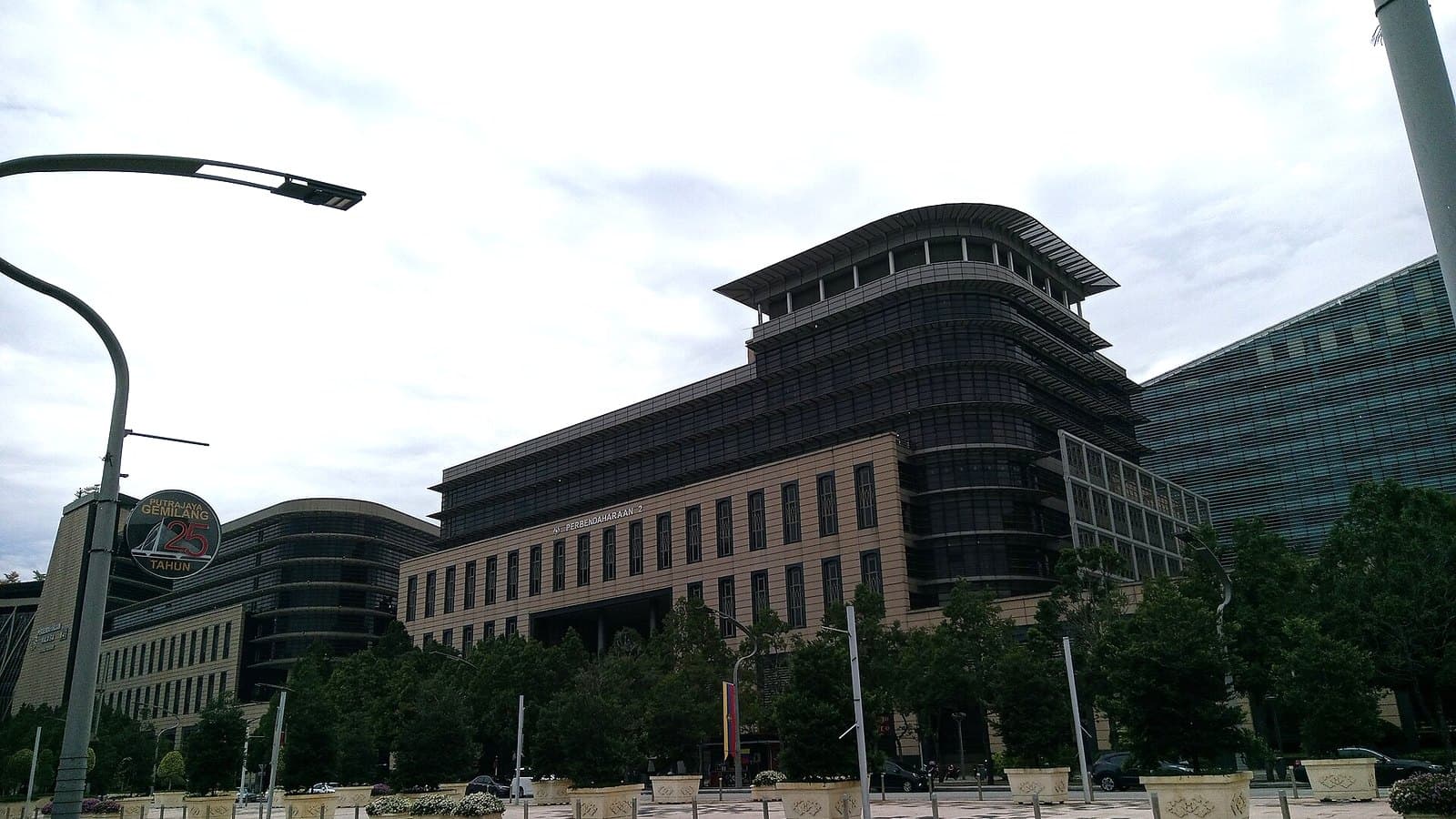
The counter route is still there if you would rather not deal with accounts at all. Completed applications with the printed unclaimed money record and supporting documents can be submitted by hand or by post to the Registrar's office at Bahagian Pengurusan Wang Tak Dituntut, Jabatan Akauntan Negara Malaysia, Aras 1, Perbendaharaan 2, Kompleks Kementerian Kewangan, No. 7 Persiaran Perdana, Presint 2, 62594 Putrajaya, or at any Accountant General's Department state or branch office. The FAQ gives the headquarters counter more precisely as Aras 1, Blok Selatan, Perbendaharaan 2. Counter hours are 8.30am to 5pm Monday to Thursday with a break from 1pm to 2pm, and 8.30am to 5pm on Friday with a longer break from 12.15pm to 2.45pm; it is closed on Saturdays, Sundays and public holidays. The enquiry line is 03-8000 8600, and claim questions go to tuntutan.bwtd@anm.gov.my.
Related reads
- Tribunal Tuntutan Pengguna 2026: Claim Up to RM50,000 for RM5, With No Lawyer in the Room — the other route for money someone else is holding, except this one is for a live dispute rather than a surrendered balance
- EPF Akaun Fleksibel 2026: The RM50 Withdrawal, and the Dividend Rule That Decides When to Take It — the far bigger pot of your own money sitting with a government body, and the timing rule that costs people dividends
- Delayed, Bumped or Missing a Bag: What Malaysian Air Passenger Rules Actually Give You in 2026 — another entitlement that is free to claim and routinely left unclaimed because nobody asks
*Cover image: SNN95, CC BY-SA 4.0, via Wikimedia Commons.*