> Quick view: The 30 September 2026 date that Perodua gave for its RM6,500 QV-E rebate has passed, but the official price lists on ev.perodua.com.my, checked on 3 October, still show the full RM16,500 "Special Rebate Price" (the RM6,500 plus September's RM10,000 Malaysia Day rebate) and say only that it is for a limited time. In Peninsular Malaysia that is RM53,499 on the road if you lease the battery at RM215 a month for nine years, or RM77,499 with the battery included. Sabah and Sarawak pay RM3,000 more. Road tax is exempted on Perodua's price list and insurance is extra. Over nine years the two options land within RM780 of each other, so the real choice is about who owns the battery.
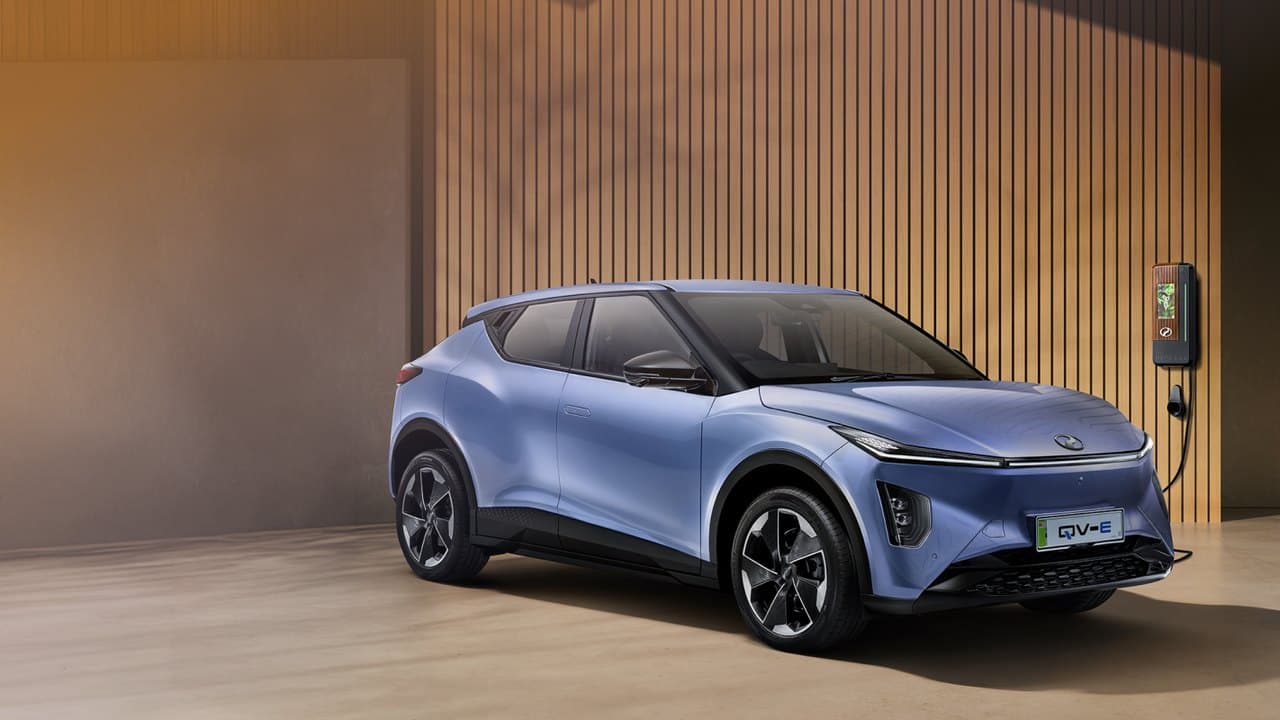
Perodua launched the QV-E in December 2025 as Malaysia's first homegrown battery-electric car: a 150kW crossover with a 52.5kWh lithium iron phosphate battery, a 370km WLTP range (445km NEDC) and a five-star ASEAN NCAP rating. On 15 June 2026 it cut the price and added a way to buy the car outright with its battery, crediting more locally made parts. The same announcement put a limited-time RM6,500 rebate on both versions, running until 30 September 2026. After that, Perodua's standard prices are RM69,999 with the battery lease and RM93,999 outright.
Perodua also looked after people who had already bought. Its release said existing owners would receive a special refund, and paultan.org reported one owner who had paid the RM80,000 launch price getting RM16,501 back without asking for it.
October 2026: the rebate price is still on Perodua's list
We re-read Perodua's QV-E site on 3 October 2026. The Peninsular and East Malaysia price lists it links are the same files Perodua issued on 15 September: they still print the RM53,499 and RM77,499 "Special Rebate Price" (RM56,499 and RM80,499 in Sabah and Sarawak), still say the rebate "is for a limited time only", and give no end date. Perodua has not announced an extension, and it has not announced that the RM6,500 has ended either. Its Latest Happenings page carries no QV-E promotion.
So the price you see on Perodua's own site in October is the rebate price, but nothing official says how long it stays. In practice:
- Ask the showroom to confirm the total rebate in writing on your booking form before you pay the booking fee.
- Ask whether the rebate follows the booking date or the registration date. If Perodua withdraws it between the two, that line decides what you pay.
- Do not read the Aruz and Ativa dates across. zigwheels.my reported that Perodua's Malaysia Day rebates on those two models run from 15 September to 31 October. It gave no date for the QV-E, which Perodua and the press described as limited units at this price.
New from 15 September: another RM10,000 off
On 15 September 2026, for Malaysia Day, Perodua added a RM10,000 cash rebate on both versions of the QV-E, and paultan.org, SoyaCincau and Automacha all reported it that day. It stacks with the June rebate. Perodua's new price lists, effective 15 September 2026, show a single "Special Rebate Price" of RM53,499 with the battery lease and RM77,499 outright in Peninsular Malaysia. In Sabah and Sarawak the prices are RM56,499 and RM80,499. That is RM16,500 off the standard price, and RM10,000 less than this article's figures at publication on 11 September.
Two things are unclear, so ask before you sign:
- How long it lasts. The price lists say only that the special rebate "is for a limited time", and reports say only a limited number of units are available at this price. Perodua's Malaysia Day rebates on the Aruz and Ativa are reported to run to 31 October, but no date has been published for the QV-E. Perodua's Latest Happenings page had already dropped the promotion by 22 September, and on 3 October the price lists still showed it with no end date.
- Earlier buyers. Perodua has not said whether owners who bought before 15 September will get the extra RM10,000 back, as they did after the June cut.
What you pay, line by line
Perodua's price list for Peninsular Malaysia, effective 15 September 2026 and valid for private registration, builds the on-the-road price like this:
- Battery-as-a-Service (BaaS): a RM69,551 customer price, plus RM300 registration, RM50 hire-purchase endorsement and RM98 for the EV ePlate, comes to RM69,999. Less the RM16,500 in rebates, that is RM53,499. The battery lease is RM215 a month on top, all inclusive.
- Full Purchase: RM93,551 plus the same RM448 in fees makes RM93,999. Less the same RM16,500, RM77,499, with no lease.
- Road tax for the first year is listed as exempted on both.
- Insurance is not included. Perodua recommends a sum insured of RM70,000 for the BaaS car and RM94,000 for the full purchase.
- Company purchases in Peninsular Malaysia pay an extra RM500 registration fee.
In Sabah and Sarawak the list runs RM72,999 and RM96,999 before the rebate, so RM56,499 with the lease and RM80,499 outright after the rebates, for private and company registration alike. The recommended sums insured there are RM73,000 and RM97,000.
Lease or buy the battery: the nine-year sums
The two Peninsular prices are RM24,000 apart. The lease costs RM215 a month for 108 months, which is RM23,220. So in cash, before any loan interest:
- BaaS: RM53,499 + RM23,220 = RM76,719 over nine years.
- Full Purchase: RM77,499.
The lease comes out RM780 cheaper across nine years. That gap widens once you finance the car, because the full-purchase buyer pays loan interest on the extra RM24,000 from day one, while the lease is paid as you go. Sabah and Sarawak buyers see the same RM780 difference (RM56,499 + RM23,220 = RM79,719, against RM80,499). The Malaysia Day rebate takes the same RM10,000 off both versions, so it does not change which one is cheaper.
Upfront, the gap is smaller than the sticker suggests. With 10% down, the BaaS car needs about RM5,350 plus a RM645 advance lease payment. That advance is three months of rent that Perodua holds and uses against your last three months, so you need RM5,995 before insurance. The full purchase needs about RM7,750 down. You would then finance roughly RM48,149 on the lease car against RM69,749 on the outright car, a RM21,600 difference.
What decides it is the end of the nine years. On the full purchase you own the battery, with an 8-year or 160,000km warranty that repairs or replaces it if its state of health (SOH) drops below 70%. On the lease the battery never becomes yours. Perodua's product disclosure sheet says that after nine years it keeps working with no more payments until its SOH falls below 70%, and Perodua may also offer a fresher replacement battery on a new lease. During the lease, Perodua replaces the battery free if it drops under 70%, with unlimited mileage.
What the battery lease really says
The lease is a separate contract with Perodua Sales under the Shariah concept of Operating Ijarah. The points that matter most, from the product disclosure sheet:
- Payments start on delivery. The RM215 is due by the 10th of each month. It can be bundled into your car-loan instalment with participating banks, and once the loan is settled you pay Perodua directly through its app.
- Missed payments bite fast. After two missed months Perodua may disable the car's start function. After three, the lease is terminated and you must arrange for the battery to be recovered within 14 days.
- Insurance is lighter. Your yearly car cover excludes the battery, which Perodua insures itself. That is why the recommended sum insured is RM24,000 lower.
- Selling goes through Perodua. The battery cannot be sold separately. Perodua recommends selling the car to Perodua Pre-Owned Vehicles, and if you sell to anyone else, the sale has to be handled by Perodua Pre-Owned and the buyer takes over the lease.
- No stamp duty or legal fees are charged on the lease agreement.
What it costs to charge at home
The sums above cover buying the car. This is what it costs to move it.
The QV-E's 52.5kWh LFP battery and 370km WLTP range work out to about 14kWh per 100km at the battery. Home AC charging is not perfectly efficient, so allow roughly a tenth for losses and call it about 16kWh from the wall per 100km, or roughly 58kWh for a full charge.
TNB's domestic tariff prices that at 44.43 sen per kWh — 27.03 sen energy, 4.55 sen capacity and 12.85 sen network — before any Energy Efficiency Incentive. Charging is added on top of what your house already uses, so it falls in your highest consumption block, where that incentive is smallest or nil. Treat 44.43 sen as the realistic marginal rate.
- A full charge costs about RM26 and covers about 370km, or roughly 7 sen per km.
- A 1.3-litre Myvi at 6 litres per 100km costs about 12 sen per km on subsidised BUDI95 RON95 at RM1.99 a litre, and about 26 sen per km at the unsubsidised RM4.37 pump price of 17 to 23 September 2026.
- Driving 1,200km a month adds roughly 190kWh, or about RM84, to the electricity bill.
The 800kWh line is the trap (600kWh again from 2027)
That extra 190kWh is the part to plan around. TNB waives the monthly AFA fuel surcharge, the RM10 retail charge and 8% SST for domestic accounts under a usage line, and the test is on the whole account, not the excess. Normally that line is 600kWh a month. On 17 September 2026 the government raised it to 800kWh a month for usage from September to 31 December 2026, after haze and hot weather pushed bills up, and TNB said the change shows on bills from October.
- Until the end of 2026: a household on 650kWh that adds 190kWh of home charging lands near 840kWh and crosses the 800kWh line. The AFA then applies to every unit on the bill, not just the 40 over it. At September 2026's AFA of +3.67 sen per kWh (the rate is reset monthly) that is roughly RM31 of AFA plus the RM10 charge.
- From January 2027, unless the measure is extended: the line goes back to 600kWh. A household on 450kWh that starts charging lands near 640kWh and crosses it, which at the same AFA rate is roughly RM23 of AFA plus the RM10 charge you were not paying at 599kWh.
If your bills already sit within about 200kWh of the line, home charging costs more than the 44.43 sen rate alone suggests. Check your consumption history in the myTNB app before you sign.
Who should buy while the rebates last
It suits households with a porch or garage where an AC charger can go. The QV-E takes up to 6.6kW on AC, and Perodua lists an AC charging time of about eight hours, which fits overnight. It also suits Klang Valley commuters whose weekday driving sits well inside the 370km range, and first-time EV buyers who worry about battery wear, since the lease hands that risk to Perodua.
Think twice if you live in a condo without a charging bay, if you often drive long stretches of the North-South Expressway (DC charging is 60kW, taking 30% to 80% in about 30 minutes), or if you like to sell your cars privately. And do not rush a nine-year contract to catch a rebate. RM16,500 is about 77 months of battery lease, a real saving, but not a reason to buy a car that does not fit how you live.
Where to book and test drive
Bookings go through the P-Circle app or a Perodua showroom. Perodua's QV-E site lists 34 authorised EV outlets across 12 states and territories in Peninsular Malaysia, and only 9 of them offer test drives:
- Klang Valley: Perodua Sentral (Seksyen 19, Petaling Jaya), PSSB Glenmarie (Shah Alam) and PSSB Putrajaya (Presint 15)
- Elsewhere: PSSB Ipoh 2, PSSB Juru (Penang), PSSB JB 1, PSSB Senawang, PSSB Kota Bharu 1 and PSSB Kuantan (Zone 2)
The other eight Klang Valley EV outlets take bookings only: Perodua KL on Jalan Pahang, and PSSB branches in Kajang, Klang, Puchong, Damansara Damai, Kota Damansara, Semenyih and Pandan Prima. The list names no outlets in Sabah or Sarawak even though East Malaysian pricing is published, so call Perodua's contact centre on 1800 88 6600 (Monday to Friday, 8.30am to 5pm) before driving to a showroom there.
Fine print that trips people up
- The only published deadline has passed. The price list calls the whole RM16,500 "limited time". The 30 September 2026 end date for the RM6,500 appeared only in Perodua's 15 June announcement, yet the price list still showed the rebate on 3 October, and no end date has been published for the RM10,000. Ask your sales advisor which rebates apply to your booking, whether they follow the booking or the registration date, and get the total written on your booking form.
- On-the-road means without insurance. Budget for a year of cover on RM70,000 (lease) or RM94,000 (outright).
- The RM645 advance lease is paid before you get the car.
- Warranty tiers differ. Basic parts are covered for 3 years or 100,000km, major parts for 5 years or 150,000km, and high-voltage parts such as the electric drive unit for 6 years or 150,000km. The 8-year battery warranty applies only to the full purchase. On the lease, the battery is covered by the lease guarantee instead.
- The home charger is separate. Perodua sells a smart AC wall charger of up to 7kW and a mobile charger, but neither is in the price list. If you install one, EV charging equipment falls under the RM2,500 environmental tax relief covered in our guide below.
- East Malaysia costs RM3,000 more on both versions.
Related reads
- Car Loans in Malaysia 2026: why a "3%" car loan costs more than it sounds, and the settlement rebate the new Act removed.
- New Personal Tax Reliefs for 2026: the shared RM2,500 pot that covers EV charging equipment.
- TNB's AFA Surcharge From September: why electricity bills are rising, which matters once you charge at home.
- Car Ownership Transfer Fees in Malaysia: worth reading if you are selling your old car first.
*Image: Perodua*
*Sources: Perodua's press release of 15 June 2026; the Peninsular and East Malaysia QV-E price lists, battery leasing product disclosure sheet, warranty booklet, charging page and EV outlet list on ev.perodua.com.my, read 11 September 2026; the updated price lists effective 15 September 2026, read 22 September 2026; paultan.org reports of 26 June, 31 July and 15 September 2026; SoyaCincau and Automacha, 15 September 2026; the same price lists and Perodua's Latest Happenings page re-checked 3 October 2026; The Star (17 and 19 September 2026) and TNB on the temporary 800kWh line; zigwheels.my on the Aruz and Ativa Malaysia Day rebates; paultan.org on fuel prices for 17 to 23 September 2026.*