If you own a house, a condo unit or even an empty lot in Malaysia, your local council sends you a property tax bill twice a year. Most people call it cukai pintu, the "door tax". The law calls it a rate and councils call it cukai taksiran or assessment tax. It is a different bill from cukai tanah (quit rent), which goes to the state land office once a year.
This guide is built on the Kuala Lumpur City Hall (DBKL) assessment tax FAQ and its online payment page, the Johor Bahru City Council (MBJB) tax assessment page and its 2026 digital bill notice, and reporting in The Star on Petaling Jaya and Selangor. Rates and procedures differ between Malaysia's 150-plus councils, so treat the DBKL and MBJB numbers as worked examples and check your own council's page.
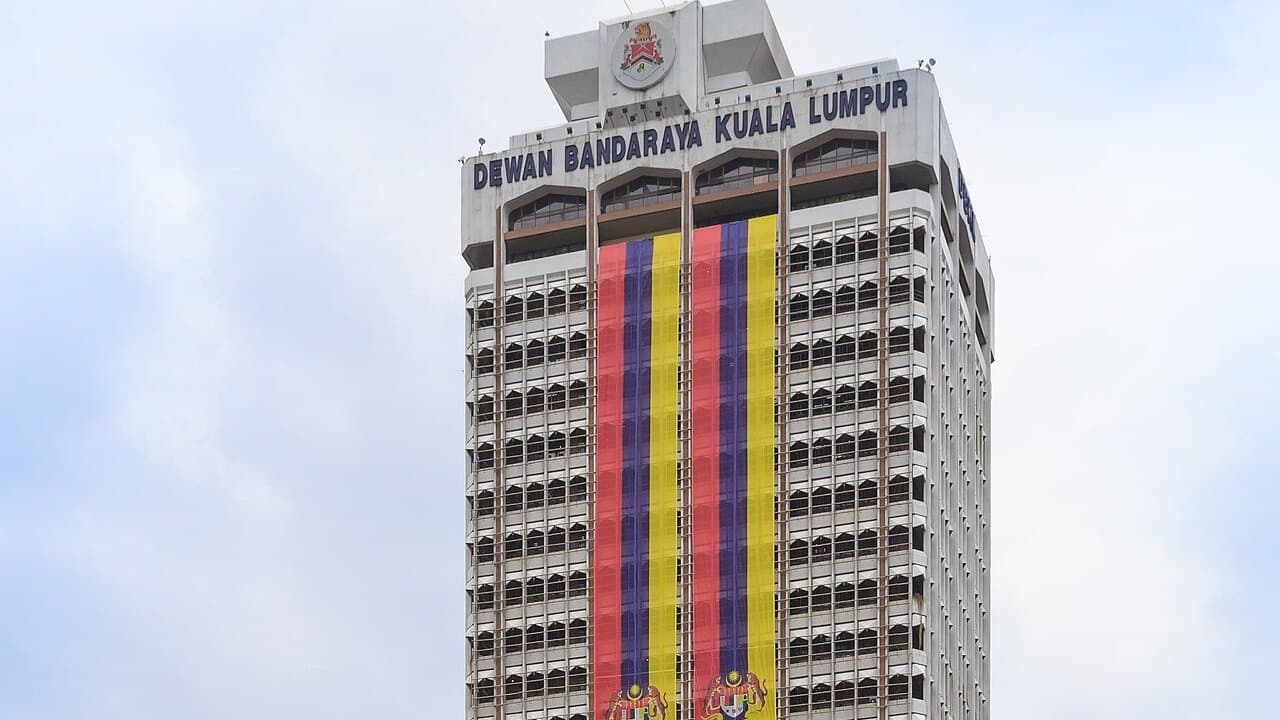
*Cover image: Menara DBKL, Kuala Lumpur City Hall's headquarters on Jalan Raja Laut. Photo: Uwe Aranas (CEphoto), CC BY-SA 3.0, via Wikimedia Commons.*
The formula: annual value times rate
Every assessment bill comes from two numbers.
- Annual value (nilai tahunan): DBKL defines it as an estimate of the gross annual rent the building could reasonably fetch if it were let. For vacant land, it is 10% of the land's market value. The same method applies to an owner-occupied home, so living in it yourself does not lower the figure.
- Rate (kadar): a percentage set by the council for each property type.
DBKL's own worked example: an annual value of RM13,200 at 4% gives RM528 a year, billed as RM264 per half-year.
DBKL's published rates
DBKL charges different rates inside and outside the old 36-square-mile city boundary:
- Commercial building: 10% inside, 8% outside
- Serviced apartment: 7% inside, 5% outside
- Residential building: 4% everywhere
- Low-cost flat: 2%
- Empty commercial lot: 7% inside, 5% outside
- Empty residential lot: 5%
- Kampung Baru, Kampung Melayu Segambut and Sungai Penchala: 1%
That serviced apartment line explains why two units with similar rents can carry very different bills. A serviced apartment sits on commercial land, so it is taxed at up to 7% rather than 4%.
DBKL also lists why your bill may differ from your neighbour's: a bigger floor area after an extension, a corner unit, or a different use of the property.
When to pay
MBJB's page sets out the two terms that most councils follow under Act 171:
- First half: 1 January to 28 February
- Second half: 1 July to 31 August
Both 2026 instalments have passed. If your account shows arrears now, it is already overdue, and the next bill opens on 1 January 2027.
What late payment costs
MBJB publishes its escalation ladder in full. A reminder letter must be settled within 15 days. If it is not, a Form E notice follows, again with 15 days. After that, the council can seize movable property inside the building, or for vacant land, seek an auction through the High Court Registrar under Section 151 of Act 171. Each step carries a fee: RM6 for the reminder, RM11 for Form E and RM33 for Form G (seizure).
Other councils use their own fees and penalty rates, so read your council's notice rather than assuming the MBJB figures.
Why the paper bill stopped coming
Councils are moving bills online, and the obligation to pay does not depend on a letter arriving.
- MBJB says it stopped printing and distributing property tax bills from 2026. Owners register for a digital bill by email or WhatsApp through its MyBill service.
- MBPJ still prints bills but plans to phase them out. On 30 July 2026 The Star reported 293,208 Petaling Jaya owners with unpaid assessments totalling about RM216.4 million. Mayor Mohamad Zahri Samingon said people tend to forget their bills when no printed copy arrives.
- DBKL bills can be viewed and paid in its DBKLBayar portal and the PAY@KL app.
How to pay
- JomPAY: DBKL assessment tax uses biller code 6981. MBJB uses 4317. Have your account number ready.
- Council portals and apps: DBKLBayar and PAY@KL for Kuala Lumpur. MBJB lists e-khidmat, PBTPay and JOHORPay.
- Counters and Pos Malaysia: still available at most councils. MBJB stopped accepting cheques on 25 October 2020.
Objections, empty units and selling up
- Objecting: if the council amends your annual value, it must send a notice under Section 144 of Act 171. You can object in writing on the grounds in Section 142, such as a value set too high. DBKL asks for objections at least 10 days before the hearing. MBJB says to bring a private valuer's report.
- Empty property: DBKL does not exempt vacant units, but owners can apply for a vacancy allowance (elaun kekosongan) through its Revenue Division on 03-2617 9000.
- New owner: tell the council when a property changes hands. MBJB charges RM50 to register a transfer, and Section 160 of Act 171 allows a fine of up to RM2,000 for failing to notify.
- Maintenance fees are separate. DBKL's FAQ notes that your condo service charge pays for common areas, while assessment tax funds roads, drains and public facilities.
Selangor's 2025 revaluation
Selangor's councils adopted new valuation lists from 1 January 2025, many of them decades old. State local government exco Ng Suee Lim said the increase in any bill was capped at 25%, and low-cost homes stayed exempt, The Star reported on 10 December 2024. If your Selangor bill jumped last year, that is the reason.