Drones have become a normal travel accessory, and plenty of Malaysians assume a small one bought at a mall is a toy that needs no paperwork. The Civil Aviation Authority of Malaysia (CAAM) disagrees. This guide is based on CAAM's Unmanned Aircraft System pages, its UAS FAQ and fee schedule, and the Standard ATF application form (reference CAAM/BOP/UAS/ATF/03-01, uploaded May 2026), all read on 27 October 2026. It explains the rules as CAAM publishes them and is not legal advice.
The law in one paragraph
Drone flying is governed by regulations 140 to 144 of the Civil Aviation Regulations 2016. Regulation 140 says an unmanned aircraft may not be flown in Class A, B, C or G airspace, inside an aerodrome traffic zone, or higher than 400ft above the ground unless CAAM's Chief Executive Officer authorises it. Since Class G is the uncontrolled airspace that covers most of the country, CAAM's FAQ puts it bluntly: all unmanned aircraft need authorisation for flying.
Which category your drone falls into
CAAM uses three buckets:
- Small unmanned aircraft: up to 20kg without fuel. You must keep direct, unaided sight of it the whole time (regulation 142).
- Small unmanned surveillance aircraft (SUsA): a small unmanned aircraft equipped for any surveillance or data acquisition. In practice, any drone with a camera. CAAM notes that model aircraft and light-show drones are most likely not in this group.
- Over 20kg: needs its own authorisation, and CAAM may require it to be registered with a CAAM-UAS number marked on the airframe.
Registration only applies to the over-20kg class in CAAM's current FAQ. Smaller drones are not registered, but they still need the permit.
The distance rules for camera drones
Regulation 143 bars a camera drone, without authorisation, from flying:
- over or within 150m of any "designated area", which CAAM defines as residential, commercial, industrial or recreational land;
- over an open-air gathering of more than 1,000 people;
- within 50m of any person, vehicle, vessel or structure (30m during take-off and landing).
In a Malaysian town that rules out almost everywhere, which is why the ATF is the normal route rather than the exception.
How to apply for a Standard ATF
The Standard ATF covers low-risk flights: within visual line of sight (or extended line of sight with at most one observer), below 400ft unless air traffic control approves more, and no spraying. The 14-page form asks for:
- Your details. For an individual, you are the "Accountable Manager".
- Pilot details, including training and hours. CAAM says a pilot certificate (RCoC-B) is not required for a Standard ATF; it judges competency through your risk assessment.
- Drone specifications, including the serial number and the SIRIM certification or MCMC label number.
- A risk assessment for the flight and the area.
- A flight map saved as a KMZ file from Google Earth, marking a green activity zone, yellow caution line, red emergency zone and blue boundary.
- Supporting documents: IC or passport, landowner permission, the drone's manual and, for any photography, videography or mapping, JUPEM approval.
The form says the ATF is only issued once full payment is made. One detail to watch: CAAM's FAQ lists drone.atf@caam.gov.my for applications, while the May 2026 form names uas.atf@caam.gov.my. Use the address on the latest form, and send it to both if unsure.
The other agencies
CAAM is clear that for an ATF, you must contact the other agencies yourself before applying. They are SIRIM (equipment standards), MCMC (radio frequencies; drones using 433-435MHz, 2.4GHz or 5.8GHz bands fall under the class assignment), JUPEM (aerial photography and mapping), and the Chief Government Security Office for protected places. Sabah adds a separate approval from the Lands and Surveys Department, and Sarawak one from the Premier's Office. National parks have their own rules too: Sarawak Forestry, for example, requires a separate permit to fly a drone in its parks.
What it costs
- One camera drone, one area: RM250.
- One camera drone, two areas more than 15nm apart: RM500.
- Two camera drones, two areas (CAAM's own worked example): RM1,000.
- A drone over 20kg: RM1,000 per drone per area.
Each application is valid for up to 90 days.
Penalties
CAAM lists a fine of up to RM50,000, jail of up to three years, or both, for individuals, and a fine of up to RM100,000 for companies.
Before your next trip
Start the paperwork a month ahead: JUPEM and state approvals come first, then CAAM's 14 working days. If that sounds like too much for one holiday clip, that is the honest answer for many casual flyers.
Related reads
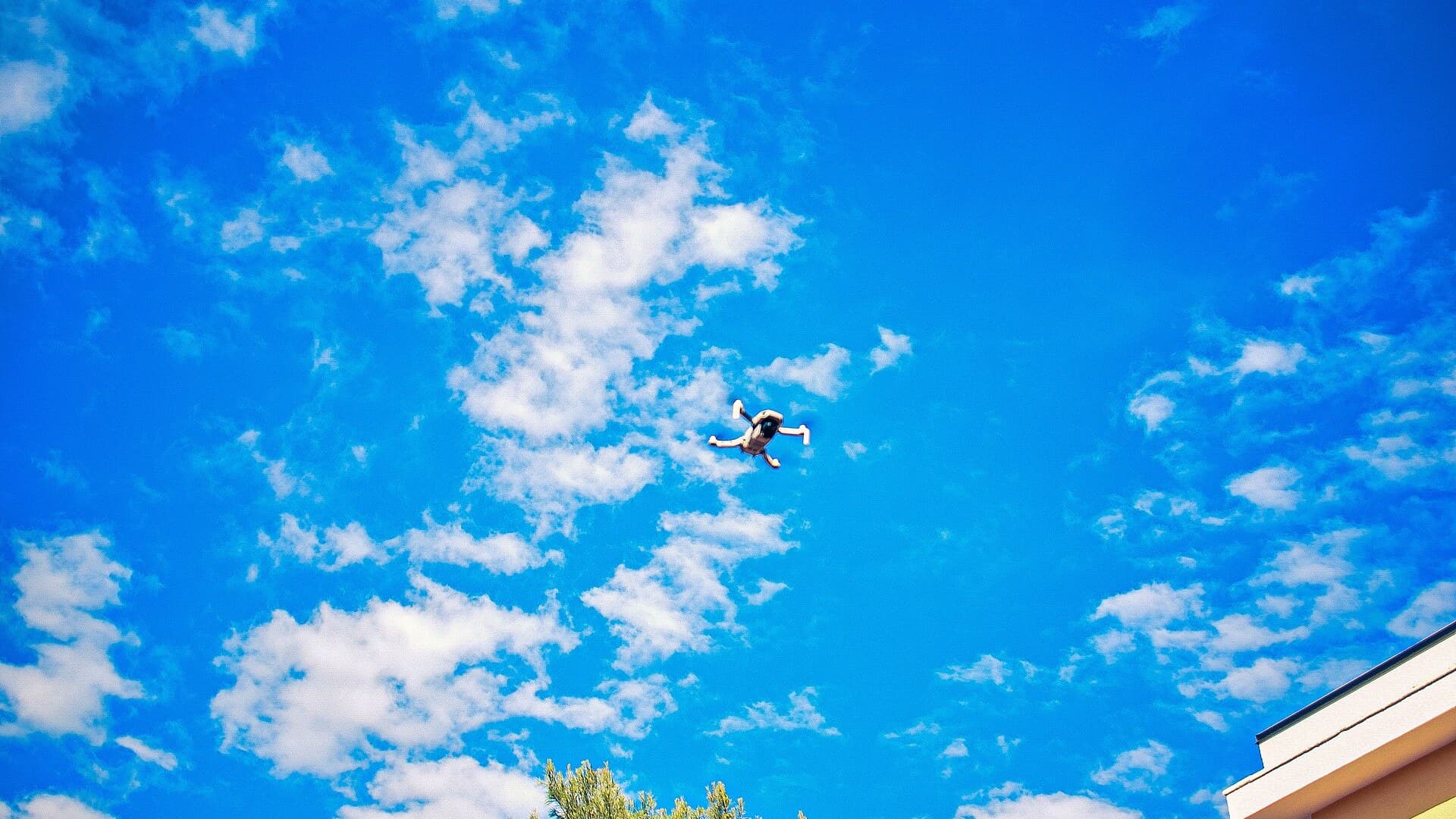
*Cover image: a DJI Mavic Mini in flight. Photo: GiovanniPen, CC BY-SA 4.0, via Wikimedia Commons.*